

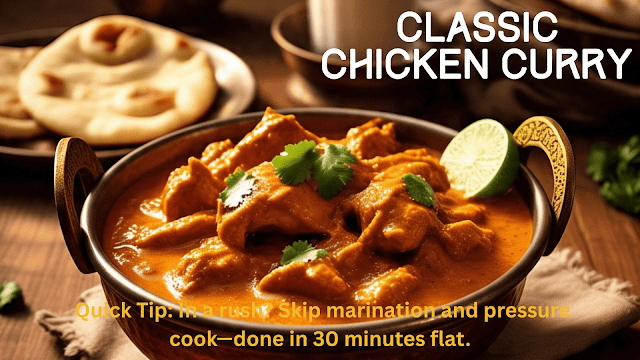
Classic Indian Chicken Curry

Indian Chicken Curry Recipe – Rich, Comforting & Easy
Indian chicken curry is one of those meals I come back to when I want something familiar, filling, and full of flavor without making dinner unnecessarily complicated.
There are countless ways to cook chicken curry across India. Some versions are thick and intensely spiced, some have a lighter gravy, and many families have their own way of doing things. So I don’t think there is one recipe that can honestly claim to be the authentic Indian chicken curry.
This is the kind of home-style curry I like making when I want a dependable meal: bone-in chicken cooked with browned onions, tomatoes, ginger, garlic, and a handful of everyday spices.
Why I Keep Coming Back to This Curry
The ingredient list isn’t particularly complicated. What matters more is what happens in the pan.
I learned this the hard way. The first few times I made chicken curry, I was too impatient with the onions. They looked cooked, so I moved on. The curry was edible, but the gravy never had the depth I was looking for.
Now I give the onions more time.
I cook them until they’re properly golden, but I stop before they become dark or burnt. That little bit of extra cooking changes the base of the curry. The onions become sweeter and give the gravy much more character.
The tomato mixture needs the same patience. I don’t rush straight from adding the tomatoes to adding the chicken. I let the tomatoes, ginger, garlic, and spices cook together until the mixture thickens and the raw tomato smell disappears.
That’s the point where I know the masala is ready.
The Chicken Makes a Difference
For this curry, I prefer bone-in chicken, particularly thighs and drumsticks.
They hold up well during simmering and are much harder to dry out than breast meat. As the chicken cooks, the gravy also picks up a deeper savory flavor.
That doesn’t mean you have to use bone-in chicken. Boneless thighs are a good choice when I want a quicker dinner. Chicken breast works too, but I keep a closer eye on it because it can become dry if left simmering for too long.
What I Look For in the Finished Curry
I don’t want the gravy to be swimming in oil, and I don’t want it so thick that it feels like a paste.
For me, the sweet spot is a gravy with enough body to coat the chicken while still being loose enough to spoon over rice.
The onions and tomatoes should have mostly disappeared into the sauce rather than sitting separately in the pan.
The spice should also support the chicken rather than overpower it. If I’m cooking for people who don’t eat very spicy food, I reduce the chili and let everyone add extra heat at the table.
One Thing I Wouldn’t Rush
If you’re making this curry for the first time, don’t worry about making it look perfect.
Pay attention to the masala instead.
Watch how it changes as it cooks. It starts wet and loose, then gradually becomes darker, thicker, and more concentrated. The smell changes too. Once that happens, you’re much closer to the curry you actually want.
That small bit of patience is more useful than adding another handful of spices.
Fans of spicy and vibrant curries should definitely explore this tangy Chicken Jalfrezi recipe, a popular restaurant-style dish.

Classic Indian Chicken Curry
Ingredients
Equipment
Method
- Mix ½ cup yogurt, ½ tsp turmeric, 1 tsp red chili powder, ½ tsp salt, and 1 tsp ginger-garlic paste.
- Add the chicken and mix well.
- Let the chicken soak in it for 30 minutes to overnight in the fridge.
- Heat oil or ghee in a thick-bottomed pan.
- Add cumin seeds and let them crackle.
- Toss in sliced onions and sauté until golden brown.
- Stir in the ginger-garlic paste and cook till the raw smell fades.
- Add tomatoes and cook till oil begins to separate.
- Mix in turmeric, red chili powder, coriander powder, and salt.
- Deglaze with a splash of water if masala sticks.
- Drop in the chicken pieces and mix well.
- Cook on medium-high flame for 8–10 minutes until the chicken changes color and sears slightly.
- Add ½ to 1 cup water depending on how thick you like your gravy.
- Cover and cook on low flame for 20–25 minutes or until chicken is fully cooked and tender.
- Stir occasionally so the bottom doesn’t burn.
- Sprinkle garam masala and kasuri methi (if using).
- Cook uncovered for 5 minutes to thicken the gravy.
- Garnish with fresh coriander leaves.
- Taste and adjust salt or spice before serving.
If you prefer bold flavors and aromatic spices, this classic pairs well with an authentic Kadai Chicken recipe.


A Few Things I’ve Learned Making Chicken Curry
The recipe card gives you the exact ingredients and cooking steps, but there are a few details I pay attention to that are easier to understand once you’ve made this curry a few times.
Don’t Judge the Masala Too Early
When the tomatoes first go into the pan, everything looks quite wet and loose. That’s normal.
I let the mixture cook until the tomatoes soften and the masala becomes noticeably thicker. The smell also changes. The sharpness of the raw tomato and ginger-garlic fades, and the spices start smelling much more rounded.
If the masala begins sticking to the bottom, I add a small splash of water and scrape the pan gently. I don’t add a lot of water at this stage because it only makes the cooking process take longer.
You Don’t Need a Huge Spice Collection
I prefer keeping everyday chicken curry fairly simple.
Turmeric, chili powder, coriander powder, and garam masala are enough to build a good base. The onions, tomatoes, and chicken still have room to come through instead of getting buried under a long list of spices.
That’s also why I like this recipe for regular home cooking. I don’t have to make a special trip to the store whenever I want chicken curry.
Yogurt Is Optional
I sometimes use yogurt when I want the chicken to have a slightly softer, richer texture.
But yogurt isn’t essential for making this curry.
If you prefer a straightforward onion-tomato curry, leave it out and cook the chicken directly in the masala. Both approaches work; they simply give you a slightly different result.
If you do use yogurt, plain unsweetened yogurt is the one I’d choose.
How I Adjust the Curry
If I Want a Thicker Gravy
Once the chicken is cooked, I leave the pan uncovered for a few minutes and let some of the moisture evaporate.
I find this gives the gravy a much better texture than trying to thicken it with flour or other ingredients.
If the Gravy Is Too Thick
I add hot water a little at a time and let the curry simmer briefly.
It’s much easier to loosen a thick curry than to rescue one that has become too watery, so I prefer adding liquid gradually.
If I Want More Heat
I usually increase the chili powder or add another green chili.
I wouldn’t automatically add more of every spice just because I want a hotter curry. Heat and spice depth are two different things.
If I Want a Richer Curry
A little ghee makes a noticeable difference.
I sometimes use ghee instead of oil, or combine the two. It gives the curry a warmer aroma without changing the basic character of the dish.
You Can Take This Curry in Different Directions
I don’t treat this recipe as a strict regional formula. It’s more of a dependable home-style base.
For a Punjabi-inspired version, I might use ghee and a few whole spices such as cinnamon, cardamom, or bay leaf.
For a South Indian-style variation, curry leaves and coconut can completely change the character of the gravy.
For a Bengali-inspired version, mustard oil and potatoes are interesting additions.
These aren’t simply interchangeable ingredients that make one recipe “authentic.” Each combination creates a different style of curry, which is part of what makes Indian cooking so interesting.
What I Like to Serve With It
For an everyday meal, I usually go with basmati rice. The grains are light enough to balance the rich gravy and make it easy to scoop up every bit of sauce.
Jeera rice is another good option when I want something more aromatic.
If I’m serving the curry with bread, I’ll choose roti, naan, or paratha, depending on what’s available.
I also like keeping something fresh on the side—sliced onion, cucumber, or a few lemon wedges. That little bit of crunch and acidity makes the meal feel less heavy.
What About Leftovers?
Chicken curry is one of the meals I actually enjoy eating the next day.
Once it has cooled, I transfer it to a covered container and refrigerate it. It should be used within 3–4 days.
For longer storage, I freeze it in individual portions for up to 2–3 months for best quality.
When reheating, I warm it gently until piping hot. The gravy usually thickens in the refrigerator, so I add a small splash of water if needed.
And if you’re cooking for one or two people, freezing individual portions is particularly useful. You can take out exactly what you need instead of reheating the entire batch.
Indian Chicken Curry Troubleshooting
Even when the recipe is straightforward, chicken curry can go slightly wrong. These are the problems I pay attention to most.
Why Does My Chicken Curry Taste Bland?
I usually look at the masala before adding more spices.
If the onions weren’t cooked enough, or the tomatoes were added and rushed, the gravy can taste flat. Too much water can have the same effect by diluting everything.
Let the curry cook down a little first, then taste it. Adjust the salt and chili gradually rather than adding a large amount at once.
Why Is My Curry Too Watery?
Take the lid off and let it simmer for a few minutes.
As the excess moisture evaporates, the gravy will naturally become thicker. Keep an eye on it and stir occasionally so the bottom doesn’t catch.
I wouldn’t add flour or cornstarch to this type of curry. The onion-tomato base should provide the body.
Why Did My Chicken Turn Dry?
The cut of chicken and cooking time both matter.
Chicken breast can become dry more quickly, especially if it is simmered for longer than necessary. I prefer thighs or drumsticks because they are more forgiving.
If you’re using boneless chicken, start checking it earlier rather than automatically following a long cooking time.
Why Are My Onions Bitter?
They were probably cooked too far.
There’s a useful difference between deep golden brown and burnt. You want the first one. If parts of the onions have turned black, that bitterness can work its way through the entire gravy.
If you’re unsure, it’s better to stop a little earlier than to push them until they burn.
Frequently Asked Questions
What chicken pieces are best for Indian chicken curry?
I prefer bone-in thighs and drumsticks because they stay tender during simmering. Boneless chicken thighs are another good choice when you want a quicker meal.
Can I make Indian chicken curry without yogurt?
Yes. Yogurt is optional in this recipe. You can skip it and cook the chicken directly in the onion-tomato masala.
Can I use chicken breast?
Yes, but be more careful with the cooking time. Breast meat has less fat and can dry out more easily than thighs.
How spicy is this curry?
That depends mainly on how much chili powder and green chili you use.
For a milder curry, reduce both. If you like more heat, increase them gradually rather than changing the entire spice balance.
Can I make chicken curry ahead of time?
Yes. I actually like how the curry tastes after it has rested for a while.
The flavors settle into the gravy, making leftovers especially good the following day. Just refrigerate it properly and reheat it thoroughly.
Can I freeze Indian chicken curry?
Yes. Divide the cooled curry into airtight portions and freeze for up to 2–3 months for best quality.
Thaw it in the refrigerator when possible, then reheat gently until piping hot.
What should I serve with Indian chicken curry?
Basmati rice is my first choice, but jeera rice, roti, naan, and paratha all work well.
A simple cucumber salad, sliced onions, or lemon wedges can also add some freshness to the meal.
Final Thoughts
I don’t think a good chicken curry needs twenty different spices or a complicated technique.
For me, the important part is learning what to look for while it cooks.
The onions should be properly golden. The tomato and spice mixture should have time to cook down. The chicken should simmer gently rather than being boiled aggressively. And the finished gravy should be thick enough to coat the chicken while still being easy to spoon over rice.
Once you get those things right, you can start making the curry your own.
Use bone-in chicken when you have time, boneless thighs when you want something quicker, adjust the chili to suit your family, or add a little ghee when you’re after a richer finish.
That’s what makes this kind of curry useful in my kitchen. It’s not a recipe I make only for special occasions. It’s the sort of meal I can cook on an ordinary evening and still feel like I’ve made something worth sitting down for.
Serve it with rice or warm roti, add a little fresh coriander, and let the curry rest for a few minutes before serving.
Sometimes that’s all dinner needs.
If you’re in the mood for something richer and creamier next, have a look at our . For a more onion-focused curry, try our .