

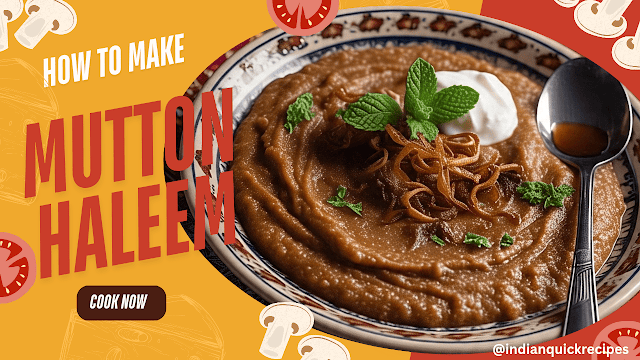
How to Make Mutton Haleem Recipe (Ramadan Special)
– Slow-Cooked Perfection!

What Is Mutton Haleem?
Mutton Haleem is a slow-cooked dish made with tender mutton, cracked wheat, lentils, ghee, onions, and aromatic spices. The ingredients are cooked until they form a smooth, creamy consistency. It is especially popular during Ramadan in India, Pakistan, and the Middle East and is traditionally served with fried onions, mint, coriander, ginger, and lemon.
Prep Time: 25 mins
Cook Time: 4–5 hours
Serves: 6 to 8 people
Difficulty: Medium
Slow-cooked. Nutritious. Soul-satisfying. That’s mutton haleem for you. A rich, creamy stew made with tender meat, lentils, cracked wheat, and warming spices. Perfect for Ramadan iftar or any day you crave a bowl of hearty comfort food.
🥄 What Makes Mutton Haleem So Special?
Mutton haleem is more than just a recipe—it’s a tradition passed down for generations. It’s that one dish everyone looks forward to during Ramadan. Long hours of cooking? Yes. But the flavor? Absolutely worth the wait.
Haleem has deep Persian roots but found a loving home in India—especially in cities like Hyderabad, Lucknow, and Kolkata. Each region has its own version. But the soul of haleem stays the same—slow-cooked, comforting, and rich in flavor.
If you love rich, slow-cooked dishes, you’ll also enjoy this slow-cooked Nalli Nihari recipe, another Mughlai classic known for its deep flavors.
🔍 Why It’s a Ramadan Favorite
- 🌙 Fills you up after fasting
- 💪 Packed with protein and fiber
- ⚡ Gives lasting energy for suhoor and iftar
- ❄️ Can be made in big batches and frozen
- 🧈 Loaded with ghee and spices—yet easy to digest
It’s a full meal in a bowl. Creamy, thick, and satisfying.

How to Make Mutton Haleem Recipe (Ramadan Special)
Ingredients
Equipment
Method
- Combine cracked wheat, toor dal, chana dal, and moong dal in a bowl. Cover with water and soak for 2–3 hours to soften them.
- Heat 2 tablespoons of ghee in a pressure cooker. Add chopped onion and sauté until golden brown. Add ginger-garlic paste and cook for 2–3 minutes. Add mutton, turmeric powder, red chili powder, black pepper powder, and salt. Sauté for about 10 minutes. Pour in 3 cups of water, cover, and pressure cook for 4–5 whistles until the meat becomes soft and shreddable.
- Transfer the soaked grains and lentils to a large saucepan. Add 5 cups of water and cook until everything becomes soft and mushy, about 30–40 minutes. Blend or mash the mixture into a smooth paste.
- Once cooked, shred or mash the mutton using a spoon or pulse it gently in a blender until it reaches a paste-like consistency.
- In a large heavy-bottomed pot, add the shredded mutton, cooked dal-wheat mixture, remaining ghee, and garam masala. Mix thoroughly.
- Cook on low heat for 1–2 hours, stirring frequently to prevent sticking. Continue cooking until the haleem becomes thick, creamy, and silky.
- Transfer the haleem to serving bowls. Top with crispy fried onions, lemon wedges, sliced ginger, fresh mint, and coriander leaves. Finish with an extra spoonful of ghee or butter if desired. Serve hot.
Notes
🍽️ Ingredient Alternatives
- No cracked wheat? Use steel-cut oats or broken barley.
- No moong dal? Use masoor dal (red lentils).
- Want it spicier? Add green chilies during the simmer.
If you’re in a hurry, minced mutton cooks faster and blends easily.
For a complete festive spread, pair haleem with these authentic Mutton Shami Kebabs, a popular appetizer during Ramadan.
🕰️ Prep Before Cooking
- Soak all lentils and wheat together in water for 2–3 hours. This softens them and speeds up the cooking.
- If you’re using whole mutton pieces, cut them small or pressure-cook for quicker shredding later.
Looking for more delicious ideas? Explore these best mutton recipes at home for your next family feast.
🍋 Garnish & Serve
When ready, top with:
- Crispy fried onions
- Lemon wedges
- Thinly sliced ginger
- Fresh mint and coriander
- A final spoon of ghee or butter (optional—but delicious)
 |
| Traditional mutton haleem served with crispy fried onions, lemon wedges, and fresh coriander |
🥣 How to Enjoy Mutton Haleem
Haleem is a one-bowl wonder. Eat it with:
- Naan or paratha
- Roomali roti
- Or just with a spoon!
Add more lemon juice if you like a bit of tang. And don’t forget the fried onions—they bring it all together.
👉 💭 Final Thoughts
If there’s one dish that defines soulful comfort food during Ramadan, it’s Haleem. The aroma of slow-cooked mutton, the rich texture of blended lentils and grains, and the warm spices all come together in a bowl of pure love. It’s not just food—it’s a reminder of family get-togethers, late-night prep, and the joy of breaking fast together.
Whether you’re making it for a special Ramadan iftar or just want a hearty one-pot meal, mutton haleem always delivers on flavor and comfort. Don’t worry if it feels time-consuming—once you take that first bite, you’ll know it’s all worth it.
Make extra, freeze some, and enjoy the taste of tradition anytime!
If you prefer lighter yet flavorful gravies, this Kashmiri Mutton Yakhni recipe is another excellent choice.
🏺 History of Haleem: A Dish that Traveled Far
Haleem didn’t start in India. Its roots go all the way back to the Middle East, particularly Persia. The original version was called Harees and was a simple porridge made with wheat and meat, cooked slowly over hours. It eventually made its way to India through Muslim rulers and traders.
Over time, Indian cities added their own flavors and techniques. In Hyderabad, it became spicier and more buttery. In Lucknow, you’ll find a more delicate, Nawabi touch. And in Kolkata, the haleem is slightly tangy and influenced by Bengali tastes.
The result? A dish that’s as diverse as India itself. No wonder Hyderabadi Haleem now has a GI tag—it’s not just a recipe, it’s heritage in a bowl.
Those who enjoy hearty meat dishes should also try the ultimate Dhaba Style Mutton Curry packed with traditional spices.
📌 FAQs About Mutton Haleem
Q: Can I make haleem in an Instant Pot?
Yes! Use the sauté function for frying and pressure cook the meat and lentils together. It saves time without compromising too much on flavor.
Q: What’s the best meat for haleem?
Boneless mutton or minced mutton works best for a smooth texture. But bone-in meat adds extra flavor—just strain the bones after cooking.
Q: Can I use oats or barley instead of cracked wheat?
Absolutely. Cracked wheat gives a traditional texture, but oats or barley are good alternatives for gluten-free or high-fiber versions.
Q: How do I make it creamier?
Use more ghee and cook longer on low heat. Slow cooking is key to getting that silky, rich finish.
📣 Loved This Recipe?
If you enjoyed this step-by-step guide to mutton haleem, don’t forget to:
- 👍 Like the post
- 💬 Leave a comment with your version or tips
- 📲 Share it with friends who love slow-cooked food!
Keep exploring traditional Indian recipes and turn everyday meals into memorable feasts.