

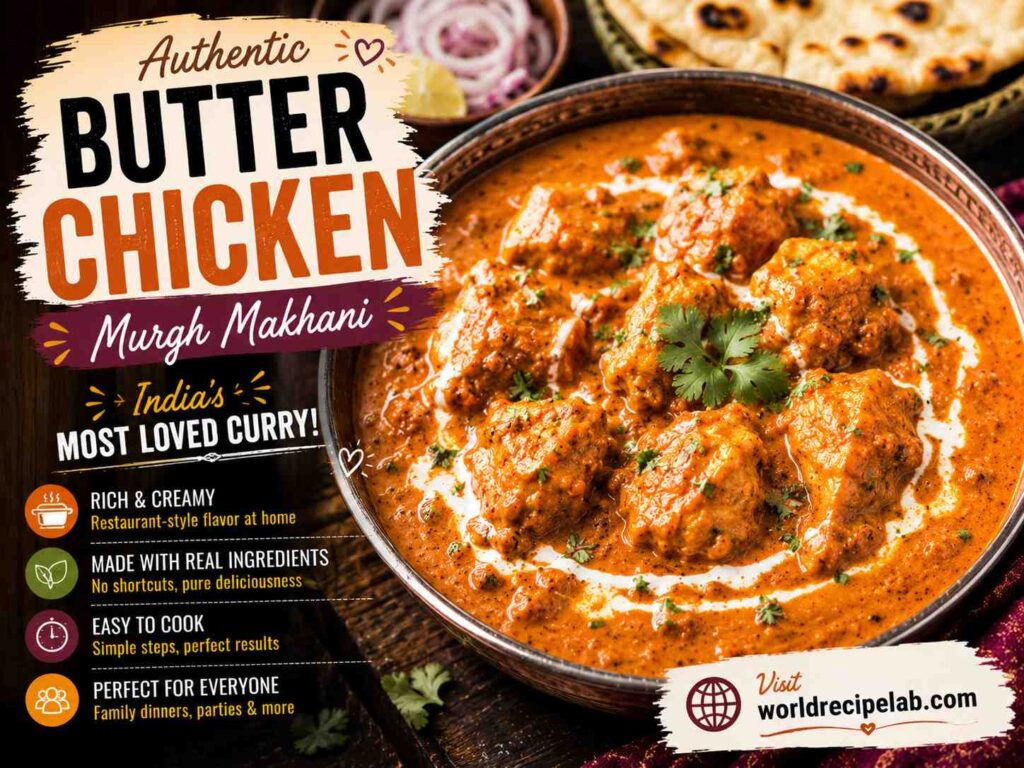
Butter chicken, or Murgh Makhani, is a North Indian chicken curry known for its tender pieces of spiced chicken in a smooth tomato, butter and cream sauce.
The best version isn't simply a curry with lots of butter. The character comes from the contrast between charred marinated chicken and a silky, mildly spiced makhani-style gravy. The tomato base needs enough cooking to lose its raw acidity, while butter, cream and kasuri methi round out the finished sauce.
This recipe uses 1 kg chicken, a yogurt-based marinade, roasted or grilled chicken, and a blended tomato-onion gravy. It serves 4 and works particularly well with naan, roti or basmati rice.
A few details have a bigger effect than adding more spices.
Yogurt, lemon, ginger, garlic and chili season the chicken and help develop its flavor before cooking.
Butter chicken is traditionally associated with tandoori-style chicken, so some browning or light charring adds a roasted flavor that simply simmering raw chicken in the gravy cannot provide.
The tomato mixture should lose its raw taste and become concentrated before it is blended. This is one of the most important steps for a balanced sauce.
A smooth gravy makes butter chicken feel very different from an everyday tomato-based chicken curry. Blending and, if desired, straining the sauce removes larger pieces of onion, tomato and spices.
Cream and butter are added near the end. Keep the heat low rather than boiling the sauce aggressively after adding the dairy.
 |
| Authentic butter chicken served with naan and garnished with cream and coriander |
Combine the yogurt, lemon juice, ginger-garlic paste, red chili powder and salt in a large bowl.
Add the chicken and coat every piece thoroughly.
Cover and refrigerate for 4–8 hours. Overnight marination is also possible if you prefer to prepare the chicken ahead.
If using bone-in chicken, make a few shallow cuts through the thicker pieces so the marinade can reach further into the meat.
Remove excess marinade from the chicken and cook it using one of the methods below.
Oven: Preheat to 200°C / 392°F and cook for approximately 15–20 minutes, checking the thickest pieces for doneness.
Grill: Cook until the chicken develops browned or lightly charred areas and is cooked through.
Tawa or frying pan: Cook the chicken in a lightly greased pan until browned and cooked through.
The goal is not necessarily to completely blacken the chicken. A few browned or lightly charred areas are enough to give the finished curry a roasted character.
For food safety, check the thickest piece rather than relying only on cooking time.
Melt 3 tablespoons butter in a deep pan over medium heat.
Add the chopped onions and cook until soft and lightly golden.
Add the ginger-garlic paste and cook until the raw aroma disappears.
Pour in the tomato puree.
Add the cumin powder, turmeric, salt and ½ teaspoon sugar.
Cook over low to medium-low heat for 10–15 minutes, stirring regularly.
The mixture should become thicker and more concentrated. If it still tastes strongly raw or sharply acidic, give it more time rather than immediately adding extra cream or sugar.
Turn off the heat and allow the mixture to cool slightly.
Blend until smooth using a blender or immersion blender.
For an especially silky restaurant-style texture, pass the sauce through a fine sieve.
Return the smooth gravy to the pan.
Place the pan over low heat.
Add the heavy cream and stir gently.
Add the cooked chicken pieces and simmer for approximately 10–15 minutes, allowing the chicken to absorb the sauce.
Avoid vigorous boiling. A gentle simmer helps keep the finished gravy smooth.
Add:
Taste the sauce.
If the tomatoes still have noticeable acidity, add a very small amount of sugar and taste again rather than adding a large quantity at once.
Cook gently for another 2–3 minutes, then turn off the heat.
Butter chicken should taste creamy, savory, mildly spiced and slightly sweet from the balance of tomato and dairy, rather than sugary.
If your sauce tastes:
Too acidic: cook the tomato base longer first. If necessary, add a small amount of sugar.
Too rich: add a little of the prepared tomato gravy or a small splash of water and adjust the seasoning.
Too spicy: add a little more cream or butter.
Too bland: check salt first, then adjust garam masala and kasuri methi gradually.
Too thick: loosen it with a small amount of warm water.
Yes. Boneless chicken is convenient and cooks relatively quickly. Chicken thighs are particularly forgiving because they remain moist more easily than very lean cuts.
Bone-in chicken gives the dish a different texture and can contribute additional flavor to the overall preparation.
Plain Greek-style yogurt can work well.
If using a thinner yogurt, drain some of the excess liquid first so the marinade does not become unnecessarily watery.
Yes. Canned tomato puree is a practical option when fresh tomatoes are not suitable or available.
Because tomato acidity varies significantly between brands and varieties, taste the cooked sauce before deciding whether it needs additional sugar.
Kasuri methi is one of the ingredients that gives butter chicken its recognizable aroma.
If you don't have it, you can leave it out rather than replacing it with a large amount of another herb. The finished curry will still work, but it will lack that characteristic dried-fenugreek note.
Yes, although the sauce will be less rich and creamy.
A cashew-based sauce can provide body, but it changes the flavor and texture. If you want the classic character of this recipe, dairy cream is the more direct choice.
There are usually three reasons.
The onions and tomatoes were not cooked enough. Raw vegetables are harder to turn into a naturally smooth base.
The mixture wasn't blended thoroughly. Use an immersion blender or regular blender until the sauce is completely smooth.
The sauce wasn't strained. Straining is optional, but it removes small tomato, onion and spice particles and gives the gravy a noticeably silkier texture.
You don't need to burn the chicken to create a roasted appearance.
Cook it over sufficiently high heat to develop browned spots, then stop once it is cooked through.
If you're using an oven or grill, placing the chicken under higher heat briefly at the end can increase browning, but watch it closely because the yogurt marinade can darken quickly.
Butter chicken is naturally suited to breads that can hold the creamy sauce.
Serve it with:
A simple side of sliced onions or cucumber can provide freshness alongside the rich curry.
If you're building a larger Indian meal, Authentic Tandoori Chicken fits naturally with the same North Indian flavor profile.
For another creamy chicken preparation with a different spice profile, try Chicken Korma.
Allow leftover butter chicken to cool appropriately before transferring it to an airtight container.
Refrigerate and use within 2–3 days.
To reheat, place it in a saucepan over low to medium-low heat. Add a small splash of water if the gravy has thickened considerably.
Heat until the chicken and sauce are thoroughly hot, stirring gently.
Avoid prolonged high-heat reheating because cream-based sauces can become overly thick or separate, while the chicken can become dry.
The chicken and tomato base can be frozen, but the texture of a cream-based sauce may change after thawing.
For the best texture, freeze the gravy before adding the final cream and finish the dish with fresh cream when reheating.
They are similar in that both can use cooked or roasted chicken in a tomato-based sauce, but they are not the same dish. Butter chicken, or Murgh Makhani, is particularly associated with a buttery, creamy tomato gravy and the use of kasuri methi.
Traditional versions can vary, but butter chicken is generally known for a relatively mild, rich sauce compared with many intensely hot Indian curries. You can adjust the chili powder to suit your preference.
Sugar should be used sparingly. It is primarily there to balance acidic tomatoes, not to make the curry sweet. Start with the listed amount and adjust only after tasting the cooked tomato base.
Yes. Chicken breast works, but it is leaner and can become dry if overcooked. Check it carefully and avoid simmering it in the gravy for longer than necessary once it is already cooked.
High heat can cause dairy-based sauces to separate. Add the cream over low heat and avoid vigorous boiling afterward.
No. Blending is enough for a good home-style butter chicken. Straining is optional if you want an exceptionally smooth, restaurant-style sauce.
Butter chicken is widely associated with Delhi's Moti Mahal restaurant and the culinary tradition that developed around tandoori cooking in the mid-20th century. The dish is commonly described as a way of combining cooked tandoori chicken with a rich tomato-based gravy, butter and cream.
Its exact origin story is more complicated than the often-repeated “leftover chicken” story, and different accounts exist. What is clear is that Murgh Makhani became one of the best-known Indian restaurant dishes internationally, eventually inspiring countless home and restaurant variations.
Prep time: 20 minutes
Marination: 4–8 hours
Cook time: 50 minutes
Total time: about 6 hours 10 minutes including the listed 5-hour resting period
Servings: 4
Course: Main Course
Cuisine: Indian, North Indian, Punjabi
Butter chicken is at its best when the three major elements work together: well-browned chicken, a properly cooked tomato base, and a gentle creamy finish. Take your time with the gravy, add the dairy over low heat, and adjust the final balance gradually. The result is a rich Murgh Makhani that works just as well for a weekend meal as it does for a larger Indian dinner.
Use bone-in chicken for maximum flavor or boneless chicken for convenience.
Full-fat yogurt creates a richer marinade.
Slight charring gives authentic tandoori flavor.
Blend and strain the gravy for a smooth restaurant-style texture.
Use real butter for the best taste.
Do not overboil after adding cream, as the sauce may split.
For extra smokiness, use the charcoal (dhungar) method.
Butter Chicken pairs beautifully with butter naan, roti, or steamed basmati rice.
Leftovers taste even better the next day and can be refrigerated for 2–3 days.