

Andhra mutton curry is the kind of dish where the gravy does most of the talking. Bone-in mutton is cooked with onions, green and dried red chilies, curry leaves, and a freshly roasted coconut-poppy seed masala. The result is a rich, spicy curry with a slightly nutty texture and plenty of depth.
This version uses 500 g bone-in mutton and a freshly ground masala made with coconut, poppy seeds, fennel, cumin, black pepper, cardamom, cloves, and cinnamon. You can cook it in a heavy-bottomed pot or use a pressure cooker when you need a faster route to tender mutton.
It is particularly good with steamed rice, but the thick gravy also works with parotta, dosa, jowar roti, or ragi sangati.
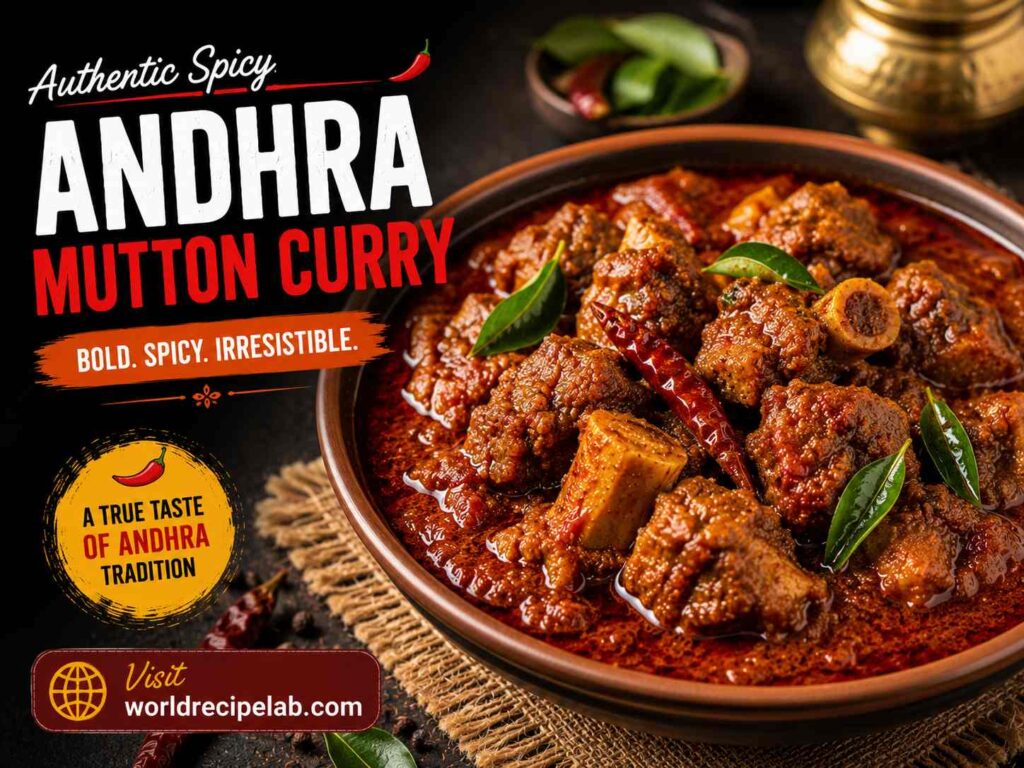
There is no single recipe for Andhra mutton curry. Different households and regions use different combinations of chilies, souring ingredients, spices, coconut, and cooking techniques.
In this version, four ingredients shape the curry:
The masala is roasted gently before grinding. That small step makes a noticeable difference because the whole spices become more aromatic without turning bitter.
The coconut-poppy seed mixture is the part of this recipe that deserves a little extra attention.
Poppy seeds can be difficult to grind smoothly when they are completely dry, so soaking them in warm water for 10–15 minutes can help. They can then be drained and roasted gently with the other ingredients.
Do not roast the coconut aggressively. It only needs to become aromatic. Excessive browning can make the masala taste bitter and can overpower the delicate coconut flavor.
For the smoothest gravy, grind the roasted mixture with enough water to form a thick, smooth paste.
The recipe uses:
The complete quantities and cooking method are in the recipe card below.
Andhra-style food is often associated with chili-forward flavors, but you do not need to make the curry overwhelmingly hot.
For a milder version, reduce the green chilies and dried red chilies. You can also reduce the black pepper slightly.
For more heat, retain the full quantity of chilies and choose a hotter variety of dried red chili.
The important point is to keep the other flavors intact rather than simply adding more chili powder.
This recipe gives you two options for acidity: tamarind pulp or thick curd.
Add either one only when the mutton is already well on its way to becoming tender. The recipe card places this toward the end of cooking.
Adding acidic ingredients too early can make meat take longer to become tender, so there is little advantage in adding them at the beginning.
If using curd, stir it in thoroughly and keep the heat controlled to reduce the chance of curdling.
Both methods work.
A pressure cooker is useful when you want tender mutton without waiting for a long stovetop simmer. Follow the recipe through the addition of the masala and water, then pressure cook until the mutton is tender according to your cooker and the cut of meat.
After releasing pressure naturally, add the tamarind or curd and simmer briefly to bring the gravy together.
The stovetop method gives you more control over the consistency. Keep the curry covered and cook gently until the mutton is tender, stirring occasionally and adding a little water if necessary.
The cooking time can vary because mutton cuts and animal age differ. Tenderness is a better indicator than the clock alone.
Use soaked unsweetened desiccated coconut if fresh coconut is unavailable. The flavor will be slightly different, but it works in the masala.
These are not identical substitutes. Sesame seeds bring a more pronounced sesame flavor, while melon seeds give a milder richness. Use them only when poppy seeds are unavailable.
Curd gives a softer, dairy-based acidity, while tamarind gives a sharper sourness. Choose according to the flavor you prefer.
Both work well here. Sesame oil gives the curry a particularly noticeable South Indian aroma. If using an oil with a strong flavor, make sure it complements the spices.
If you mainly want to reduce heat, simply decrease the green chilies rather than replacing them with another ingredient.
Burning the masala:
Roast the spices and coconut over low heat. Darkly roasted coconut or spices can make the curry bitter.
Leaving the masala coarse:
A coarse grind can give the gravy an uneven texture. Soak the poppy seeds first if needed and grind the mixture thoroughly.
Adding too much water:
Start with the amount specified in the recipe and adjust later. A thin curry can always be reduced, but excessive water can dilute the roasted masala.
Adding acidity too early:
Wait until the mutton is nearly cooked before adding tamarind or curd.
Cooking only by time:
Mutton does not always become tender at exactly the same point. The cut, size of pieces, and meat itself all affect cooking time.
Steamed rice is the simplest pairing because the gravy mixes easily with rice.
For a more substantial meal, try:
A few raw onion slices or a simple fresh salad can also provide a crisp contrast to the rich curry.
Allow leftover curry to cool and refrigerate it in a covered container.
It can be refrigerated for up to 3 days according to the recipe notes. For longer storage, freeze it for up to 1 month.
When reheating, warm it gently and add a small splash of water if the gravy has become too thick. Heat until the curry is thoroughly hot before serving.
The gravy will usually become thicker after refrigeration because the coconut-based masala settles as it cools.
These curries can look similar because both are spicy South Indian mutton dishes, but their flavor profiles do not have to be the same.
This Andhra version is built around chilies, curry leaves, coconut and poppy seeds, while Chettinad preparations commonly put greater emphasis on a larger roasted spice blend, including ingredients such as fennel, black pepper, coriander, and other aromatics.
If you enjoy this style of curry, you may also want to try our Chettinad Mutton Curry.
If you are building a collection of Indian mutton dishes, these are useful next reads:
Andhra mutton curry is a South Indian-style mutton curry with many regional and household variations. This version combines bone-in mutton with chilies, curry leaves, roasted coconut, poppy seeds and aromatic whole spices.
It can be, but the heat is adjustable. Reduce the green and dried red chilies for a milder curry while keeping the roasted masala and other aromatics.
Yes. A pressure cooker can significantly reduce the time needed to tenderize mutton. The recipe card includes the pressure-cooker option along with the stovetop method.
You can, but coconut contributes body and flavor to this particular version. Removing it will produce a noticeably different curry rather than a direct substitute.
Yes. Lamb can be used, but cooking time may differ depending on the cut and size of the pieces. Cook until the meat is properly tender rather than relying only on the stated time.
Yes. The recipe provides thick curd as an alternative to tamarind pulp. The finished curry will have a softer dairy-based acidity rather than tamarind's sharper sourness.
This Andhra mutton curry gets its character from the combination of bone-in mutton, roasted spices, coconut, poppy seeds, chilies and curry leaves. It is rich without needing cream, and the masala gives the gravy enough body to work equally well with rice or Indian flatbreads.
For the best result, give the roasted masala the attention it deserves and cook the mutton until genuinely tender. The rest is about adjusting the heat and gravy to your preference.
Soak poppy seeds in warm water for 10–15 minutes before grinding for a smoother paste.
Do not add tamarind or curd too early, as acidity can slow down the cooking of mutton.
Groundnut or sesame oil gives the most authentic Andhra flavor.
For a milder curry, reduce the quantity of green chilies and dry red chilies.
The curry tastes even better the next day after the flavors have matured.
Store leftovers in the refrigerator for up to 3 days or freeze for up to 1 month.
Serve with steamed rice, ghee rice, parotta, jowar roti, or traditional ragi sangati.