

Bengali Kosha Mangsho is a rich, deeply browned mutton dish known for its thick masala, mustard oil aroma, and slow-cooked texture. Unlike a thin mutton curry, the masala is gradually reduced until it clings closely to the meat.
This version uses bone-in mutton, thick curd, mustard oil, browned onions, ginger, garlic, Kashmiri chili and whole spices. A small amount of hot water is added during slow cooking, keeping the curry concentrated rather than turning it into a thin gravy.
Potatoes are optional, but they are a popular addition and work particularly well with the thick masala.
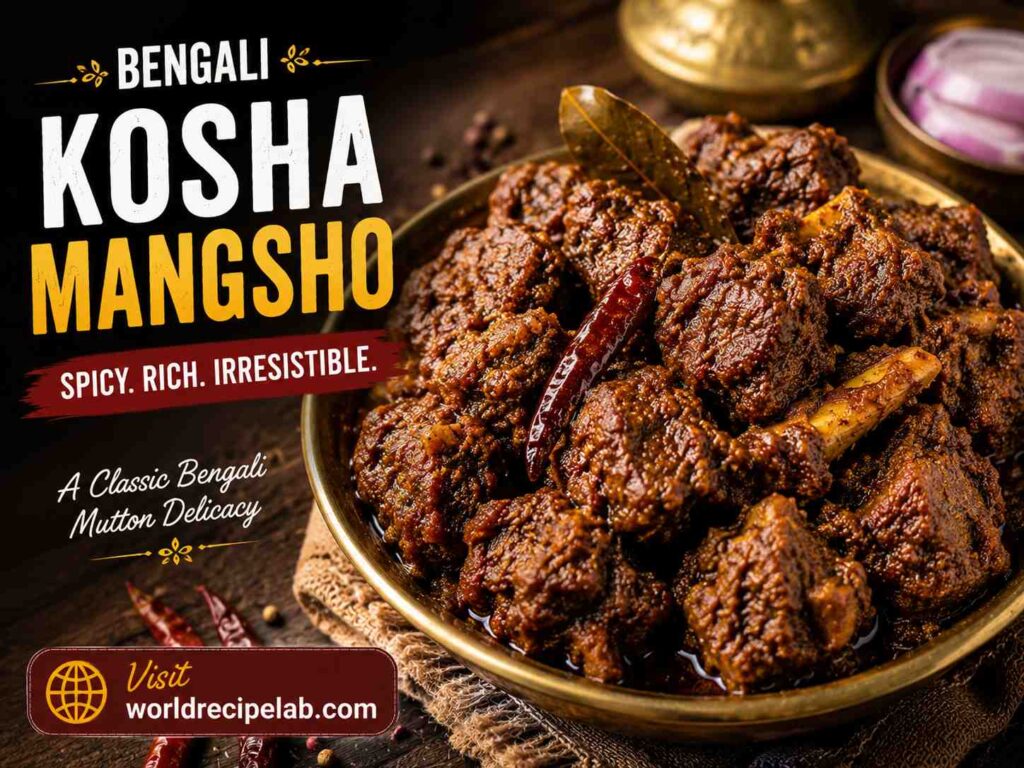
The defining feature of Kosha Mangsho is the bhuno-style cooking.
Instead of adding plenty of water at the beginning, the marinated mutton is cooked with the browned onion mixture while its moisture gradually reduces. The meat and masala are stirred frequently until the mixture becomes darker, thicker and more concentrated.
The finished curry should have:
The dark color should come mainly from properly browned onions and prolonged bhuno cooking rather than simply adding extra chili powder.
Mustard oil is one of the ingredients that gives this Bengali-style mutton curry its distinctive character.
Heat the oil until it reaches its smoking point, then reduce the heat before adding the whole spices. This reduces some of the raw pungency while retaining the characteristic mustard aroma.
If mustard oil is unavailable, you can substitute another cooking fat, but the finished curry will taste different.
Add the 500 g bone-in mutton to a large bowl.
Add:
Mix thoroughly so every piece is coated.
Cover and refrigerate for 3 hours.
If you prefer, the mutton can be marinated longer, but the recipe's stated preparation time is based on a 3-hour marination.
Place a heavy-bottomed kadai or Dutch oven over medium heat.
Add 5 tbsp mustard oil.
Heat until the oil reaches its smoking point, then reduce the heat slightly.
Add:
Let the whole spices become aromatic.
Add the 4 large thinly sliced onions.
Cook over medium heat, stirring regularly, until the onions become deep golden brown.
This stage is important. Pale onions will give you a lighter curry with less developed flavor.
At the same time, be careful not to burn them. Deep brown is useful; blackened onions can make the curry bitter.
Add:
Cook until the raw aroma disappears.
If using the optional 1 tsp sugar, add it during this stage and stir well.
The sugar is not essential, so you can leave it out.
Add the marinated mutton along with all of its marinade.
Increase the heat to medium-high.
Cook for 25–30 minutes, stirring frequently.
Initially, the mixture will look wet because of the yogurt and moisture released by the meat.
Continue cooking until:
This reduction stage is central to the character of Kosha Mangsho.
If the bottom begins catching, reduce the heat and keep stirring rather than allowing the masala to burn.
Pour in ½ cup hot water.
Mix well and scrape any flavorful masala from the bottom of the pan.
Cover tightly.
Cook over low heat for 45–60 minutes, stirring occasionally.
The exact time can vary depending on the cut and tenderness of the mutton.
The goal is tender meat and a thick, concentrated masala.
If the pan becomes dry before the mutton is tender, add a small amount of hot water rather than allowing the masala to burn.
If using potato, take 1 boiled potato, peel it and cut it into suitable pieces.
For better flavor, fry the boiled potato separately until golden.
Add it during the final 10 minutes of cooking.
This gives the potato enough time to absorb the masala without breaking apart.
Add ½ tsp Bengali garam masala.
Cook for another 2–3 minutes.
Check the seasoning and add salt if necessary.
The finished Kosha Mangsho should have a thick masala coating the mutton rather than a large amount of loose gravy.
Turn off the heat and allow the curry to rest briefly before serving.
Don't judge the dish only by its color.
Look for:
If the meat is tender but the curry is too loose, remove the lid and simmer gently until the excess moisture reduces.
If the masala is becoming dry while the meat is still tough, add a little hot water and continue cooking.
Mustard oil gives the most characteristic flavor.
If unavailable, use ghee or another cooking oil. The result will still work, but it will no longer have the same mustard-oil profile.
Hung curd, Greek yogurt or another thick plain yogurt can replace the curd.
Avoid very watery yogurt because it adds unnecessary moisture.
A combination of paprika and regular red chili powder can be used.
Adjust the amount according to the heat of your chili powder.
If Bengali garam masala is unavailable, use regular garam masala in a smaller quantity so it does not overpower the dish.
Too much water or insufficient reduction is usually the cause.
Remove the lid and cook gently until the excess moisture evaporates.
Continue cooking over low heat.
Mutton can vary considerably in tenderness, so the stated cooking time is a guide rather than an absolute guarantee.
If the pan is drying out, add a little hot water and continue cooking.
Unfortunately, badly burned onions can make the entire masala bitter.
For the next batch, reduce the heat and stir more frequently. The goal is deep golden brown, not black.
Don't simply add more chili powder.
The deeper color comes primarily from properly browned onions and prolonged bhuno cooking.
Make sure the oil was heated sufficiently before cooking. This helps reduce its raw pungency.
You can also use less mustard oil and combine it with another cooking fat, although the flavor will change.
Yes.
Potatoes are optional in this recipe but pair extremely well with the thick masala.
Boil and peel the potato, fry it until golden, and add it during the final 10 minutes of cooking.
The potato absorbs the concentrated masala and becomes almost as desirable as the meat.
Yes, but the cooking technique is different.
The important part is to bhuno the onions and mutton before pressure cooking. Simply putting everything into a pressure cooker at once will produce tender meat, but it will not develop the same reduced masala.
For this recipe, the slow stovetop method gives you better control over the characteristic thick texture.
Crisp, airy luchi is one of the most enjoyable ways to scoop up the thick masala.
Simple steamed rice keeps the meal balanced and lets the mutton remain the focus.
The fragrant, mildly sweet rice provides a pleasant contrast to the spicy, savory curry.
If available, serve a small wedge of Gondhoraj lemon alongside the curry. Its distinctive aroma works particularly well with rich Bengali dishes.
Regular lemon can be used if Gondhoraj lemon isn't available.
Store leftover Kosha Mangsho in an airtight container in the refrigerator for up to 4 days.
For longer storage, freeze in a suitable airtight freezer container.
When reheating, warm the curry gently. If the masala has become very thick, add a small splash of hot water or ghee.
Make sure leftovers are heated thoroughly before serving.
Kosha Mangsho is noticeably different from a typical Indian mutton curry.
A conventional mutton curry may have a generous amount of gravy designed to be mixed with rice.
Kosha Mangsho is more concentrated. The meat is cooked with the masala until the liquid reduces and the sauce clings to each piece.
It also has a different flavor profile from South Indian preparations such as our Andhra Mutton Curry and Chettinad Mutton Curry.
For another Indian mutton preparation with a richer, creamier profile, see our Mutton Korma.
Bengali Kosha Mangsho is a thick, slow-cooked Bengali mutton preparation in which meat is cooked with browned onions, mustard oil, ginger, garlic and spices until the masala becomes concentrated and coats the meat.
It is best described as a thick, reduced curry rather than completely dry. The finished dish should have enough masala to coat the mutton without having a large amount of thin gravy.
Mustard oil is strongly associated with this style of Bengali cooking and gives the dish its characteristic aroma. You can substitute another fat, but the flavor will change.
Yes. Lamb can be substituted, although cooking time may vary depending on the cut.
Cook until the meat is tender rather than relying only on the stated time.
Potatoes absorb the concentrated masala and are a popular optional addition to Bengali-style mutton preparations.
Yes. Reduce the Kashmiri chili powder or replace part of it with paprika. The exact heat will depend on the chili powder you use.
Yes. It can be prepared ahead and refrigerated. The flavors often become more integrated after resting, making it convenient for a planned meal.
| Detail | Time |
|---|---|
| Prep Time | 20 minutes |
| Marination | 3 hours |
| Cook Time | 1 hour 40 minutes |
| Total Time | 5 hours |
| Servings | 4 |
The long total time includes the marination period. Most of the cooking itself is slow, controlled cooking rather than constant hands-on work.
If you enjoy regional Indian mutton dishes, try:
Kosha Mangsho rewards patience more than complexity. The essential work happens while the onions brown, the mutton bhunoes, and the moisture slowly reduces into a thick masala.
Use bone-in mutton, give the onions enough time to develop color, keep the heat controlled, and don't flood the pan with water.
Serve the finished curry with luchi, rice or Basanti pulao, and let that concentrated Bengali-style masala take center stage.
• Bone-in mutton gives the richest flavor and texture.
• Mustard oil should be heated until smoking to remove its raw pungency.
• Traditional slow cooking develops deeper flavors than pressure cooking.
• Fried potatoes are a classic Bengali addition and absorb the spicy masala beautifully.
• Kosha Mangsho tastes even better after resting for a few hours or the next day.
• Serve with luchi, steamed rice, Basanti pulao, or gondhoraj lemon.
• Store leftovers in an airtight container in the refrigerator for up to 4 days.
• Freeze for up to 1 week and reheat gently with a splash of hot water or ghee.