
Cajun Blackened Salmon is known for its dark, boldly seasoned crust and tender centre. Paprika, garlic, onion, thyme, oregano, and cayenne pepper give the fish a warm, smoky-spicy flavour, while a hot skillet creates the characteristic blackened exterior.
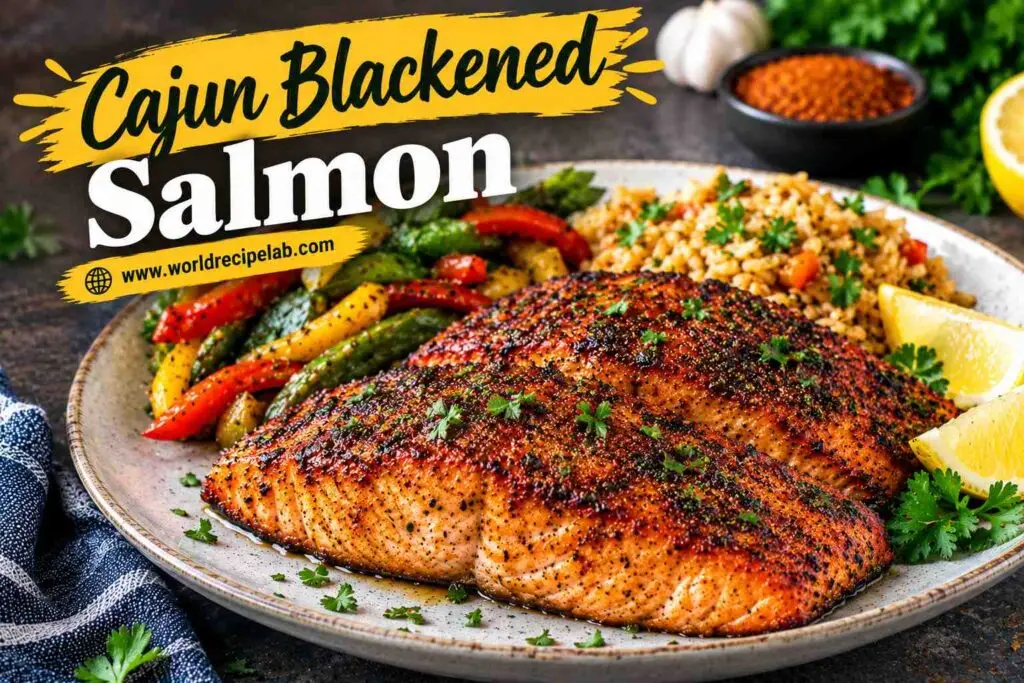
Inspired by the Cajun cooking traditions of Louisiana, this salmon recipe is a good choice when you want a flavour-packed dinner without a complicated sauce. The seasoning does most of the work, and the salmon pairs easily with rice, potatoes, vegetables, or a crisp salad.
The secret is controlling the heat. Blackening should create a deeply browned spice crust, not a layer of burnt seasoning. With the right pan temperature and a little attention, you can get that bold finish while keeping the salmon moist.
Cajun seasoning typically combines paprika, black pepper, cayenne, garlic, onion, and dried herbs. The exact mixture varies, so the flavour can range from gently peppery to distinctly hot.
Blackening is a cooking technique in which seasoned food is cooked over high heat, traditionally in a very hot skillet. The spices darken and develop an intense roasted flavour. The dark crust is not meant to come from burning the fish itself.
Salmon is particularly suitable for this technique because its rich flesh stands up well to assertive seasoning. Its natural flavour balances the heat of cayenne and the earthy notes of paprika and herbs.
A balanced homemade blend gives you control over the spice level.
Store-bought Cajun seasoning is also convenient. Check the ingredient label before adding extra salt because some commercial blends are already heavily seasoned.
The heat depends largely on the amount of cayenne pepper and the seasoning blend you choose. A moderate amount creates a noticeable warmth without overwhelming the salmon. For a milder version, reduce the cayenne and use paprika as the dominant spice. For a hotter crust, increase the cayenne gradually rather than adding a large amount at once.
Blackened salmon is not necessarily extremely spicy. Paprika, herbs, garlic, and onion contribute plenty of flavour beyond the heat.
Both fresh and frozen salmon can work well. Frozen fillets should ideally be thawed in the refrigerator before cooking, then patted thoroughly dry.
Surface moisture can interfere with browning and make the seasoning paste-like rather than forming an even crust. Removing excess moisture is particularly useful when pan-searing.
Choose fillets of similar thickness so they cook at approximately the same rate. Skin-on salmon is suitable, but the seasoning crust will develop mainly on the flesh side.
Dry the salmon first. Use paper towels to remove moisture from the surface before applying the seasoning.
Choose an oil that tolerates high heat. Avocado oil, refined canola oil, or another suitable high-smoke-point oil is a practical choice. Butter can burn quickly in a very hot pan, so add it near the end if you want its flavour.
Preheat the skillet carefully. The pan needs to be hot enough to brown the seasoning, but excessively high heat can scorch paprika and dried herbs before the salmon cooks through.
Avoid overcrowding. Too many fillets in one pan lower the temperature and interfere with even browning. Cook in batches if necessary.
Use a thermometer. A dark crust does not confirm that the centre is cooked. The US Food and Drug Administration recommends cooking fish to an internal temperature of 145°F (63°C), measured at the thickest part.
Ventilate the kitchen. Blackening can produce smoke, particularly in a very hot skillet. Use an extractor fan or open a window where practical.
The bold seasoning works best with sides that provide contrast or absorb the juices without competing with the spices.
For another salmon meal idea, try the World Recipe Lab Salmon Rice Bowl Recipe. For broader guidance on choosing and cooking different types of salmon, visit our Salmon Guide.
Salmon provides protein and naturally occurring omega-3 fatty acids. The overall nutritional profile depends on the fillet size, cooking oil, seasoning quantities, and any sides or sauces served with it.
For a simpler preparation, use enough oil to coat the fish and pan without adding excess. Homemade seasoning also lets you control the sodium level. Avoid describing the finished dish as low-calorie or low-sodium without checking the actual ingredients and serving size.
Place leftover salmon in a covered container and refrigerate within two hours of cooking. Use refrigerated leftovers within three to four days.
Reheat gently in an oven or skillet until hot throughout. The crust may soften during storage, and prolonged heating can dry the fish. Alternatively, flake the chilled salmon over rice, vegetables, or salad for another meal.
For food safety, discard cooked salmon left at room temperature for more than two hours, or more than one hour when the temperature is above 90°F (32°C).
Salmon fillets coated in a bold Cajun spice blend and pan-seared to create a dark, flavourful crust with a moist centre.