

Chicken Galouti Kebab is a soft, delicately spiced kebab inspired by the famous Galouti kebabs of Lucknow, India. Traditionally associated with Awadhi cuisine, Galouti kebabs are known for their exceptionally tender texture and finely ground meat.
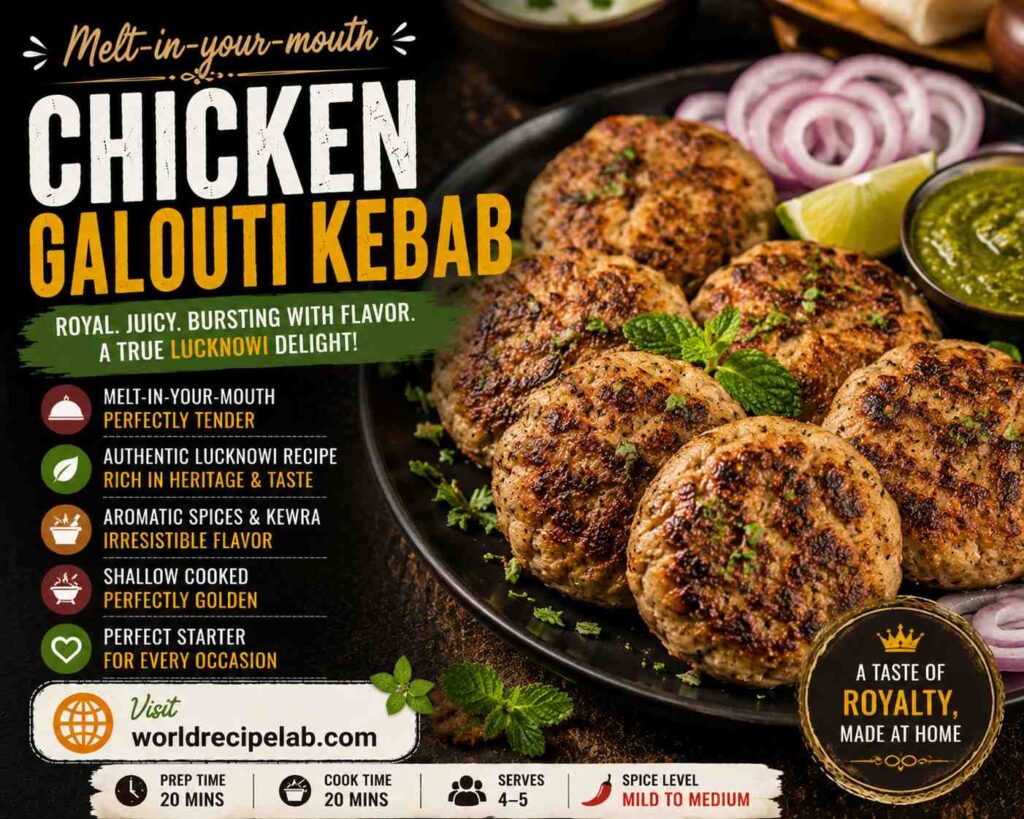
This chicken version uses finely minced chicken, fried onion, aromatic spices, hung curd, roasted gram flour, and a small amount of raw papaya paste to create a soft mixture that cooks quickly in a pan.
The result is a tender, lightly browned kebab with warm spices and a subtle smoky aroma if you choose to use the dhungar method.
Chicken Galouti Kebab is a chicken-based variation of the classic Galouti or Galawati kebab associated with Lucknow's Awadhi culinary tradition.
The word Galouti is commonly associated with the idea of something that melts or is exceptionally tender. The defining feature is not simply the spice blend but the texture: the meat is finely minced and prepared so the finished kebab is soft rather than firm or chewy.
Traditional Galouti kebabs are generally made with finely minced meat. Chicken is a practical alternative for home cooks because it cooks faster and produces a lighter kebab.
The texture is the most important part of this recipe.
A few techniques make a noticeable difference:
The finished kebabs should be lightly browned outside while remaining tender inside.
Place the finely minced chicken in a mixing bowl.
Add the ginger-garlic paste, red chili powder, garam masala, black pepper, salt, roasted cumin powder, chaat masala, coriander powder, cinnamon powder, kewra or rose water, fried onion paste, curd, roasted gram flour, and raw papaya paste.
Mix thoroughly until the spices and other ingredients are evenly distributed.
Do not add excessive flour or other binders. The mixture should remain soft.
Cover the bowl and refrigerate for at least 30 minutes.
If preparing ahead, the mixture can be refrigerated longer, but keep it properly chilled and use fresh minced chicken within a safe refrigerated storage period.
Chilling also makes the soft mixture easier to shape.
Divide the chilled mixture into small portions.
With lightly greased hands, shape each portion into a small, flattened patty.
Keep the kebabs relatively small and not too thick. This helps them cook evenly without requiring prolonged cooking.
If the mixture feels too soft to handle, chill it again before shaping rather than adding a large amount of flour.
Heat a little ghee or oil in a non-stick pan or tawa over medium heat.
Place the kebabs carefully in the pan, leaving enough space between them.
Cook for about 3–4 minutes on the first side, then gently turn them.
Cook the other side for another 3–4 minutes, or until the kebabs are lightly browned and the chicken is fully cooked.
Because chicken is poultry, the center should reach 74°C / 165°F for food safety.
Avoid repeatedly turning the kebabs. They are soft and can break while cooking.
Serve the kebabs hot with:
For a simple appetizer, serve them with chutney and onion rings.
There are several factors behind the characteristic texture.
Fine mince creates a smoother mixture than coarse minced chicken. It also makes the cooked kebab easier to bite.
Raw papaya contains papain, an enzyme that can help break down proteins. That is why it is traditionally used as a meat tenderizer in some Indian preparations.
Use the amount called for in the recipe rather than adding a large quantity.
Chicken thigh generally contains more fat than chicken breast, which can help produce a juicier kebab.
Curd also contributes moisture to the mixture.
Overcooking is one of the easiest ways to turn a soft kebab dry.
Cook until the chicken is safely done, then remove the kebabs from the heat.
Yes.
Chicken breast can be used, but it is leaner and can become dry more quickly.
For softer and juicier kebabs, finely minced chicken thigh is generally the better choice.
If using breast mince, pay particular attention to cooking time and avoid leaving the kebabs in the pan longer than necessary after they are cooked through.
Yes.
Raw papaya is helpful for tenderizing the meat, but it is not the only option.
You can omit it and still make the kebabs. The texture may be slightly different, so using finely minced chicken and avoiding overcooking become even more important.
Some cooks use commercial meat tenderizer or small amounts of enzyme-rich fruit such as kiwi. If using an alternative tenderizer, use it carefully because excessive tenderizing can make the mixture unpleasantly soft.
Yes.
Kewra water gives the kebabs a distinctive floral aroma commonly associated with some North Indian and Awadhi-style preparations.
Rose water can be used in its place, but use only a small amount. Too much can make the kebabs taste strongly floral.
You can also leave both out if you prefer a more straightforward savory flavor.
Galouti mixture is intentionally soft, so gentle handling is important.
Follow these tips:
If the mixture is extremely loose, refrigerate it longer before shaping.
You can cook these kebabs in an air fryer instead of shallow-frying them.
Preheat the air fryer to 180°C (356°F).
Lightly brush the shaped kebabs with oil or ghee and place them in the basket without overcrowding.
Air fry for approximately 6–8 minutes, then carefully turn them and cook for another 4–5 minutes, or until browned and fully cooked.
Cooking time can vary between air fryers and according to kebab thickness, so check the center rather than relying only on the clock.
The air-fried version will generally have a different surface texture from pan-fried kebabs.
For a subtle smoky aroma, you can use the traditional dhungar technique.
After preparing the chicken mixture:
Use heatproof equipment and handle hot charcoal carefully.
The goal is a light smoky aroma, not a heavily charred flavor.
The traditional Galouti style is strongly associated with minced meat, particularly mutton.
Chicken provides a different result.
| Feature | Chicken Galouti | Mutton Galouti |
|---|---|---|
| Main meat | Chicken | Mutton |
| Flavor | Mild and spice-forward | Richer and deeper |
| Texture | Soft and delicate | Rich and tender |
| Cooking time | Generally shorter | Generally longer |
| Fat content | Usually lower | Usually higher |
Chicken Galouti is a practical home version when you want the characteristic soft kebab style without using mutton.
The classic way to serve these kebabs is simple.
A fresh mint-coriander chutney adds acidity and freshness to the rich, spiced kebab.
Thinly sliced onions and lemon wedges provide a crisp, acidic contrast.
Place a kebab inside soft roomali roti with chutney and onions for a simple meal.
Serve several kebabs with chutneys, salad, lemon wedges, and flatbread for an easy appetizer platter.
Mint-coriander chutney is one of the best pairings because its fresh, herbaceous flavor balances the warm spices in the kebab.
You can also serve the kebabs with tamarind-date chutney if you prefer a sweeter and tangier accompaniment.
For a simple platter, offer both.
Allow cooked kebabs to cool promptly and store them in an airtight container in the refrigerator.
Use within 3 days.
For the best texture, freeze shaped uncooked kebabs before cooking, provided the minced chicken has been handled and stored safely.
Place them in a freezer-safe container or bag with parchment between layers.
Use within about 2 months for best quality.
Reheat cooked kebabs gently in a pan or air fryer until heated through.
Avoid prolonged high heat because it can dry out the chicken.
Yes.
You can prepare the chicken mixture in advance and keep it refrigerated until you are ready to shape and cook the kebabs.
You can also shape the kebabs ahead of time and keep them chilled until cooking.
For longer storage, freezing the shaped uncooked kebabs is a practical option.
The ingredients in this version are naturally gluten-free when you use besan (chickpea flour) and verify that packaged spices and other ingredients are free from cross-contamination.
Besan is made from chickpeas rather than wheat.
If you are cooking for someone with celiac disease or a severe gluten allergy, check the labels of packaged ingredients carefully.
Yes.
The curd can be omitted, although it contributes moisture and a little acidity to the mixture.
If replacing it, avoid adding a large amount of liquid because a wet kebab mixture can become difficult to shape.
Large pieces of chicken make the texture less smooth.
Too much binder can make the kebabs dense and dry.
Raw papaya and other enzymatic tenderizers should be used in moderation.
Thick kebabs take longer to cook and can become dry on the outside before the center is done.
Let the first side set before turning the kebab.
Chicken must be fully cooked, but cooking far beyond that point can make the kebabs dry.
Galouti kebabs are closely associated with Lucknow and the Awadhi culinary tradition.
A popular story says that the kebab was developed for a Nawab of Lucknow who had difficulty chewing and wanted an exceptionally tender meat preparation. The story is widely repeated, but the exact historical details are difficult to verify.
The name Galouti is commonly linked with the idea of tenderness or something that melts in the mouth.
Over time, Galouti-style kebabs became an important part of Lucknow's culinary identity, and versions made with different meats are now enjoyed well beyond the city.
This chicken version is a home-friendly interpretation rather than a claim to reproduce a specific royal kitchen recipe.
Although both are popular Indian kebabs, their textures and preparation styles are different.
| Feature | Galouti Kebab | Seekh Kebab |
|---|---|---|
| Texture | Very soft | Firmer |
| Shape | Usually flat patties | Long and cylindrical |
| Cooking | Often pan-fried | Commonly grilled or cooked on skewers |
| Meat | Finely minced | Minced |
| Main focus | Soft, delicate texture | Charred, grilled texture |
If you prefer a soft, delicate kebab, Galouti is the better choice. If you want smoky grilled edges and a firmer bite, seekh kebab is a different style worth trying.
For a complete meal, serve Chicken Galouti Kebab with:
For a larger Indian-style meal, these kebabs can also be served as an appetizer before Chicken Biryani.
If you enjoy other chicken dishes with bold spices, try Chicken Chettinad or the creamy Chicken Korma.
For another popular kebab-style dish, explore Chicken Tikka.
Galouti is commonly associated with the idea of something being exceptionally tender or melting in the mouth. Galouti kebabs are particularly known for their soft texture.
Yes. Chicken breast can be used, but chicken thigh usually produces a juicier kebab because it contains more fat.
Yes. You can omit raw papaya, although it helps tenderize the meat. Finely minced chicken and careful cooking are especially important when it is omitted.
The mixture may be too soft, too wet, or not chilled enough. Chill the mixture before shaping, use a small amount of binder, and turn the kebabs gently after the first side has set.
Yes. Air fry at approximately 180°C (356°F), turning once during cooking. Check that the chicken reaches 74°C / 165°F in the center.
Cooked kebabs can be refrigerated for up to 3 days when stored properly. Shaped uncooked kebabs can be frozen for longer storage.
Finely minced chicken thigh is generally the best choice for a tender and juicy texture.
It can be moderately spicy, but the heat is easy to adjust by changing the amount of red chili powder. The aromatic spices should remain balanced rather than overpowering the chicken.
Chicken Galouti Kebab is all about texture.
The key is finely minced chicken, balanced seasoning, a little tenderizing ingredient, careful shaping, and gentle cooking. You do not need a tandoor or complicated equipment to make a soft kebab at home.
Serve the kebabs hot with mint-coriander chutney, onions, lemon, and roomali roti for a simple Lucknow-inspired meal.
If you enjoy exploring Indian chicken dishes, continue with Chicken Tikka, Chicken Chettinad, or Chicken Korma.
Ingredient Alternatives
Raw papaya paste can be replaced with kiwi pulp, pineapple juice, or meat tenderizer powder.
For gluten-free kebabs, replace roasted besan with almond flour, arrowroot powder, or rice flour.
Chicken thigh mince gives the juiciest texture.
Air Fryer Method
Preheat air fryer to 180°C (356°F).
Brush kebabs lightly with oil or ghee.
Air fry for 6–8 minutes.
Flip and cook for another 4–5 minutes until golden.
Dhungar (Smoke) Method
For restaurant-style smoky flavor, place a hot charcoal piece in a small steel bowl inside the marinated mixture, pour ½ teaspoon ghee over it, cover immediately, and allow the smoke to infuse for 3–5 minutes.
Storage
Refrigerate cooked kebabs for up to 3 days.
Freeze uncooked kebabs for up to 2 months.
Serving Suggestions
Serve with:
Mint-coriander chutney
Tamarind-date chutney
Onion rings
Lemon wedges
Roomali roti, naan, or buttered buns