

Chicken Jalfrezi is a flavorful Indian-style chicken curry made with tender chicken, onions, bell peppers, tomatoes, green chilies, and aromatic spices. Unlike rich, creamy curries, Jalfrezi has a lighter, semi-dry texture with plenty of vegetables and a noticeable tang from tomatoes and lemon.

This version is designed for a hot pan and quick cooking, so the chicken stays tender while the peppers retain some of their bite. Serve it with naan, roti, paratha, or jeera rice for an easy dinner.
Chicken Jalfrezi is a popular South Asian curry known for its stir-fried cooking style. Chicken is cooked with onions, bell peppers, tomatoes, chilies, and ground spices rather than being simmered in a large amount of gravy.
The result is a dish that sits somewhere between a stir-fry and a curry: saucy enough to coat the chicken, but not so wet that the vegetables become soft and heavy.
The name is commonly associated with the Bengali term jhal, meaning spicy or hot, and the dish became particularly popular in British-Indian cuisine.
A good Jalfrezi depends more on cooking technique than on a long ingredient list.
Cooking the chicken and vegetables over medium-high to high heat helps develop browned edges without turning the peppers soft.
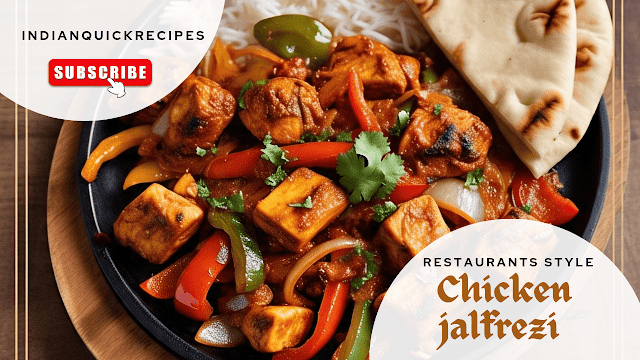 |
| Colorful Chicken Jalfrezi served with bell peppers and onions in a thick masala |
Onion, bell pepper, tomato, ginger, and green chili give the curry its characteristic fresh texture and flavor.
The tomato mixture should coat the chicken rather than leave it swimming in gravy.
Cumin, coriander, chili, and garam masala provide the main spice profile. Garam masala is added near the end so its aroma remains noticeable.
Add the chicken strips to a bowl with lemon juice, ginger-garlic paste, turmeric, red chili powder, and salt.
Mix thoroughly so the chicken is evenly coated.
Cover and let it rest for 20–30 minutes in the refrigerator.
This short marinade seasons the chicken and adds a little acidity before cooking.
Heat 1 tablespoon of the oil in a wok or heavy-bottomed kadai over high heat.
Add the marinated chicken in a single layer as much as possible.
Cook for 5–7 minutes, turning occasionally, until the chicken is lightly browned and cooked through.
Transfer the chicken to a plate and set aside.
Avoid overcrowding the pan. If the pan is too full, the chicken can release moisture and start steaming instead of browning.
Add the remaining oil to the same pan.
Add the cumin seeds and let them sizzle briefly.
Add the sliced onion and cook for 2–3 minutes, stirring frequently, until it begins to soften while retaining some texture.
Add the ginger juliennes and slit green chilies.
Next, add the tomato paste, coriander powder, cumin powder, paprika or Kashmiri chili powder, and salt.
Cook for about 5 minutes, stirring regularly, until the tomato mixture thickens and the oil begins to separate slightly.
If the masala becomes too dry, add a small amount of the ¼ cup water as needed.
Add the sliced bell pepper and diced tomato.
Stir-fry over high heat for 2–3 minutes.
The vegetables should soften slightly but still have some bite. Avoid cooking them until completely soft.
This is one of the characteristics that separates Jalfrezi from a heavily simmered curry.
Add the cooked chicken back to the pan.
Toss the chicken, vegetables, and masala together.
Cook for another 3–4 minutes, allowing the chicken to absorb the sauce.
Sprinkle in the garam masala and mix well.
Taste and adjust the salt if necessary.
Turn off the heat and finish with fresh coriander.
Serve the Chicken Jalfrezi hot with:
A squeeze of fresh lemon can also be added at the table if you prefer a sharper flavor.
Bell peppers are an important part of Chicken Jalfrezi, so avoid cooking them for too long.
For better texture:
They should be tender enough to eat but still have a little bite.
Both work well in this recipe.
Chicken thighs are more forgiving and tend to stay juicy during high-heat cooking.
Chicken breast cooks faster but can become dry if left in the pan too long.
If using breast meat, cut it into evenly sized strips and remove it from the pan as soon as it is cooked.
Yes.
The heat mainly comes from the green chilies and chili powder.
For a milder Jalfrezi:
For a hotter version, keep the chili seeds and increase the fresh chili gradually.
Yes.
Tomato paste gives the masala a concentrated tomato flavor and thicker texture, but you can use fresh tomatoes instead.
If replacing the tomato paste, use additional fresh tomato and cook it until the excess moisture has reduced and the masala becomes thick.
The finished curry should remain relatively dry rather than watery.
Chicken Jalfrezi works particularly well with simple breads and rice.
Serve it with jeera rice or plain basmati rice. The rice balances the bold, spicy masala.
Naan is ideal for scooping up the thick tomato masala.
For a lighter everyday meal, serve it with tandoori roti or another flatbread.
A flaky paratha makes the dish more filling and works especially well with the semi-dry curry.
For another flavorful Indian chicken dinner, try our Kadai Chicken recipe.
Allow leftover Chicken Jalfrezi to cool and transfer it to an airtight container.
Store in the refrigerator for up to 3 days.
For longer storage, freeze in a suitable airtight container for up to 2 months.
Thaw frozen Jalfrezi in the refrigerator before reheating when possible.
Reheat gently in a pan over low to medium heat. Add a small splash of water if the masala has become too thick.
Heat until the chicken is thoroughly hot.
Yes. The same general cooking style can be adapted to other proteins and vegetables.
You can make:
For a vegetarian version, replace the chicken with paneer or firm tofu and adjust the cooking time according to the ingredient.
Although both dishes are popular in British-Indian cuisine, they have different textures and cooking styles.
Chicken Jalfrezi is generally more vegetable-forward, stir-fried, and semi-dry.
Chicken Tikka Masala is usually more sauce-based, with cooked chicken pieces simmered in a spiced tomato gravy.
Jalfrezi also relies heavily on the texture of onions and bell peppers, while tikka masala is typically smoother and richer.
The two curries are also quite different.
Chicken Jalfrezi is built around stir-fried vegetables, tomatoes, chilies, and spices.
Vindaloo is strongly associated with Goan cuisine and is characterized by a pronounced combination of vinegar, garlic, and spices.
If you want a chunky, vegetable-filled curry, Jalfrezi is the better choice. If you prefer a sharper, more acidic curry, Vindaloo has a very different flavor profile.
Chicken Jalfrezi can range from moderately spicy to quite hot. The amount of green chili and chili powder can be adjusted to suit your preference.
Chicken Jalfrezi is made with chicken, onions, bell peppers, tomatoes, chilies, ginger, and spices such as cumin, coriander, chili powder, and garam masala.
It is usually a semi-dry curry. The masala should coat the chicken and vegetables without producing a large amount of thin gravy.
Yes. Chicken breast works well, but it should not be overcooked because it can dry out more quickly than chicken thighs.
Cook the peppers over high heat for only 2–3 minutes and avoid covering the pan. They should remain slightly crisp.
Yes. You can prepare it ahead and refrigerate it for up to 3 days. Reheat gently before serving.
Yes. Store it in an airtight freezer-safe container for up to 2 months and reheat thoroughly after thawing.
Chicken Jalfrezi is a great choice when you want a flavorful chicken curry without a heavy, creamy sauce. The combination of browned chicken, crisp-tender bell peppers, onions, tomatoes, chilies, and warm spices gives it plenty of character.
The key is simple: use a hot pan, avoid overcrowding, keep the vegetables slightly crisp, and add the garam masala near the end.
For another classic Indian chicken curry, try our Chicken Do Pyaza. If you prefer a richer curry, our Butter Chicken is another option.
- Chicken thighs remain juicier than chicken breast and are highly recommended.
- Avoid overcooking the bell peppers to maintain their signature crunch.
- For a richer version, add a spoonful of butter or cream at the end.
- For smoky flavor, use the dhungar method with hot charcoal and ghee.
- Store leftovers in an airtight container in the refrigerator for up to 3 days.
- Freeze for up to 2 months.
- Reheat gently with a splash of water.
- For a keto-friendly version, replace tomato paste with fresh tomato puree and serve with cauliflower rice.
- Vegetarian alternatives include paneer, tofu, mushrooms, or jackfruit.
- Serve with jeera rice, tandoori roti, naan, mint chutney, or raita.