Nutrition Facts
Servings 4
- Amount Per Serving
- Calories 475kcal


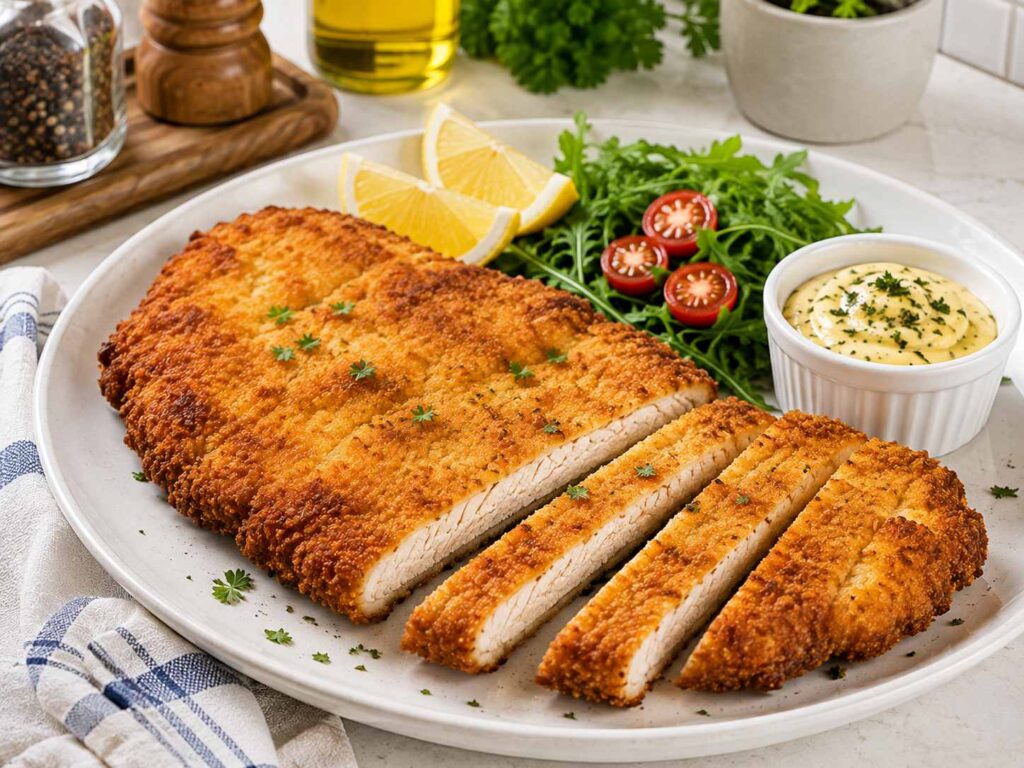
Golden, crispy, and irresistibly juicy, Chicken Schnitzel is one of those timeless dishes that never goes out of style. With its crunchy breadcrumb coating and tender chicken inside, it's a meal that's equally at home on a busy weeknight dinner table or as the centerpiece of a weekend family feast.
Although schnitzel has European roots, it has become a favorite around the world because it's simple to prepare and incredibly versatile. Serve it with creamy mashed potatoes, French fries, fresh salad, roasted vegetables, or tuck it into a sandwich or wrap for an easy lunch. Its crisp texture and mild flavor make it popular with both children and adults.
As a chef, one lesson stands out: great schnitzel isn't about complicated ingredients—it's about technique. Pounding the chicken to an even thickness, seasoning every layer, and frying at the correct temperature are the small details that transform an ordinary breaded cutlet into a restaurant-quality dish. Skip these steps, and you may end up with dry chicken or a coating that falls off.
This recipe is designed to help you achieve consistent results at home using everyday ingredients. Instead of overwhelming you with unnecessary steps, it focuses on the techniques that truly matter. By the end, you'll know not only how to make chicken schnitzel but why each step improves the final result.
Note: The printable ingredient list and detailed cooking instructions are provided in the WPRM recipe card below. This article focuses on expert guidance, cooking techniques, and helpful tips to help you make the best chicken schnitzel every time.
A few simple techniques create a light, golden crust that stays crisp while protecting the juicy chicken inside.
Flattening the chicken to an even thickness allows it to cook quickly and evenly without drying out.
Even if you've never made schnitzel before, the straightforward method makes it easy to achieve great results.
Its mild, comforting flavor appeals to both kids and adults, making it an excellent choice for family meals.
Serve it as a main course, slice it over salads, fill sandwiches and wraps, or enjoy it with your favorite dipping sauce.
Adjust the seasonings, breadcrumbs, and side dishes to create flavors inspired by different cuisines while keeping the classic crispy texture.
Chicken schnitzel is a thin chicken cutlet coated in flour, egg, and breadcrumbs before being cooked until crisp and golden. The goal is a delicate, crunchy crust surrounding moist, tender chicken.
Traditional schnitzel is known for its thin profile, which allows it to cook quickly while developing an evenly browned coating. Unlike heavily battered fried chicken, schnitzel has a lighter crust that lets the flavor of the chicken shine through.
Today, you'll find chicken schnitzel served in homes and restaurants across the world. It can be paired with classic European sides, fresh salads, rice, vegetables, or transformed into sandwiches, burgers, and wraps.
Many recipes focus only on the breading, but excellent schnitzel starts long before it reaches the frying pan.
Chicken that is the same thickness cooks evenly, preventing dry edges and undercooked centers.
Seasoning only the breadcrumbs isn't enough. Lightly seasoning the chicken itself builds flavor from the inside out.
Fine breadcrumbs create a traditional crust, while panko breadcrumbs produce a lighter, crunchier texture. Both work well, depending on your preference.
Oil that is too cool makes the coating greasy. Oil that is too hot can burn the breadcrumbs before the chicken cooks through. Maintaining a steady medium heat gives the best balance of color, crispness, and juicy meat.
Allowing the schnitzel to rest for a couple of minutes after cooking helps excess oil drain away while preserving its crisp exterior.
Although schnitzel is strongly associated with Central Europe, many countries have created their own versions.
The birthplace of the famous Wiener Schnitzel, traditionally made with veal, where a thin, crisp coating is the defining characteristic.
German-style schnitzel is served with a variety of sauces, mushrooms, potatoes, and fresh salads.
Chicken schnitzel has become a beloved everyday meal, often served with fries, salads, rice, or tucked into pita bread.
Chicken schnitzel is a popular pub classic, frequently topped with sauces or cheese and served with chips and salad.
Today, home cooks around the world prepare baked, air-fried, and pan-fried versions, making schnitzel more accessible while preserving its signature crispy texture.
The WPRM recipe card below contains the complete ingredient list and exact measurements. Here, let's look at why each ingredient matters and how it affects the final result.
Boneless, skinless chicken breasts are the classic choice because they can be sliced into thin cutlets and cook quickly. If you prefer richer flavor, boneless chicken thighs also work well, although they produce a slightly different texture.
The most important step is creating an even thickness. A chicken cutlet that is the same thickness from edge to edge cooks uniformly, giving you juicy meat without dry spots.
Breadcrumbs are responsible for the signature crispy crust.
For extra flavor, many chefs mix a small amount of grated Parmesan, dried herbs, or smoked paprika into the breadcrumbs.
Flour is more than just the first coating.
It dries the surface of the chicken, allowing the egg to stick evenly. Skipping this step often causes the breadcrumb coating to separate during cooking.
Egg acts as the glue between the flour and breadcrumbs.
A well-coated chicken cutlet develops a crust that stays attached throughout cooking instead of peeling away.
Simple seasonings often produce the best schnitzel.
Salt, black pepper, garlic powder, paprika, and a touch of lemon create a balanced flavor without overpowering the chicken.
Choose a neutral oil with a high smoke point, such as:
These oils allow the schnitzel to brown evenly without adding unwanted flavors.
Professional kitchens spend a few minutes preparing before turning on the stove, and this small habit makes cooking much easier.
Remove the chicken from the refrigerator about 15–20 minutes before cooking.
Very cold chicken can cook unevenly, leaving the outside overcooked before the center is ready.
Arrange the flour, beaten eggs, and breadcrumbs in separate shallow bowls.
Keeping everything organized helps you coat each piece quickly and evenly.
Use one hand for the flour and breadcrumbs and the other for the egg mixture.
This simple technique keeps your fingers clean and prevents the breading from clumping together.
The detailed recipe is available in the WPRM recipe card. The following techniques explain how to achieve the best possible results.
Place the chicken between two sheets of baking paper or plastic wrap before gently pounding it.
Avoid striking too hard. The goal is to create an even thickness rather than tearing the meat.
Uniform thickness ensures every part of the chicken cooks at the same rate.
Many home cooks only season the breadcrumbs.
Professional chefs season the chicken first.
This creates layers of flavor so every bite tastes seasoned rather than relying only on the crust.
After dipping the chicken into the breadcrumbs, coat it evenly with gentle pressure.
Pressing too firmly compresses the crumbs and can reduce crispiness.
A light coating creates the airy, delicate crust that good schnitzel is known for.
Allow the breaded chicken to rest for 5–10 minutes before frying.
This helps the coating adhere better and reduces the chance of it separating during cooking.
Although this step is often skipped, it makes a noticeable difference.
The cooking oil should be hot enough that breadcrumbs begin to sizzle immediately when added.
Oil that is too cool causes the schnitzel to absorb excess oil.
Oil that is too hot browns the coating before the chicken cooks through.
Maintaining a steady medium heat produces the most even color and crisp texture.
Cook only one or two schnitzels at a time, depending on the size of your pan.
Too many pieces lower the oil temperature, leading to greasy, less crispy schnitzel.
Allow one side to become golden before flipping.
Frequent turning can disturb the coating and reduce even browning.
Instead of stacking the schnitzels on paper towels, place them on a wire rack whenever possible.
Air can circulate underneath, helping the coating stay crisp.
A perfectly cooked schnitzel should have:
The coating should be evenly browned without dark or burnt spots.
The crust should stay crisp for several minutes after cooking rather than becoming soft immediately.
The chicken should remain moist and tender, never dry or stringy.
For food safety, the thickest part of the chicken should reach an internal temperature of 74°C (165°F).
Using a digital meat thermometer is the most reliable way to check doneness.
Each cooking method offers different advantages.
This is the traditional method and produces the richest flavor with the crispiest crust.
Air frying uses much less oil while still creating a crunchy exterior, making it a great option for lighter meals.
Baking is convenient for cooking multiple pieces at once and requires minimal hands-on attention, though the crust is usually slightly less crisp than fried schnitzel.
Choose the method that best matches your preferences, available equipment, and desired texture.
After preparing schnitzel in both professional and home kitchens, I've found that a few small details make the biggest difference. These tips will help you achieve a crisp, golden crust and juicy chicken every time.
Fresh chicken has better texture and retains moisture more effectively than chicken that has been frozen and thawed multiple times. If using frozen chicken, thaw it completely and pat it dry before breading.
Even thickness is one of the secrets to restaurant-quality schnitzel. Thin, even cutlets cook quickly and evenly, preventing dry edges and undercooked centers.
Moisture on the surface prevents the flour from sticking properly. Drying the chicken with paper towels before breading helps create a coating that stays attached during cooking.
A light coating creates a crisp, airy crust. Pressing the breadcrumbs too firmly can make the coating dense instead of crunchy.
Overcrowding the pan lowers the oil temperature, causing the schnitzel to absorb more oil instead of becoming crispy.
Chicken schnitzel tastes best while it's hot and freshly cooked. The coating is at its crispiest, and the chicken remains wonderfully juicy.
Once you've mastered the classic version, try these flavorful variations.
Keep the seasoning simple and serve with lemon wedges, potato salad, or parsley potatoes for a traditional presentation.
Mix grated Parmesan cheese into the breadcrumb coating for a richer, more savory crust with extra depth of flavor.
Add dried parsley, thyme, oregano, basil, or rosemary to the breadcrumbs for a fragrant, herb-filled coating.
Add cayenne pepper, smoked paprika, chili flakes, or your favorite spice blend for a bold, spicy twist.
Serve with garlic mayonnaise or spicy aioli.
Brush freshly cooked schnitzel with melted garlic butter and sprinkle with chopped parsley for an extra layer of flavor.
If you prefer using less oil, lightly spray the breaded chicken with cooking oil before air frying. You'll still achieve a crisp coating while reducing the amount of added fat.
Bake on a wire rack placed over a baking tray for improved air circulation and a crispier crust compared to baking directly on the tray.
One of the reasons chicken schnitzel is loved around the world is how easily it pairs with different side dishes.
A fresh salad balances the richness of the crispy coating.
Great options include:
Serve with:
Although chicken schnitzel is delicious with fresh lemon alone, these sauces also pair beautifully:
If you have leftovers, proper storage helps preserve flavor and texture.
Allow the schnitzel to cool completely before storing.
Place in an airtight container.
Refrigerate for up to 3 days.
Separate layers with parchment paper to help protect the crispy coating.
Freeze cooked schnitzel in a single layer until firm.
Transfer to a freezer-safe container or freezer bag.
Store for up to 2 months.
Label with the freezing date for best quality.
The goal is to restore crispness without drying out the chicken.
Preheat to 180°C (350°F).
Bake for 8–10 minutes until hot and crispy.
Heat at 180°C (350°F) for 4–6 minutes.
This is one of the best methods for restoring the crispy coating.
Warm over medium heat with a very small amount of oil for a few minutes on each side.
While convenient, microwaving softens the breadcrumb coating and reduces the signature crisp texture.
Learning what not to do is just as important as following the recipe.
Without flour, the egg may not stick evenly, causing the breadcrumb coating to fall off.
Oil that hasn't reached the proper temperature results in greasy schnitzel rather than crispy schnitzel.
Very hot oil browns the coating too quickly while leaving the chicken undercooked inside.
Flip the schnitzel only once after the first side becomes golden brown.
Chicken breast cooks quickly.
Once it reaches 74°C (165°F), remove it from the pan to keep it juicy.
Stacking traps steam, softening the crispy coating.
Place cooked schnitzels on a wire rack until serving.
The nutritional values depend on the exact ingredients and cooking method used.
Approximate nutrition per serving
These values are estimates and should be used as a general guide.
Yes. You can bread the chicken several hours in advance and keep it covered in the refrigerator until you're ready to cook. For the crispiest results, fry or air fry just before serving.
Absolutely. You can freeze both uncooked breaded schnitzel and fully cooked schnitzel.
The coating usually separates because the chicken wasn't patted dry, the flour layer was skipped, the breaded chicken wasn't rested before cooking, or it was flipped too early. Following the proper breading technique helps the crust stay firmly attached.
Yes. Baking is a lighter alternative. Lightly spray the breaded chicken with oil and bake until golden and the internal temperature reaches 74°C (165°F). While the coating won't be quite as crisp as pan-fried schnitzel, it will still be delicious.
Yes. An air fryer produces a crispy coating using much less oil than traditional frying. It's an excellent option for anyone looking for a lighter version without sacrificing texture.
Both work well, depending on the result you want.
Choose a neutral oil with a high smoke point, such as:
These oils allow the chicken to cook evenly without overpowering its flavor.
The safest method is to use a digital meat thermometer. The thickest part of the chicken should reach an internal temperature of 74°C (165°F).
If you don't have a thermometer, slice into the thickest section. The meat should be completely white with clear juices and no pink remaining.
Chicken schnitzel pairs beautifully with many side dishes, including:
A truly great Chicken Schnitzel Recipe isn't about complicated ingredients—it's about mastering a few simple techniques. When the chicken is evenly pounded, properly seasoned, carefully breaded, and cooked at the right temperature, the result is everything you want in a schnitzel: a light, golden crust with juicy, tender chicken inside.
One of the reasons this dish has remained popular for generations is its versatility. It can be served as a comforting family dinner, sliced into sandwiches and wraps, paired with fresh salads for a lighter meal, or enjoyed with classic sides like potatoes and vegetables. It's equally suitable for casual weeknight cooking and special occasions.
As you become more comfortable with the recipe, don't hesitate to experiment with different herbs, spices, cheeses, and sauces. Small changes can create entirely new flavor profiles while preserving the crisp texture that makes schnitzel so enjoyable.
Most importantly, enjoy the process. Cooking isn't just about following instructions—it's about building confidence in the kitchen. Once you've mastered this classic chicken schnitzel, you'll have a reliable recipe you can return to whenever you want a meal that's simple, satisfying, and guaranteed to impress.
Servings 4
Pound the chicken evenly so it cooks quickly and consistently.
Pat the chicken dry before breading to help the flour adhere.
Season the chicken itself, not just the breadcrumb mixture.
Shake off excess flour before dipping into the egg.
Do not compress the breadcrumbs too firmly.
Rest the breaded chicken for 5–10 minutes before cooking.
Maintain the oil temperature around 170–175°C (340–350°F) when pan frying.
Avoid overcrowding the skillet because it can lower the oil temperature.
Place cooked schnitzel on a wire rack instead of stacking it.