

Creamy spinach pasta is an easy, comforting dinner made with tender pasta, fresh spinach, garlic, cream and freshly grated Parmesan cheese. The sauce is rich and silky without being overly complicated, while the spinach adds freshness and colour to every serving.
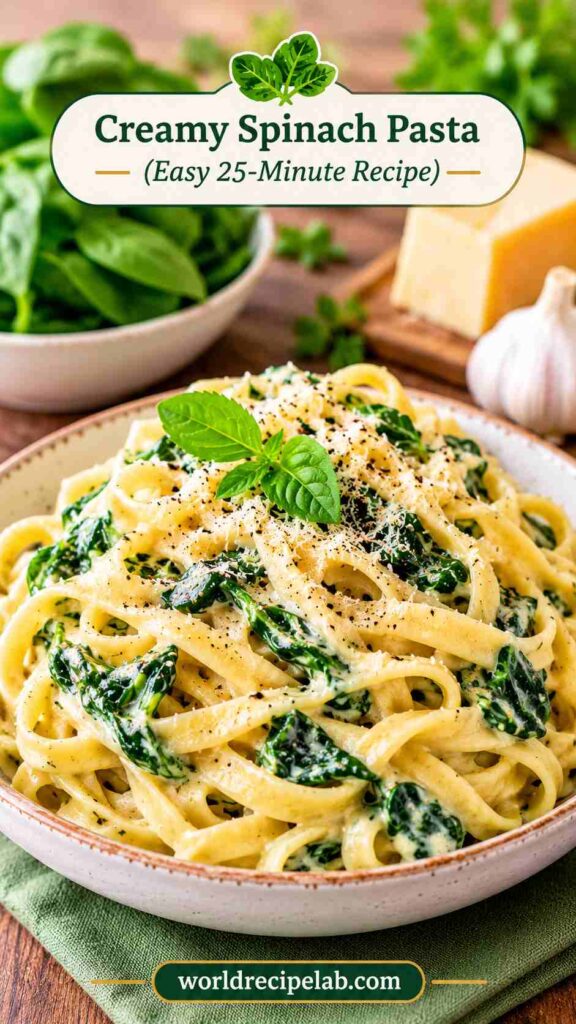
This recipe is a good choice for busy weeknights when you want a satisfying pasta dinner using everyday ingredients. It also gives you plenty of room to customise the sauce: add mushrooms, white beans or mozzarella, make a lighter version, or adapt it for vegan and gluten-free diets.
Recipe overview
Fresh spinach softens into the warm sauce and gives the pasta a mild, earthy flavour. Parmesan adds a savoury, slightly nutty taste that balances the richness of the cream.
Garlic and butter create the flavour base for this recipe. Cooking the garlic gently helps release its aroma without making it bitter or overpowering.
The sauce comes together while the pasta cooks, so you do not need a separate complicated preparation process. It is also easy to adapt with ingredients you already have in your kitchen.
The quantities below make approximately four servings.
Fresh baby spinach is convenient because it wilts quickly and has a delicate texture. Frozen spinach can also work, but thaw it completely and squeeze out excess water before adding it. Otherwise, the extra moisture may make the sauce thinner.
Heavy cream produces the richest sauce. For a slightly lighter result, use half-and-half, but avoid boiling it vigorously because lower-fat dairy can be more likely to separate. Unsweetened evaporated milk can also work, although the sauce will have a different flavour and texture.
Pecorino Romano can replace Parmesan, but it is saltier and has a sharper flavour, so use a little less at first. Mascarpone can make the sauce extra smooth and rich; use a few spoonfuls alongside the cream rather than treating it as a direct one-to-one replacement.
Use your preferred gluten-free pasta made from rice, corn, quinoa or a blend of these ingredients. Gluten-free pasta can become soft more quickly than wheat pasta, so follow the package timing and check the texture before draining. If cooking for someone with coeliac disease, check ingredient labels and avoid cross-contact with regular pasta and cooking equipment.
The basic spinach and Parmesan sauce is flexible enough to suit different meals and dietary preferences. These variations use the same flavour foundation but change the ingredients or the way you serve the sauce.
For a vegan version, replace the butter with plant-based butter or olive oil, the heavy cream with an unsweetened plant-based cooking cream, and Parmesan with a dairy-free alternative. Cashew cream can also give the sauce a smooth, rich texture. Check the labels on packaged products to make sure they are vegan and unsweetened.
This spinach sauce also works well with cheese, mushroom or spinach-filled ravioli. Keep the sauce slightly looser than you would for dried pasta because ravioli can be delicate and may break if stirred too vigorously. A little reserved cooking water helps the sauce coat the ravioli without becoming too thick.
For a lighter sauce, replace some or all of the heavy cream with half-and-half or evaporated milk. You can also increase the spinach and add vegetables such as peas or courgette. The result will be less rich than the classic cream-based version, but Parmesan and garlic will still provide plenty of flavour.
Mascarpone gives spinach pasta a particularly smooth, velvety texture. Stir a few spoonfuls into the cream-based sauce and let it melt gently. Because mascarpone is rich, you may want to reduce the Parmesan slightly and adjust the consistency with reserved pasta water.
Mushrooms make a natural addition to spinach pasta because their savoury flavour complements garlic and Parmesan. Brown sliced cremini, button or chestnut mushrooms before adding the spinach. Allow excess moisture to cook away so the mushrooms develop a deeper flavour rather than steaming in the pan.
For a one-pot version, cook the pasta in a measured amount of broth or water in a deep pan, then add the spinach and creamy ingredients towards the end. This approach requires adjusting the liquid as the pasta cooks, so follow the pasta's cooking time and add liquid gradually. The texture will be different from pasta cooked separately, but it can reduce washing up.
For a cheesier version, combine Parmesan with a little grated mozzarella. Parmesan provides the savoury flavour, while mozzarella adds a mild, stretchy texture. Add mozzarella in moderation because too much can make the sauce stringy rather than smooth.
White beans, such as cannellini or butter beans, add a soft texture and make the dish more substantial. Drain and rinse canned beans before adding them to the sauce. Gently warm them so they hold their shape instead of breaking apart.
For a vegetable-rich primavera variation, add seasonal vegetables such as broccoli, peas, asparagus, courgette or bell peppers. Cut vegetables into similar-sized pieces so they cook evenly. Keep the sauce balanced by adding vegetables gradually rather than overcrowding the pan.
The homemade sauce is built around garlic, butter, cream, spinach and Parmesan. For a smoother consistency, grate the cheese finely and add it over gentle heat. If the sauce becomes too thick, loosen it with a little reserved pasta water. Avoid rapid boiling after adding the cheese, as excessive heat can make a cheese-based sauce grainy.
Wash fresh spinach and dry it well before using it. If you are using frozen spinach, thaw it and squeeze out excess liquid. Adding wet spinach can dilute the cream sauce and make it harder to achieve the right consistency.
Keep the heat moderate when combining the cream and cheese. Add the Parmesan gradually and stir until it melts into the sauce. If the mixture looks too thick, add reserved pasta water a little at a time.
Use finely grated Parmesan rather than large chunks, and avoid adding it to a rapidly boiling sauce. Lowering the heat before adding the cheese helps it incorporate more evenly. Pre-grated cheese may contain anti-caking ingredients that affect how smoothly it melts.
Cream sauce thickens as it cools and as it coats the pasta. Aim for a sauce that flows easily from a spoon but still clings to the pasta. Add small amounts of pasta water if it becomes too thick, rather than pouring in a large quantity at once.
Garlic bread, toasted baguette or soft dinner rolls are useful for enjoying any sauce left on the plate. Choose a lightly crisp bread so it contrasts with the creamy pasta.
A simple salad with lettuce, cucumber, tomatoes and a lemon-based dressing adds freshness to the meal. The acidity of the dressing balances the richness of the cream and Parmesan.
Roasted broccoli, courgette, asparagus or bell peppers make easy side dishes. If you want to add more protein, serve the pasta with grilled chicken on the side or incorporate cooked chicken into the sauce.
Allow leftovers to cool, then transfer them to an airtight container and refrigerate promptly. For best quality, eat within 3 days. If the sauce thickens in the refrigerator, that is normal for cream-based pasta.
Reheat leftovers gently in a saucepan over low heat, adding a splash of milk, cream or water to loosen the sauce. Stir occasionally until heated through. You can also use a microwave-safe container, reheating in short intervals and stirring between each one. Avoid overheating, which can cause the sauce to separate.
Yes. Thaw frozen spinach completely and squeeze out as much excess water as possible before adding it to the sauce. This helps prevent the pasta from becoming watery.
Yes. Half-and-half, evaporated milk or an unsweetened plant-based cooking cream can be used instead. The final sauce will have a different richness and consistency, so adjust it gradually with pasta water if needed.
Allow the sauce to simmer gently until it reduces slightly, or add a little more finely grated Parmesan. Avoid adding too much cheese at once, as it can make the sauce grainy. Remember that the sauce will also thicken as it cools.
You can prepare the sauce ingredients in advance, wash and dry the spinach, and grate the Parmesan before cooking. For the best creamy texture, cook and combine the pasta with the sauce shortly before serving. Fully assembled leftovers can be refrigerated, although the sauce may thicken and need extra liquid when reheated.
Creamy spinach pasta is a practical way to turn everyday ingredients into a comforting meal. Fresh spinach, garlic, cream and Parmesan create a simple sauce that works with several pasta shapes and can be adapted with mushrooms, white beans, vegetables or different cheeses.
Start with the classic version, then try one of the variations when you want to change the flavour or make the dish suit different dietary needs.
A comforting pasta dinner with tender spinach, garlic, heavy cream and freshly grated Parmesan. This easy cream-based recipe is ready in approximately 25 minutes.