

Creamy Tomato Basil Pasta is a comforting pasta dish that combines the bright flavour of ripe tomatoes with a smooth cream sauce, fresh basil, garlic and Parmesan cheese. It brings together the familiar taste of tomato pasta and the richness of a creamy sauce, creating a balanced meal that works well for lunch or dinner.
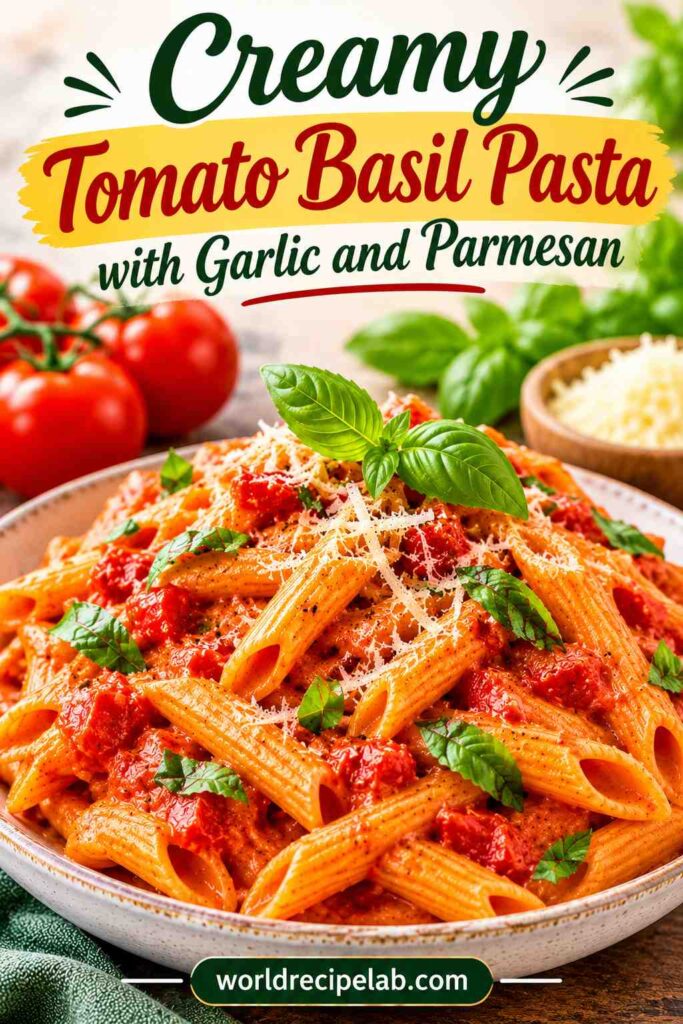
Unlike a traditional tomato sauce, this creamy tomato basil sauce has a softer, silkier texture. Tomatoes provide natural acidity and sweetness, cream rounds out their sharpness, and Parmesan adds a savoury finish. Fresh basil ties everything together with its distinctive herbal aroma.
Whether you prefer penne, rigatoni, spaghetti or fettuccine, this homemade creamy tomato pasta is easy to adapt to your favourite pasta shape. You can also add spinach, mushrooms, chicken or shrimp when you want to change the meal.
Creamy tomato basil pasta is an Italian-inspired pasta dish made with a tomato-based sauce enriched with cream, garlic, fresh basil and cheese. It combines two popular pasta styles: tomato sauce pasta and creamy pasta.
The tomatoes give the sauce its colour, acidity and fruity flavour. Cream softens the acidity and creates a smooth consistency, while basil adds freshness. Parmesan brings a deeper savoury flavour that makes the sauce taste more complete.
It is different from traditional marinara because of its creamy texture, and different from Alfredo because tomatoes remain the main flavour.
This recipe is a useful choice if you are looking for:
A balanced tomato and cream sauce: The acidity of tomatoes cuts through the richness of cream, preventing the sauce from tasting too heavy.
Fresh basil flavour: Basil gives the dish a fragrant finish and complements both tomatoes and Parmesan.
Easy to customise: You can add vegetables, seafood, chicken or plant-based protein without changing the basic sauce.
Works with different pasta shapes: The sauce pairs well with short pasta and long noodles.
A practical weeknight meal: The ingredients are familiar and widely available, making this a useful recipe for everyday cooking.
The best creamy tomato basil sauce depends on balancing acidity, sweetness, creaminess and savoury flavour. Each ingredient contributes to that balance.
Tomatoes are the foundation of the sauce. Fresh ripe tomatoes provide a lighter, fresher flavour, while canned crushed or diced tomatoes offer convenience and consistent results throughout the year.
For a smoother sauce, crushed tomatoes are a practical choice. If you prefer a little texture, diced tomatoes work well. Choose good-quality canned tomatoes without unnecessary added seasoning so you can control the flavour yourself.
Fresh basil gives this recipe its characteristic aroma. Its sweet, slightly peppery herbal flavour complements tomatoes naturally.
Add most of the basil towards the end of cooking to preserve its freshness. Dried basil can be used when fresh basil is unavailable, but it has a different flavour and should be used more sparingly.
Garlic builds the savoury foundation of the sauce. It works particularly well with tomatoes, olive oil and Parmesan. Freshly minced garlic provides a stronger aroma than garlic powder.
Cook it gently until fragrant. Burnt garlic can make a tomato cream sauce taste bitter.
Onion adds natural sweetness and depth. When softened, it blends into the tomato sauce and helps balance the acidity of the tomatoes. Yellow onion is a good everyday option, while shallots provide a milder flavour.
Heavy cream gives the sauce its smooth, rich consistency. It softens the acidity of tomatoes and helps create a silky coating for the pasta.
For a lighter version, you can use cooking cream or half-and-half, although the sauce may be less thick. Unsweetened plant-based cream is another option for a dairy-free variation.
Parmesan adds a salty, nutty and savoury flavour. It also helps give the finished sauce a richer texture.
Freshly grated Parmesan generally melts more smoothly than pre-shredded cheese. Add it over gentle heat to reduce the risk of clumping.
Olive oil helps soften the garlic and onion while carrying their flavours into the sauce. Extra-virgin olive oil also adds a subtle fruity note that complements tomatoes and basil.
Tomato paste deepens the tomato flavour and gives the sauce a more concentrated character. Cooking it briefly with the aromatics helps remove its raw taste.
Vegetable broth can loosen a thick sauce while adding another layer of savoury flavour. Choose a lower-sodium variety if you want greater control over seasoning.
Italian seasoning provides a supporting blend of dried herbs. It works well with tomatoes and garlic, but should not overpower the fresh basil.
Black pepper adds gentle warmth. Red pepper flakes are optional but useful if you enjoy a little heat in creamy tomato pasta.
Reserved pasta water contains starch released during cooking. It helps bring the sauce and pasta together, improves the coating and can loosen a sauce that has become too thick.
The sauce is versatile, but some pasta shapes hold it better than others.
For a family-friendly meal, penne and fusilli are convenient options. For a more traditional pasta presentation, choose fettuccine or spaghetti.
You can prepare this dish using ordinary kitchen equipment.
An immersion blender is optional if you prefer a completely smooth tomato sauce rather than one with small pieces of tomato and onion.
A creamy tomato sauce should taste fresh and balanced, with enough acidity to complement its richness. These practical tips help you avoid common texture and flavour problems.
Tomatoes determine much of the sauce's flavour. Use ripe fresh tomatoes when they are flavourful and in season. Good-quality canned tomatoes are often a more reliable choice when fresh tomatoes are bland or out of season.
Allow the tomato mixture to cook until its raw flavour softens and the sauce develops a deeper taste. Rushing this stage can leave the sauce tasting sharp or watery.
Allow the tomato base to develop its flavour before adding cream. Once the cream is added, keep the heat gentle rather than allowing the sauce to boil vigorously.
Tomatoes naturally vary in acidity. If the sauce tastes too sharp, cream can soften the flavour. A small amount of butter or finely cooked onion can also help balance it. Taste before adding extra seasoning.
Fresh basil loses some of its aroma when cooked for too long. Stir most of it into the sauce near the end and save a few leaves for serving.
Freshly grated Parmesan generally melts better and gives the sauce a smoother finish. Add it gradually over low heat rather than adding it to a vigorously boiling sauce.
Keep some pasta water before draining. Its starch helps the sauce cling to the pasta and makes it easier to adjust the consistency without adding too much cream.
Tossing hot pasta with warm sauce helps the flavours come together. Avoid leaving drained pasta sitting for too long, as it can stick together and become difficult to coat evenly.
This sauce makes a useful starting point for several different meals. You can change its richness, add vegetables or introduce protein while keeping the tomato and basil flavour at the centre.
For a lighter version, leave out the dairy cream and use vegetable broth with olive oil to create a looser sauce. You can also blend cooked white beans into the tomato base for a thicker texture.
The result will taste more like a rich tomato sauce than a traditional cream sauce, but fresh basil and Parmesan-style alternatives can still provide plenty of flavour.
Spinach is an easy addition because its mild flavour works naturally with tomatoes and cream. Stir fresh spinach into the warm sauce and allow it to wilt before adding the pasta.
Baby spinach is particularly convenient, while mature spinach can be used after removing any tough stems.
Mushrooms add an earthy, savoury flavour that balances the sweetness of tomatoes. Brown them separately before combining them with the sauce. This helps develop their flavour and prevents excess moisture from thinning the tomato cream sauce.
Cremini, button and chestnut mushrooms are all suitable choices.
Chicken makes this pasta more substantial and works well for a family dinner. Season and brown the chicken separately, then combine it with the finished tomato basil sauce and pasta.
Chicken breast provides a leaner option, while boneless chicken thighs offer a richer flavour.
Shrimp pairs well with tomato, garlic and basil. Its mild sweetness complements the sauce without overpowering it. Cook the shrimp separately until just opaque, then add it near the end to prevent overcooking.
This variation is particularly good with linguine or fettuccine.
For a spicy version, add red pepper flakes or finely chopped fresh chilli to the garlic and onion base. You can also use a little chilli paste.
Keep the heat moderate so that the tomato and basil flavours remain noticeable.
Mozzarella adds a mild, milky flavour and a soft, stretchy texture. Fold small pieces into the warm pasta just before serving or use it as a topping.
Fresh mozzarella releases moisture, so avoid adding too much if you want the sauce to remain thick.
For a vegan version, use an unsweetened plant-based cream or blended cashews, vegetable broth and a suitable dairy-free Parmesan alternative. Olive oil can replace butter.
Check packaged pasta and other ingredients to make sure they meet your dietary requirements.
You can adapt the recipe into a one-pot meal by cooking the pasta in the same pot as the tomato-based sauce, provided the liquid and cooking method are adjusted appropriately.
The pasta releases starch directly into the sauce, which can help create a cohesive texture. However, monitor the liquid carefully because pasta shapes and brands absorb different amounts.
The sauce is rich and savoury, so simple sides work particularly well. Fresh vegetables, crisp bread and lightly dressed salads provide contrast.
Finish the pasta with fresh basil, Parmesan and freshly ground black pepper just before serving.
Some tomatoes are naturally more acidic than others. A sharp flavour can also develop if the tomato base has not cooked long enough. Allow it to cook until the raw tomato taste softens. Cream, butter or properly cooked onion can help balance the acidity.
The sauce may have been heated too aggressively after adding cream, or the dairy may have reacted to the acidity of the tomatoes. Keep the heat gentle and avoid a vigorous boil. Adding cream after the tomato base has cooked can also help.
The tomatoes may contain excess liquid, or too much broth or pasta water may have been added. Allow the sauce to simmer gently until it thickens before combining it with the pasta. Add any reserved pasta water gradually.
The tomato base may need more cooking time, or the seasoning may be unbalanced. Taste the sauce and adjust salt, black pepper, garlic and Parmesan. Fresh basil added near the end can also improve its aroma.
Parmesan can clump when added to a sauce that is too hot. Reduce the heat and add finely grated cheese gradually while stirring. Avoid boiling the sauce after adding Parmesan.
Yes. Preparing the sauce in advance can make dinner easier, especially on busy weekdays. The tomato base can be made ahead and refrigerated separately from the pasta.
For the best result, add the cream and finish the sauce gently when reheating, particularly if you are preparing it well in advance. Fresh basil is best added near serving time so that its aroma remains bright.
Allow the sauce to cool before transferring it to an airtight container. Refrigerate promptly and use it within three to four days.
Store leftover pasta in an airtight container in the refrigerator and use it within three to four days. The pasta may absorb some of the sauce as it sits, so leftovers can become thicker than when freshly prepared.
For stovetop reheating, transfer the pasta to a skillet and warm gently over low to medium-low heat. Add a small splash of water, milk or broth to loosen the sauce, stirring until heated through.
For microwave reheating, place an individual portion in a microwave-safe dish and cover it loosely. Heat in short intervals, stirring between each interval. Add a little liquid if the sauce looks dry.
Freezing is generally better for the tomato base than for the fully assembled cream pasta. Cream-based sauces can change texture after thawing, and cooked pasta may become softer. If you want to prepare the dish ahead for freezing, consider freezing the tomato sauce separately and adding the cream and fresh basil when reheating.
Yes. Fresh ripe tomatoes work well, especially during tomato season. Remove tough cores and cook them until soft before adding the cream. If the tomatoes are particularly watery, allow the sauce to reduce until it reaches the desired consistency.
Yes. You can leave out Parmesan or use another hard cheese with a similar savoury flavour. For a dairy-free version, use nutritional yeast or a suitable vegan cheese alternative. The final sauce will have a slightly different taste and texture.
It can be vegetarian when made with vegetable broth and vegetarian-friendly cheese. Traditional Parmesan may contain animal-derived rennet, so check the label if you need a strictly vegetarian dish.
Traditional tomato basil pasta usually has a lighter sauce made mainly from tomatoes, olive oil, garlic and basil. Creamy tomato basil pasta includes cream or another creamy ingredient, creating a richer texture and softer tomato flavour.
Creamy Tomato Basil Pasta is a simple way to bring together the familiar flavours of tomatoes, garlic, basil and Parmesan in a smooth, comforting sauce. Its balance of tomato acidity and creaminess makes it a useful alternative to traditional tomato pasta and Alfredo-style dishes.
Keep the basil fresh, cook the tomato base until its flavour develops and finish the sauce gently. Serve it with garlic bread or a fresh salad, or customise it with spinach, mushrooms, chicken or shrimp for a different meal.
This Creamy Tomato Basil Pasta combines tender pasta with a rich yet balanced sauce made from tomatoes, garlic, onion, heavy cream and freshly grated Parmesan. Fresh basil adds a fragrant finish, while the cream softens the tomatoes' natural acidity. It is a comforting Italian-inspired meal for lunch or dinner and can be customised with spinach, mushrooms, chicken or shrimp.
Cook the Pasta Bring a large pot of salted water to a boil. Add the pasta and cook until al dente according to the package instructions. Reserve some pasta water, then drain and set aside.
Use good-quality crushed tomatoes for a consistent sauce. Fresh ripe tomatoes can also be used after cooking them until soft.
Cook the tomato paste briefly before adding the crushed tomatoes to develop a deeper flavour.
Keep the heat low after adding cream to reduce the risk of sauce separation.
Freshly grated Parmesan melts more smoothly than most pre-shredded varieties.
Add fresh basil near the end to preserve its aroma.
Reserve pasta water before draining. Add it gradually to adjust the sauce consistency.
If the sauce tastes too acidic, a little extra cream or butter can help balance it.
For a vegetarian version, choose Parmesan made with vegetarian-friendly enzymes.