

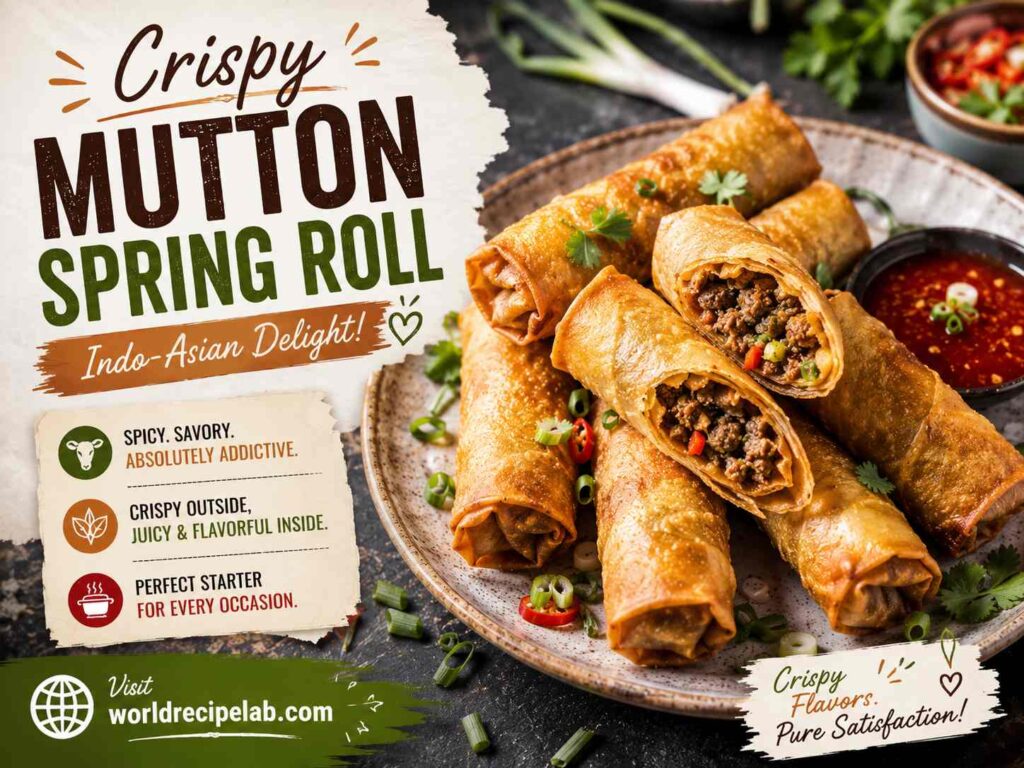
Crispy mutton spring rolls combine a savory minced-mutton filling with crunchy vegetables and thin spring roll wrappers. The filling is seasoned with ginger, garlic, chili, soy sauce, vinegar, and garam masala, then wrapped and fried until golden.
They make a useful party appetizer because the rolls can be assembled ahead of time and frozen before frying. The most important part is keeping the filling dry and completely cool before it goes into the wrappers.
If the filling is wet or warm, the wrappers can soften, tear, or release moisture into the frying oil.
Prep Time: 20 minutes
Cook Time: 15 minutes
Total Time: 35 minutes
Yield: 10 spring rolls
Course: Appetizer, Snack
Cuisine: Indo-Chinese
The filling should be flavorful but relatively dry.
Three things matter most:
The wrapper should become crisp and golden without absorbing excessive oil.
For another crispy mutton appetizer, try these mutton lollipops, or use our mutton recipes collection when planning a larger menu.
Heat 1 tablespoon of oil in a frying pan over medium heat.
Add the ginger-garlic paste and cook for about 1 minute.
Add the finely chopped onion and optional green chili. Cook until the onion becomes soft and lightly golden.
Add 250 g minced mutton.
Break up the meat with a spatula as it cooks so there are no large clumps.
Cook for approximately 6–8 minutes, stirring regularly, then continue cooking as necessary until the mutton is fully cooked and no longer pink.
Because minced meat varies in particle size and moisture, use doneness rather than the timer alone. For a reliable food-safety check, the mutton should reach 71°C/160°F in the thickest part of the mixture.
Add the grated carrot, shredded cabbage, red chili powder, garam masala, and salt.
Stir in the soy sauce and vinegar.
Cook until the vegetables soften slightly and all visible excess moisture has evaporated.
The filling should be moist enough to hold together but dry enough that it does not release liquid when wrapped.
Turn off the heat and stir in the chopped coriander.
Transfer the filling to a wide plate or bowl and allow it to cool completely.
Do not rush this step. Warm filling can soften spring roll wrappers and make them difficult to seal.
Place one spring roll wrapper on a clean surface in a diamond shape.
Put approximately 1½ tablespoons of filling near the bottom corner.
Fold the bottom corner over the filling.
Fold the two side corners toward the center.
Roll the wrapper upward firmly but without squeezing the filling out.
Brush the final edge with the flour-and-water paste and seal.
Repeat with the remaining wrappers.
Spring roll wrappers dry out quickly once exposed to air.
Keep the unused wrappers covered with a slightly damp, clean cloth while assembling the rolls. Do not leave them exposed on the counter.
Heat oil in a deep pan over medium heat.
Test the oil with a small piece of wrapper. It should begin bubbling steadily when added.
Fry 2–3 spring rolls at a time, depending on the size of your pan.
Cook until the wrappers are evenly golden and crisp, turning them as needed.
Remove them with a slotted spoon and drain on paper towels or a rack.
Avoid overcrowding the pan. Adding too many rolls at once can lower the oil temperature and produce greasy rather than crisp spring rolls.
The wrapper becomes crispest when the filling is dry and the oil temperature remains reasonably steady.
If your rolls are turning dark before the wrapper becomes properly crisp, the oil is probably too hot.
If the rolls absorb a lot of oil and remain pale, the oil may not be hot enough.
Also avoid overfilling. Too much filling makes the wrapper difficult to seal and increases the chance of it breaking during frying.
For an air-fryer version:
Air-fryer performance varies, so begin checking toward the end of the cooking time.
For oven baking:
Baked spring rolls will generally have a different texture from deep-fried ones, but they are a useful alternative when you do not want to deep-fry.
Yes. Finely shred or chop leftover cooked mutton and sauté it with the onion, ginger, garlic, spices, soy sauce, and vinegar.
Because the meat is already cooked, concentrate on removing excess moisture rather than cooking it for the full raw-mutton stage.
Yes. You can increase the carrot slightly or simply leave the cabbage out.
The important thing is not to add vegetables that release a large amount of water without cooking that moisture away.
Add extra green chili or a little more red chili powder.
For a sharper Indo-Chinese flavor, you can also serve the finished rolls with a spicy dipping sauce rather than making the filling excessively hot.
Yes. Replace the mutton with a combination of cabbage, carrot, mushrooms, paneer, or other suitable vegetables.
The filling still needs to be cooked until reasonably dry before wrapping.
Mutton spring rolls are convenient to prepare ahead.
Assemble the rolls but do not fry them.
Arrange them in a single layer on a tray and freeze until firm, usually for around 1–2 hours.
Once frozen, transfer them to an airtight freezer-safe container or bag.
Use within approximately 1 month for best quality.
Do not thaw them on the counter before frying. Thawing can make the wrappers wet and more likely to split.
Deep-fry the frozen rolls carefully in moderately hot oil until golden and crisp.
Because frozen food can affect oil temperature, avoid overcrowding the pan.
For air frying, the original recipe notes approximately 15–18 minutes at 180°C. Check the rolls during the final few minutes because air-fryer models differ.
The filling probably contained too much moisture, or the rolls were left sitting after assembly.
Cook the filling until the excess moisture has evaporated and cool it completely before wrapping.
Common causes include overfilling, dry wrappers, or wet filling.
Use about 1½ tablespoons of filling per wrapper and keep unused wrappers covered.
The oil may not have been hot enough, or the pan may have been overcrowded.
Fry only a few rolls at a time and allow the oil to recover between batches.
They may have been overfilled or not sealed properly.
Leave enough wrapper around the filling to create a secure seal and use the flour-water paste along the final edge.
Yes. Frying from frozen can help preserve the wrapper structure, but use caution because frozen rolls can cause oil to bubble aggressively. Fry in small batches.
These rolls are best served hot, when the wrapper is still crisp.
Good dipping options include:
For a larger snack platter, serve them alongside mutton cutlets or mutton seekh kebabs.
You can also serve them with sliced onions, fresh coriander, or a simple vinegar-based chili dip.
Yes. Minced chicken can replace the minced mutton. Cook it thoroughly before assembling the rolls.
Yes. Finely chop or shred it and cook it briefly with the aromatics and seasonings until the filling is dry enough to wrap.
Yes, although the result will not be identical to deep-frying. Use enough oil to brown the wrappers evenly and turn them carefully during cooking.
No. Let it cool completely. A hot or steaming filling can soften the wrapper and make sealing difficult.
The ingredient list contains 10 spring roll wrappers, so the recipe is designed to make approximately 10 spring rolls, depending on how much filling is used in each one.
Minced mutton and vegetables can release moisture during cooking. Continue cooking until the visible liquid has evaporated before adding the filling to the wrappers.
Spring rolls have a long history in Chinese cuisine and became widely adapted across Asia and beyond.
The version commonly sold in India is part of the country's broader Indo-Chinese food tradition. Indian cooks and street-food vendors adapted Chinese-inspired dishes using local spices, sauces, vegetables, and meat fillings.
There is no need to assign this particular mutton version to one city or claim a single origin. It is better understood as an Indo-Chinese adaptation that combines a spring-roll format with a spiced Indian-style mutton filling.
Give the fried rolls a minute or two to drain before serving, then bring them to the table while the wrappers are still crisp.
The contrast is what makes them work: a thin crunchy wrapper around a savory filling of minced mutton, cabbage, carrot, aromatics, and spices.
If you're building a mutton snack menu, continue with Mutton Lollipops or browse the complete best mutton recipes at home collection.
Always allow the filling to cool completely before rolling to prevent soggy spring rolls.
Keep the wrappers covered with a damp cloth while assembling to prevent them from drying out.
Do not overstuff the rolls, as they may tear during frying.
For an air-fried version, cook at 180°C (350°F) for 12–15 minutes, flipping halfway.
For oven baking, bake at 200°C (390°F) for 20–25 minutes, turning once.
Uncooked spring rolls can be frozen for up to 1 month and cooked directly from frozen.
These spring rolls pair wonderfully with Schezwan sauce, sweet chili sauce, mint mayo, or tomato ketchup.