

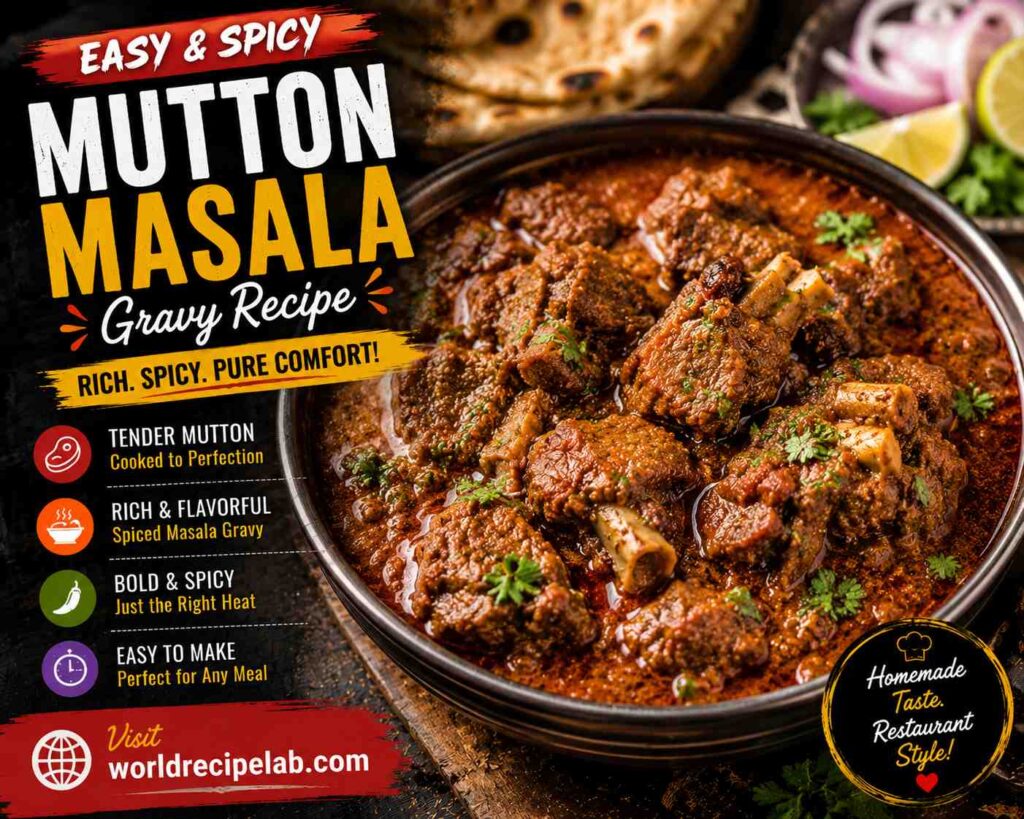
When you want a mutton curry with a thick, intensely flavored gravy rather than a thin broth, this easy mutton masala gravy recipe is a good place to start.
The curry is built around browned onions, tomatoes, ginger, garlic, whole spices, and ground spices. The mutton is briefly marinated with yogurt and turmeric, then cooked in the masala before going into the pressure cooker.
The result is a hearty Indian-style curry with tender mutton and a concentrated onion-tomato gravy that works beautifully with rice, naan, paratha, or even soft pav.
 |
| Hot and spicy mutton masala gravy served with fresh coriander garnish |
Mutton masala is not defined by one universal spice mixture. Across Indian kitchens, the dish can range from a relatively simple onion-tomato curry to richer regional preparations with additional whole spices, coconut, yogurt, or roasted masalas.
This version keeps things straightforward.
The flavor comes mainly from properly browned onions, cooked tomatoes, ginger-garlic, whole spices, and enough time for the mutton to absorb the masala.
The gravy is deliberately kept semi-thick, so it coats the meat rather than pooling like a thin curry.
The most important part of this recipe happens before the pressure cooker is closed.
The onions need to develop a deep golden color, and the tomato-spice mixture needs to cook until the raw tomato smell disappears and the masala becomes concentrated.
Simply adding everything to a pressure cooker at once can cook the mutton, but it will not give the same depth of flavor.
Think of the pressure cooker as the tool that finishes the mutton—not the replacement for building the masala.
Add the mutton to a mixing bowl.
Add:
Mix well until the pieces are evenly coated.
Cover and refrigerate for at least 30 minutes. The recipe can be marinated for up to 4 hours if you have more time.
Do not leave the marinating meat at room temperature for an extended period.
Heat 2 tbsp oil or ghee in a pressure cooker over medium heat.
Add the cumin seeds, bay leaf, cinnamon, cloves, and green cardamoms.
Let them cook briefly until fragrant.
You do not need to burn or heavily darken the whole spices. A short time in the hot fat is enough to release their aroma.
Add the finely chopped onions.
Cook over medium heat until they turn golden brown.
This step deserves patience. Pale, barely cooked onions produce a very different gravy from properly browned onions.
Stir regularly so the bottom does not burn.
Add 2 tsp ginger-garlic paste and sauté until the raw smell disappears.
Add the chopped or puréed tomatoes, red chilli powder, coriander powder, cumin powder, and salt.
Cook until the tomatoes break down and the masala becomes thick.
Continue cooking until the mixture looks concentrated and the oil begins to separate from the masala.
This is the bhuno stage, and it is one of the most important flavor-building steps in the recipe.
Add the marinated mutton to the cooked masala.
Cook for 7–8 minutes, stirring regularly.
The masala should cling to the meat and coat the pieces evenly.
The mutton will release some moisture as it cooks. Keep stirring so the meat and masala continue to cook together rather than simply boiling in liquid.
Add ¾ to 1 cup water, depending on how much gravy you want.
Close the pressure cooker securely.
Cook for 3–4 whistles over medium heat, or around 5–6 whistles for tougher cuts, according to the original recipe.
Allow the pressure to release naturally.
Because pressure cookers and mutton cuts vary, the whistle count should not be treated as an absolute guarantee of tenderness.
Open the cooker only after the pressure has released safely and check the meat.
If the mutton is tender but the gravy is thinner than you want, simmer it uncovered for 5–7 minutes.
This evaporates excess liquid and concentrates the masala.
Stir in ½ tsp garam masala and cook for another 2 minutes.
Taste and adjust the salt if necessary.
Turn off the heat.
Finish with fresh coriander and a squeeze of lime.
Serve hot with rice, naan, paratha, or pav.
Mutton can vary significantly from one cut to another, so cooking time is never completely universal.
For better results:
If the gravy is already thick but the meat needs more time, add a little water before continuing.
The pressure cooker is the quickest practical method for this recipe.
It also works particularly well for tougher mutton because the pressurized environment helps the meat cook faster than an uncovered or lightly covered pot.
If you do not have a pressure cooker, transfer everything to a heavy-bottomed pot.
Add enough water to keep the curry from drying out, cover, and simmer gently for approximately 1½–2 hours, checking periodically.
The exact time depends on the mutton.
The goal is tender meat, not a specific number on the timer.
If you prefer a restaurant-style thick masala coating the meat, do not add extra flour or starch.
Instead, reduce the gravy naturally.
After pressure cooking:
A concentrated onion-tomato base gives a better texture and flavor than simply adding a thickener.
The recipe uses 2 tbsp curd for the mutton marinade.
If you do not have curd, the original recipe suggests using 1 tsp vinegar with 1 tsp cream or lemon juice as an alternative.
Because this substitution is more acidic and does not behave exactly like yogurt, use it as a practical fallback rather than an identical replacement.
Replace the 2 large tomatoes with approximately ½ cup tomato purée.
The flavor and acidity can vary between brands, so taste the finished gravy before adjusting seasoning.
The original recipe suggests chaat masala with a pinch of nutmeg as a substitute.
Use it sparingly because chaat masala has a noticeably tangier and saltier flavor than garam masala.
Either works.
Ghee gives the gravy a richer aroma, while neutral oil keeps the flavor more straightforward.
Chicken can be used instead, but it needs considerably less cooking time.
Soya chunks are another meat-free option, although the dish will no longer have the same flavor or texture as mutton masala.
The recipe uses 1 tsp red chilli powder, but the final heat depends heavily on the chilli powder you use.
For a milder curry, reduce the chilli powder.
For more heat, increase it gradually rather than adding a large amount at once.
If you want color without excessive heat, a mild Kashmiri-style chilli powder can be useful, although it changes the original ingredient list.
The semi-thick gravy makes this curry versatile.
A simple cucumber or onion salad can also provide a fresh contrast to the rich curry.
Yes.
Mutton masala is a useful make-ahead curry because the gravy often tastes more developed after resting and reheating.
For meal preparation, cool the cooked curry properly before storing it.
Reheat gently and add a small splash of water if the gravy has become too thick.
Transfer leftover curry to an airtight container once it has cooled appropriately.
Refrigerate and use within 2–3 days, following safe food-handling practices.
For longer storage, the original recipe recommends freezing for up to 1 month.
Thaw frozen curry in the refrigerator before reheating.
Reheat on the stovetop or in the microwave. If the gravy has thickened during storage, add a small splash of water and stir gently.
The most likely reason is that the meat has not cooked long enough.
Mutton varies by cut and age, so pressure-cooking time is not identical for every batch.
If the gravy is already prepared but the meat is still firm, continue cooking until tender.
Remove the lid and simmer the curry uncovered for 5–7 minutes.
This allows excess water to evaporate without adding another thickening ingredient.
The tomato and spice mixture may not have been cooked long enough.
Cook the masala until the tomatoes are fully broken down and the mixture becomes concentrated before adding the mutton.
The heat may have been too high, or the onions were not stirred often enough.
Burnt onions can make the entire curry bitter. Medium heat gives you better control.
Yes. Reduce the red chilli powder according to your preference.
You can also serve the curry with plain yogurt or a cooling side dish.
These two curries can look similar on a plate, but their flavor direction is different.
Mutton masala generally emphasizes a cooked onion-tomato base and a more pronounced spice profile.
Mutton korma usually leans toward a richer, smoother gravy built around ingredients such as yogurt, nuts, cream, or other aromatic elements depending on the regional style.
If you want a bold, concentrated curry with a thick masala coating, this mutton masala is the better fit.
If you prefer a richer and more gently spiced gravy, try the Easy Mutton Korma Recipe.
Yes. Use a heavy-bottomed pot and simmer the curry covered for approximately 1½–2 hours, adding water as needed. Cook until the mutton is tender.
This recipe uses a minimum of 30 minutes and allows up to 4 hours. Keep the meat refrigerated during marination.
Yes. Lamb can be substituted, but it may cook faster depending on the cut.
Yes. Store the cooked curry properly in the refrigerator or freezer and reheat gently before serving.
After the meat is cooked and tender, simmer the curry uncovered for 5–7 minutes until the excess liquid reduces.
Basmati rice is a natural pairing, particularly steamed basmati or jeera rice. The curry also works well with naan and paratha.
If you are building a mutton dinner menu, these recipes are worth exploring:
This easy mutton masala gravy recipe is built around a simple principle: develop the masala properly before relying on the pressure cooker to finish the meat.
Brown the onions, cook the tomatoes until concentrated, give the mutton time to absorb the spices, and reduce the finished gravy if necessary.
Those steps matter more than adding a long list of spices.
Serve the curry with steamed rice, naan, paratha, or pav, and adjust the chilli level to suit your table. Once you have the basic method down, it is easy to adapt the gravy to your preferred level of heat and consistency.
- Marinating for 30 minutes to 4 hours helps tenderize the meat and enhances flavor.
- If you don't have curd, use 1 tsp vinegar with 1 tsp cream or lemon juice.
- Fresh tomatoes can be replaced with 1/2 cup tomato puree.
- Chaat masala with a pinch of nutmeg can substitute for garam masala.
- Chicken or soya chunks can replace mutton with adjusted cooking times.
- For stovetop cooking without a pressure cooker, simmer covered in a heavy pot for 1½ to 2 hours.
- To make the gravy thicker, simmer uncovered for 5–7 minutes after pressure cooking.
- Flavor improves overnight, making this curry ideal for meal prep.
- Refrigerate leftovers in an airtight container for 2–3 days.
- Freeze for up to 1 month and thaw overnight before reheating.
- Reheat on the stovetop or microwave with a splash of water.
- Serve with steamed basmati rice, jeera rice, ghee rice, butter naan, lachha paratha, pav, millet roti, or dosa.