

Garlic butter mushroom pasta is a simple, flavourful dinner built around golden-browned mushrooms, aromatic garlic, buttery pasta and a generous finish of Parmesan. It has the savoury depth of a restaurant-style mushroom pasta but uses familiar ingredients and straightforward stovetop cooking.
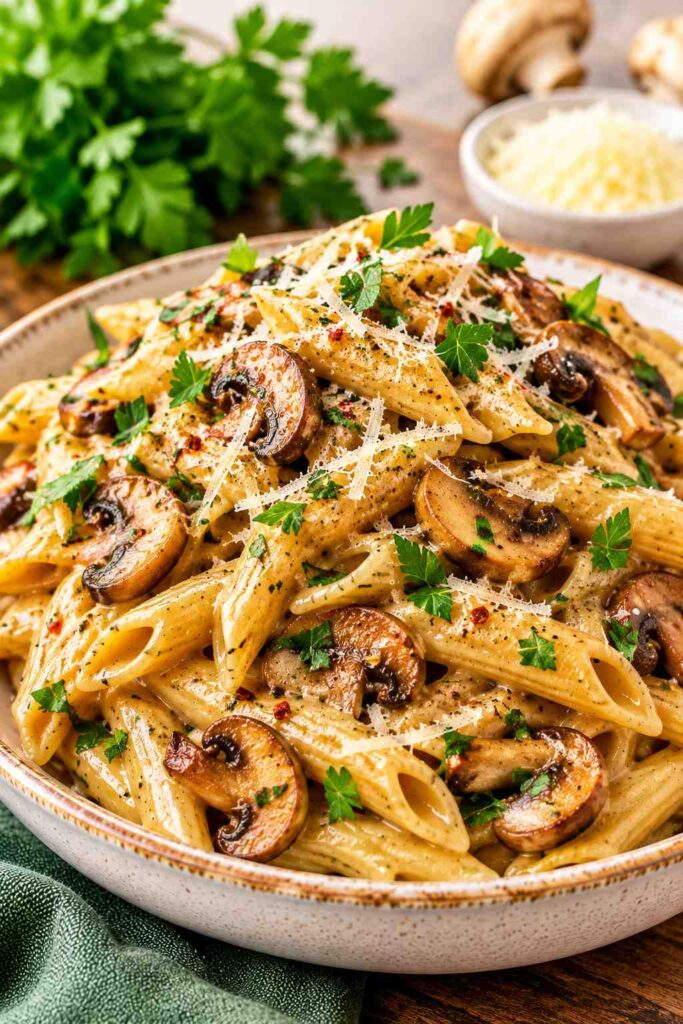
The secret is giving the mushrooms enough space and time to brown before adding the garlic and butter. Mushrooms naturally release moisture as they cook. If they are crowded in the pan or stirred constantly, they can steam instead of developing the deep, savoury colour that makes this pasta so satisfying.
Unlike a heavy cream-based pasta sauce, this version uses butter, Parmesan and starchy pasta water to create a light, glossy coating. The result is rich without feeling overly heavy, with the mushrooms remaining the main attraction.
This pasta gets its flavour from a few ingredients working together. Mushrooms bring an earthy, savoury taste, garlic adds fragrance, butter provides richness, and Parmesan gives the sauce a salty, nutty finish.
The cooking technique matters just as much as the ingredients. Properly browned mushrooms develop a deeper flavour than pale, steamed ones. Adding garlic after the mushrooms have started browning also helps prevent it from burning.
Pasta water is another important part of the sauce. Its starch helps the butter and cheese cling to the pasta rather than collecting at the bottom of the pan.
Each ingredient has a specific job in this recipe. Choosing the right mushrooms and using good-quality Parmesan can make a noticeable difference.
Cremini mushrooms, also called baby bella mushrooms, are an excellent choice because they have a deeper flavour than ordinary white button mushrooms. White mushrooms work well too and have a milder taste.
For a more complex mushroom flavour, combine cremini with shiitake or oyster mushrooms. Avoid washing mushrooms too far in advance, and dry them well if you rinse them.
Fresh garlic gives the butter sauce its characteristic aroma. Minced garlic distributes throughout the pasta, while finely sliced garlic creates small pockets of flavour.
Add it after the mushrooms have browned. Garlic cooks quickly and can become bitter if exposed to high heat for too long.
Butter creates the rich base of the sauce and helps carry the garlic and mushroom flavours. Unsalted butter gives you more control over the final seasoning.
A little olive oil can be used alongside butter to help prevent the butter from browning too quickly.
Freshly grated Parmesan melts more smoothly than many pre-grated varieties. It adds saltiness, savoury depth and a slightly nutty flavour.
Parmigiano Reggiano is a good option, but a good-quality vegetarian hard cheese can also work if you need a vegetarian alternative. Check the label because traditional Parmesan is made using animal rennet.
Fettuccine, linguine, spaghetti and penne all work well. Long pasta catches the buttery sauce, while short pasta holds the mushroom pieces in its ridges and openings.
Choose a shape that is easy to coat evenly rather than one that overwhelms the delicate sauce.
Reserved pasta water is essential for bringing the sauce together. Its starch helps emulsify the butter and Parmesan, creating a glossy coating.
Add it gradually. Too much can make the sauce watery, while too little may leave it greasy or difficult to toss.
Olive oil helps the mushrooms brown and balances the richness of the butter. A mild extra-virgin olive oil works particularly well.
Parsley adds freshness and a mild herbal flavour. It also balances the earthy mushrooms and rich butter sauce.
Freshly ground black pepper adds gentle warmth and complements the mushrooms. Season gradually because Parmesan already contributes salt.
Different mushrooms bring different flavours and textures. You can use one variety or combine several.
| Mushroom | Flavour and texture | Best use |
|---|---|---|
| Cremini | Earthy, firm and savoury | Everyday mushroom pasta |
| White button | Mild and tender | Simple, budget-friendly version |
| Portobello | Deep, meaty and substantial | Hearty pasta |
| Shiitake | Rich, woodsy and distinctive | More intense mushroom flavour |
| Oyster | Delicate and slightly sweet | Mixed mushroom pasta |
For a reliable everyday version, cremini mushrooms are a particularly good choice. If using portobello, remove any tough stems and slice the caps evenly.
The best pasta shape depends on how you want the sauce to cling to each bite.
A wide skillet is especially useful. It gives mushrooms enough room to brown rather than release moisture and steam in a crowded pan.
This is the most important flavour-building step. Spread the mushrooms in a single layer where possible and let them cook undisturbed for a short time before stirring. If your pan is small, cook them in batches.
Overcrowding traps moisture and prevents browning. The mushrooms may turn soft and watery instead of developing golden edges.
Cook the mushrooms first, then add the garlic. Stir it briefly until fragrant. This protects the garlic from burning while allowing its flavour to infuse the butter.
Freshly grated cheese generally melts more evenly. Add it over gentle heat and toss with pasta water to help form a smooth sauce.
Save some pasta water before draining the pasta. It is much easier to loosen a thick sauce with reserved water than to fix a dry pasta dish after the pot has been washed.
Toss the cooked pasta with the mushroom butter mixture in the skillet. This helps the sauce coat the pasta evenly and allows the flavours to come together.
If the butter and cheese make the dish feel too rich, finish with fresh parsley, black pepper or a little lemon juice. Add acidic ingredients gradually so they brighten rather than dominate the sauce.
The basic recipe is easy to adapt without losing its mushroom-and-garlic character.
For a richer sauce, add a splash of heavy cream after the garlic has softened. Let it warm gently before adding Parmesan and pasta water. Avoid boiling the sauce aggressively.
The standard version is already cream-free. Butter, Parmesan and starchy pasta water create a glossy coating without needing heavy cream.
Add fresh spinach to the skillet after the mushrooms are cooked. Let it wilt before combining everything with the pasta. It brings colour and a mild vegetal flavour.
Add sliced, seasoned chicken breast for a more filling meal. Brown the chicken separately, cook the mushrooms in the same skillet and return the chicken when combining the pasta and sauce.
Shrimp pairs well with garlic butter and mushrooms. Cook it separately until just opaque, then fold it into the finished pasta. Overcooked shrimp can become rubbery.
Use plant-based butter, a vegan Parmesan-style alternative and pasta that contains no egg. A little reserved pasta water helps create a glossy sauce. Check the seasoning because plant-based cheese alternatives vary in saltiness.
After browning the mushrooms, add a splash of dry white wine to the skillet. Scrape up the browned bits and let the liquid reduce before adding the butter and garlic mixture. This gives the sauce a brighter, more layered flavour.
Add red pepper flakes with the garlic. Their gentle heat works well with the earthy mushrooms and buttery sauce.
Fresh thyme adds a woodsy herbal note. Add it while the mushrooms cook so its flavour infuses the butter.
Why it happens: The pan is overcrowded, the heat is too low, or the mushrooms are stirred too frequently.
How to fix it: Cook in batches if needed and allow moisture to evaporate before adding butter and garlic. Use a wide skillet and give the mushrooms room.
Why it happens: Garlic has cooked for too long or at excessively high heat.
How to fix it: Add garlic after the mushrooms are browned and stir briefly over moderate heat.
Why it happens: Butter has not emulsified with the pasta water, or the pan is too hot when the cheese is added.
How to fix it: Lower the heat, add a small splash of warm pasta water and toss continuously. Add Parmesan gradually rather than all at once.
Why it happens: Too much liquid has evaporated or the pasta has absorbed the sauce while sitting.
How to fix it: Add reserved pasta water a little at a time until the sauce loosens and coats the pasta.
Why it happens: Too much pasta water was added at once.
How to fix it: Toss the pasta over gentle heat to allow some liquid to evaporate. Add a little more Parmesan if needed.
Why it happens: The cheese is added to a very hot, dry pan or is not tossed with enough liquid.
How to fix it: Reduce the heat, add pasta water and incorporate freshly grated cheese gradually while tossing.
This pasta can be served as a main course or as a side dish alongside a larger meal. Its buttery, earthy flavour pairs well with fresh vegetables and crisp salads.
For a simple dinner, serve it with a crisp green salad and toasted bread.
Allow leftovers to cool, then transfer them to an airtight container and refrigerate promptly. For the best quality, enjoy within three days.
The sauce may thicken as it cools because the pasta absorbs some of the moisture.
Reheat gently in a skillet over low heat. Add a small splash of water or milk and toss until the sauce loosens and coats the pasta again.
You can also use a microwave. Cover the pasta loosely and heat in short intervals, stirring between each one. Add a little liquid if it looks dry.
Freezing is not ideal for this dish. Cooked mushrooms can become softer after thawing, and a butter-and-Parmesan sauce may separate when reheated.
For better results, prepare the mushroom mixture separately and refrigerate it. Cook fresh pasta when you are ready to serve.
You can clean and slice the mushrooms, grate the Parmesan and prepare the garlic in advance. For the best texture, cook the pasta and finish the sauce shortly before serving.
Cremini mushrooms are an excellent everyday choice because they have a deeper, earthier flavour than white button mushrooms. You can also use portobello, shiitake or oyster mushrooms, either individually or in a combination.
Yes. This version does not require cream. Butter, Parmesan and starchy pasta water create a glossy sauce that coats the pasta without heavy cream.
Use a wide skillet, avoid overcrowding and let the mushrooms brown before stirring frequently. If you have a small pan, cook them in batches so moisture can evaporate instead of collecting in the pan.
Use reserved pasta water and add Parmesan gradually over gentle heat while tossing. The starch in the pasta water helps the butter and cheese form a more cohesive sauce. Avoid adding the cheese to a very hot, dry skillet.
Garlic butter mushroom pasta is a practical way to turn everyday ingredients into a satisfying meal. The key is to brown the mushrooms properly, add the garlic at the right moment and use pasta water to bring the butter and Parmesan together.
Keep the basic version simple, or adapt it with spinach, chicken, shrimp, thyme or a little white wine. However you serve it, let the mushrooms remain the centre of the dish.
This garlic butter mushroom pasta combines tender pasta with savoury mushrooms, aromatic garlic, butter and freshly grated Parmesan. Reserved pasta water brings the ingredients together into a light, glossy sauce without needing heavy cream. It is an easy vegetarian-friendly dinner for busy weeknights.
Mushrooms: Cremini mushrooms provide a deeper flavour, while white button mushrooms offer a milder alternative.
Browning: Avoid overcrowding the skillet. Cook mushrooms in batches if necessary to prevent steaming.
Garlic: Add garlic after the mushrooms have browned to prevent it from burning.
Parmesan: Freshly grated Parmesan melts more smoothly than many pre-grated varieties.
Pasta water: Add it gradually to create a glossy sauce. You may not need the full amount.
Creamy variation: For a richer sauce, stir in a little heavy cream before adding the Parmesan.
Storage: Refrigerate leftovers in an airtight container for up to 3 days.
Reheating: Warm gently in a skillet with a splash of water or milk, tossing until the sauce loosens.
Freezing: Freezing is not recommended because the mushrooms and butter-Parmesan sauce may change texture.