

Grilled salmon is a practical choice for a flavorful dinner without complicated preparation. Salmon fillets cook relatively quickly on a hot grill, while a simple marinade made with olive oil, lemon juice, garlic, and herbs adds fresh flavor.
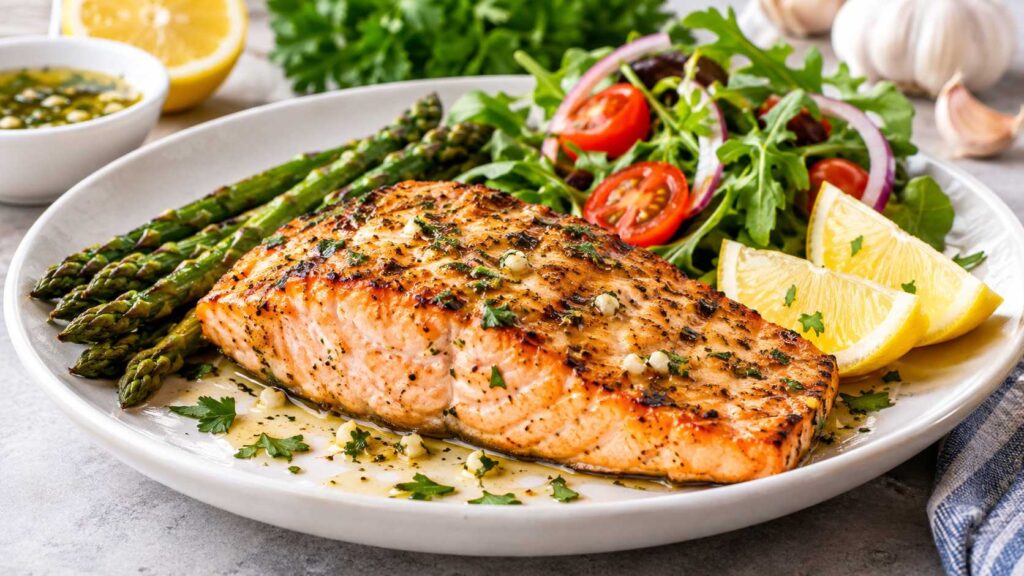
The key to making good grilled salmon is controlling the heat, preparing the grill properly, and avoiding overcooking. Salmon can become dry when left on the grill for too long, so checking its temperature is more reliable than judging cooking time alone.
This grilled salmon recipe uses everyday ingredients and works on an outdoor gas or charcoal grill. You can also adapt the method for a grill pan when outdoor grilling is not possible.
Choose salmon fillets of reasonably similar thickness so they cook at a similar rate. Skin-on fillets can be easier to handle on the grill because the skin helps hold the fish together.
Fresh lemon juice provides acidity, while olive oil helps distribute the seasonings across the surface. Garlic, oregano, and paprika add flavor without requiring a long ingredient list.
In a small bowl, whisk together the olive oil, lemon juice, minced garlic, dried oregano, paprika, salt, and black pepper.
Stir until the ingredients are evenly combined.
Pat the salmon fillets dry with paper towels. Place them in a shallow dish and coat them with the marinade.
Refrigerate for approximately 15–20 minutes while you prepare the grill. Avoid leaving the fish in the acidic marinade for an extended period because the lemon juice can affect the texture of the surface.
Before grilling, remove excess marinade so oil does not drip excessively onto the flames.
Preheat a clean grill to medium-high heat, approximately 400–450°F (200–230°C).
Clean the grill grates and lightly oil them using an oil-soaked paper towel held with long-handled tongs. Keep the paper towel away from direct flames.
A properly heated, clean grill helps reduce sticking and makes the salmon easier to turn.
Place the salmon on the grill, skin-side down if the fillets have skin.
Close the lid and cook for approximately 4–6 minutes before checking the fish. Thicker fillets may need more time.
Carefully turn the salmon only if needed, using a wide fish spatula. Cook the other side for approximately 2–4 minutes, depending on thickness and grill temperature.
The salmon is ready when it reaches a safe internal temperature and separates into moist flakes. Avoid repeatedly moving the fillets, as this can cause them to break apart.
Food safety: For a conservative home-cooking guideline, cook salmon to an internal temperature of 145°F (63°C), measured at the thickest part with a food thermometer.
Cooking times are estimates. Fillet thickness, starting temperature, grill performance, and whether the lid is closed all affect how quickly salmon cooks.
Transfer the salmon to a clean plate and let it rest for a few minutes.
Finish with fresh parsley or dill and a squeeze of lemon juice. Serve immediately with your preferred sides.
The exact time depends on the thickness of the fillet, the heat of the grill, and whether the salmon has skin.
| Salmon thickness | Approximate cooking time | What to check |
|---|---|---|
| Thin fillets, about ½ inch (1.3 cm) | Start checking after 4–5 minutes total | The centre cooks quickly |
| Medium fillets, about 1 inch (2.5 cm) | Often around 6–10 minutes total | Check the thickest section |
| Thick fillets, over 1 inch (2.5 cm) | May require 10–12 minutes or longer | Use a food thermometer |
These are starting estimates, not guaranteed cooking times. Always check the internal temperature rather than relying on the clock alone.
Food residue can make fish stick. Clean the grates before heating the grill and lightly oil them if necessary.
Excess moisture on the surface can interfere with browning. Pat the salmon dry before applying the marinade.
Salmon can break apart when handled repeatedly. Let the first side cook before attempting to turn the fillet.
Medium-high heat works well for many salmon fillets, but intense flames can burn the surface before the centre cooks. Move the fish to a cooler part of the grill if flare-ups occur.
A thermometer gives a more dependable indication of doneness than colour alone. Insert it into the thickest part of the fillet without touching the grill.
This recipe uses lemon juice, which is acidic. A short marinating period adds flavor without unnecessarily changing the texture of the fish.
Cooking salmon in foil is useful when you want to contain juices or add vegetables to the same packet.
Cooking time varies with the thickness of the fish, the amount of food in the packet, and the grill temperature. Open foil packets carefully because escaping steam can cause burns.
Foil cooking produces a softer surface than direct grilling, so it is a good alternative when you prefer moist fish over pronounced grill marks.
You can adjust the basic lemon garlic marinade to create different flavours.
Add 1–2 teaspoons of honey to the marinade. The sweetness balances the lemon and garlic, but sugary marinades can brown quickly over direct heat.
Replace part of the salt with 1 tablespoon of soy sauce and add 1 teaspoon of finely grated fresh ginger. Taste before adding extra salt because soy sauce is already salty.
Add chopped fresh dill or parsley and a little extra lemon zest for a fresh, herb-forward flavour.
Add ¼–½ teaspoon of chilli flakes or a small amount of cayenne pepper. Adjust the quantity to your preferred heat level.
Grilled salmon pairs well with a variety of simple sides.
For a complete dinner, pair one salmon fillet with a vegetable side and a serving of potatoes, rice, or another grain.
Allow leftover salmon to cool briefly, then transfer it to a shallow, airtight container and refrigerate promptly.
Do not leave cooked salmon at room temperature for more than two hours, or more than one hour when the temperature is above 90°F (32°C). Discard food that has been stored unsafely.
For frozen leftovers, thaw in the refrigerator rather than on the kitchen counter.
A grill temperature of approximately 400–450°F (200–230°C) is a useful starting point for salmon fillets. Adjust the heat if the surface browns too quickly. For a conservative food-safety guideline, cook the thickest part to 145°F (63°C).
Both methods work. Skin-on salmon is often easier to handle because the skin helps keep the fillet intact. Place it skin-side down first and use a wide spatula when moving the fish.
Clean and preheat the grates, pat the salmon dry, and lightly oil the grill grates if needed. Let the fish cook before trying to move it. If it resists lifting, give it a little more time.
Yes. You can season salmon with salt, pepper, and a little oil immediately before grilling. Marinating is optional and mainly adds flavour.
Grilled salmon is easy to adapt to different meals, seasonings, and cooking preferences. A short lemon garlic marinade adds flavour, while a clean, preheated grill and careful temperature checks help prevent sticking and overcooking.
Start with the basic recipe, then experiment with honey garlic, soy ginger, or fresh herb variations. Pair the finished salmon with vegetables, potatoes, rice, or salad for a practical dinner.
For more meal ideas, try our salmon rice bowl recipe or explore our complete salmon guide.
Cooking times vary with the thickness of the salmon and the grill temperature.
Do not leave salmon in the acidic marinade for an extended period.
Avoid repeatedly turning the fillets, as they can break apart.
For grilled salmon in foil, seal the seasoned fillets in foil packets and begin checking for doneness after approximately 10 minutes.
Refrigerate leftovers promptly and use within 3–4 days.
Freeze leftovers in an airtight container for best quality for approximately 2–3 months.
For food safety, cook salmon to an internal temperature of 145°F (63°C).