

Mutton pulao gets its character from the stock the meat leaves behind. Instead of layering rice and curry as you would for many biryani recipes, you cook the rice in a seasoned liquid that carries the flavor of the mutton, whole spices, onions, and yogurt.
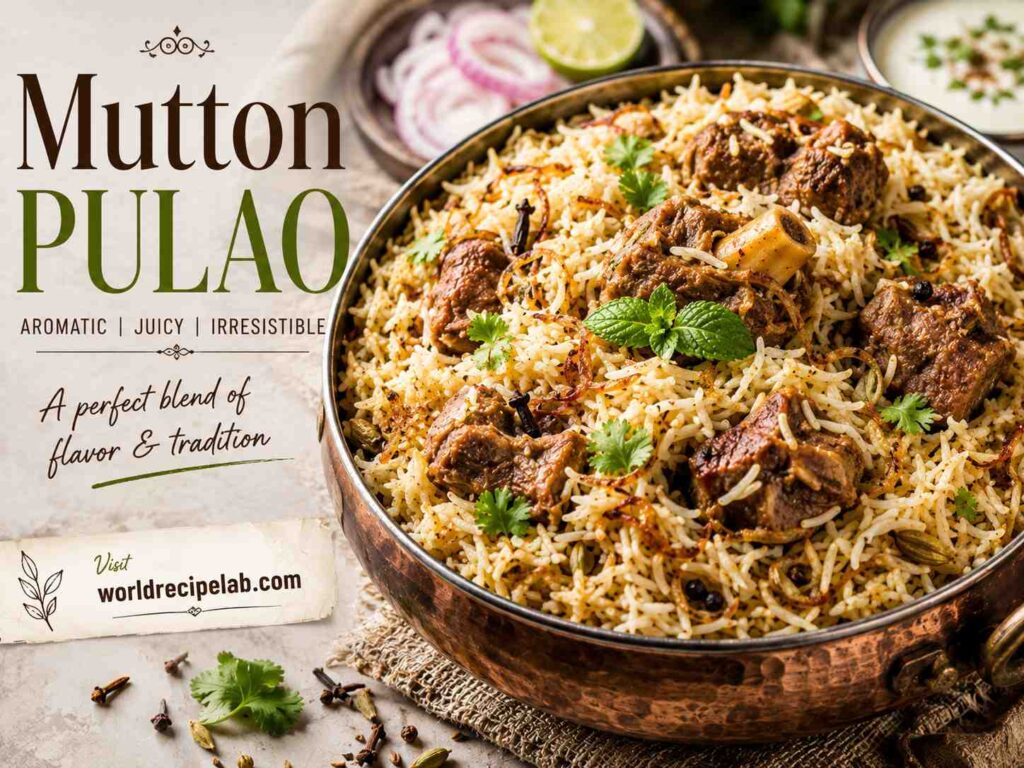
The result should be fragrant rather than overpoweringly spicy, with tender pieces of mutton and rice grains that remain separate instead of turning into a sticky mass.
This home-style Indian mutton pulao uses bone-in mutton, aged basmati rice, whole spices, and a combination of ghee and oil. A pressure cooker speeds up the meat preparation, while the final rice stage is completed in a heavy-bottomed pot.
Both dishes combine meat, rice, and aromatic spices, but their cooking methods often differ.
Mutton pulao: The rice cooks in seasoned meat stock, allowing the liquid to distribute the flavor throughout the pot. The preparation is usually more direct, without the separate rice and meat layers associated with many biryani styles.
Mutton biryani: Many versions involve partially cooking the rice separately, layering it with prepared meat, and finishing everything together using a dum technique. There are also regional variations with different methods.
Neither dish has to be bland or excessively rich. The key difference is the cooking approach, not simply the amount of spice.
If you want a layered rice dish for another occasion, try our Hyderabadi Mutton Dum Biryani.
The most important decision in this recipe is how much liquid to add after cooking the mutton.
The original ingredient list uses 2 cups of basmati rice and 3 cups of water for the meat. The method then calls for approximately 3½–4 cups of total liquid for the rice. Do not automatically add all the reserved stock on top of that amount. Measure the stock first and account for any additional water separately.
The correct amount depends on the rice, how thoroughly it was drained, the cooking pot, and how much moisture remains in the mutton masala.
For a reliable result, follow the rice package's absorption guidance as a starting point, then adjust for your cooking method. Too much liquid can leave the rice wet and sticky; too little can leave the grains undercooked.
Rinse the basmati rice several times until the water becomes much clearer. Cover with fresh water and soak for 30 minutes.
Drain thoroughly before cooking. Removing excess soaking water makes it easier to control the liquid in the pulao.
Aged basmati is a good choice because its long grains are well suited to a dish where separate, fluffy rice is the goal.
Place the mutton, turmeric, salt, and 3 cups of water in a pressure cooker.
Cook until the meat is nearly tender, following your pressure cooker's instructions for the size of the pieces. The original method suggests 4–5 whistles, but whistles vary between cookers, so check the meat rather than relying on that number alone.
Allow the pressure to release naturally according to the appliance instructions.
Remove the mutton and strain the stock into a heatproof container. Set both aside.
The meat should be tender enough to continue cooking with the rice but not so fragile that it falls apart when stirred.
Heat the oil and ghee in a heavy-bottomed pot or handi over medium heat.
Add the bay leaf, black cardamom, green cardamoms, cloves, cinnamon, black peppercorns, star anise, and cumin seeds.
Stir for about 30 seconds, or until the spices become fragrant. Avoid letting them burn, especially the smaller spices.
This brief step releases their aroma into the cooking fat, helping distribute their flavor throughout the rice.
Add the sliced onions and cook until golden brown, stirring occasionally.
Do not rush this stage. Pale onions give a sweeter, milder base, while well-browned onions provide deeper flavor and color.
Add the slit green chilies and ginger-garlic paste. Cook for another 2–3 minutes, stirring until the raw smell of the paste disappears.
Add the cooked mutton to the onion and spice mixture.
Sprinkle in the red chili powder and garam masala, then stir gently for 2–3 minutes so the meat becomes coated with the masala.
Lower the heat. Add the whisked yogurt gradually, stirring continuously to help it blend into the mixture without curdling.
Cook until the masala looks cohesive and some of the fat begins to separate around the edges. If the pot becomes too dry, add a small splash of reserved stock.
Add the drained basmati rice to the pot.
Fold it gently through the mutton masala for 2–3 minutes. This allows the grains to pick up the aromatic fat and spices before the stock goes in.
Use a light hand. Broken rice releases more starch and can make the finished pulao less distinct.
Measure the reserved mutton stock and add the amount appropriate for your rice and pot. The original method specifies approximately 3½–4 cups of total liquid for the rice stage; treat this as a guide, not an amount to add on top of an already measured quantity of stock.
Taste the liquid and adjust the salt before covering the pot.
Bring it to a gentle boil, then reduce the heat to low and cover tightly. Cook for approximately 15–20 minutes, checking near the end of the cooking period.
The rice should absorb the liquid and become tender. If the liquid has disappeared but the grains are still firm, add a small splash of hot water, cover again, and continue cooking gently.
Turn off the heat once the rice is cooked.
Leave the pot covered for 10 minutes. This resting period allows the moisture to settle and makes the rice easier to fluff without breaking the grains.
Use a fork or flat rice spoon to lift the rice gently from the sides and bottom. Avoid vigorous stirring.
Serve hot with raita, fresh salad, or lemon wedges.
Yes. Boneless mutton is easier to serve, but bone-in pieces generally contribute more flavor to the stock. Boneless pieces may also cook faster, so check tenderness earlier.
Butter can work, although it has a different flavor and can brown more easily. Neutral cooking oil is another option. If using oil alone, the pulao will have a less pronounced ghee aroma.
Leave them out for a milder pulao, or adjust the red chili powder to suit your preference. Red chili powder changes both the heat and color, so it is not an exact substitute for fresh green chilies.
Plain yogurt adds acidity and helps the masala cling to the meat. If you cannot use dairy, omit it and add a small amount of lemon juice near the end instead. The flavor and texture will be different, so add the lemon gradually.
The original suggestion of lemon juice mixed with cream is an option for changing the flavor, but it is not an exact replacement for yogurt.
Yes. A commercial pulao masala can simplify preparation, but blends vary in salt and heat. Start with a modest amount and check the seasoning before adding more.
Pulao already contains rice, meat, and aromatic spices, so the best sides often bring freshness, acidity, or crunch.
If you want a more gravy-focused meal, serve the pulao with a modest portion of Dhaba-Style Mutton Curry. Since both dishes are rich, a simple salad or raita helps balance the plate.
Excess liquid, insufficient draining, broken grains, or vigorous stirring can all contribute. Rinse and soak the rice as directed, measure the stock carefully, and fluff gently after resting.
The meat may need more cooking before the rice is added. Continue cooking it until nearly tender, adding liquid if necessary. Do not rely only on the number of pressure-cooker whistles.
Check the salt in the stock before cooking the rice. Because the rice absorbs the liquid, underseasoned stock can produce a bland result. Whole spices provide aroma, but they cannot compensate for insufficient seasoning.
Use a heavy-bottomed pot and reduce the heat once the liquid begins to simmer. If your stove runs hot, use a heat diffuser or move the pot to a lower-heat burner.
If the grains are tender, uncover the pot and allow excess steam to escape over very low heat for a short period. Handle the rice gently so the grains do not break.
Mutton pulao varies across households and regions. Some versions emphasize whole spices and meat stock, while others include fried onions, fresh herbs, nuts, or additional aromatics.
You can experiment with the following additions, keeping in mind that each changes the flavor profile:
These are optional variations rather than requirements for every traditional pulao.
Cooked rice needs careful handling. Do not leave the pulao at room temperature for an extended period.
For the best texture, reheat gently and fluff the rice with a fork before serving.
Many pulao recipes use a more direct cooking method, with the rice absorbing seasoned stock in the same pot. Biryani often involves separate rice preparation, layering, and a final dum stage, although methods vary by region.
You can adapt the recipe. Cook the mutton separately, prepare the masala, and transfer the ingredients to the rice cooker with the measured stock. Follow the appliance's instructions for the rice type and liquid quantity.
Yes, but chicken cooks much faster and produces a different stock. Cook it until safely done, and adjust the method so the meat does not become overcooked while the rice finishes.
Yes. Cook the mutton and refrigerate it with its stock in a covered container. When ready to make the pulao, reheat the meat and stock thoroughly before continuing with the masala and rice.
Timing note: Actual cooking time depends on the mutton, pressure cooker, rice, and stove. The listed times are estimates; tenderness and rice doneness should determine when each stage is finished.
Mutton pulao succeeds when the meat stock is flavorful, the liquid is measured carefully, and the rice is allowed to cook undisturbed. Once you get those details right, you don't need an elaborate spice blend or a complicated layering process to make a satisfying pot of mutton and rice.
For another way to cook mutton, browse our Best Mutton Recipes at Home.
Ingredient Alternatives
- Ghee can be replaced with butter or oil, though ghee gives the best aroma.
- Bone-in mutton may be substituted with boneless mutton, but the flavor will be milder.
- Green chilies can be replaced with extra red chili powder.
- Yogurt can be replaced with 1 tsp lemon juice mixed with 2 tbsp cream.
Pro Tips
- Use aged basmati rice for fluffy, separate grains.
- Bone-in mutton creates richer stock and better flavor.
- Do not skip soaking the rice for at least 30 minutes.
- Allow the pulao to rest after cooking for firmer grains.
- Drizzle 1 tsp ghee over the pulao before serving for extra aroma.
- Avoid stirring too much after cooking to prevent breaking the rice.
Regional Variations
Hyderabadi Style:
Finish with fried onions, mint leaves, coriander, and a few drops of rose water.
South Indian Style:
Replace water with coconut milk and add curry leaves and black pepper.
Kashmiri Style:
Garnish with saffron and fried dry fruits for a mildly sweet touch.
Serving Suggestions
- Onion raita
- Lemon wedges
- Mint chutney
- Papad
- Fresh salad
Storage
- Refrigerate in an airtight container for up to 2 days.
- Sprinkle a little water before reheating.
- Reheat gently in a covered pan or microwave.
- Avoid overheating to keep the rice moist.
FAQs
Can I use chicken instead of mutton?
Yes. Reduce the cooking time since chicken cooks much faster.
Why is my rice sticky?
Too much water or insufficient soaking can cause sticky rice.
Can I make this in a rice cooker?
Yes. Cook the mutton and masala separately, then transfer everything to the rice cooker.
Can I use ready-made pulao masala?
Yes, though whole spices provide the most authentic flavor.