

Pathar ka Gosht is a Hyderabadi mutton dish traditionally prepared by cooking marinated meat on a heated stone slab. The meat develops a savoury, spiced crust while the marinade adds flavour and helps tenderise the slices.
You can prepare a home-style version using a heavy iron tawa or grill pan. Thinly sliced mutton, a well-balanced yoghurt marinade, and careful heat control are the keys to getting tender meat with browned edges.
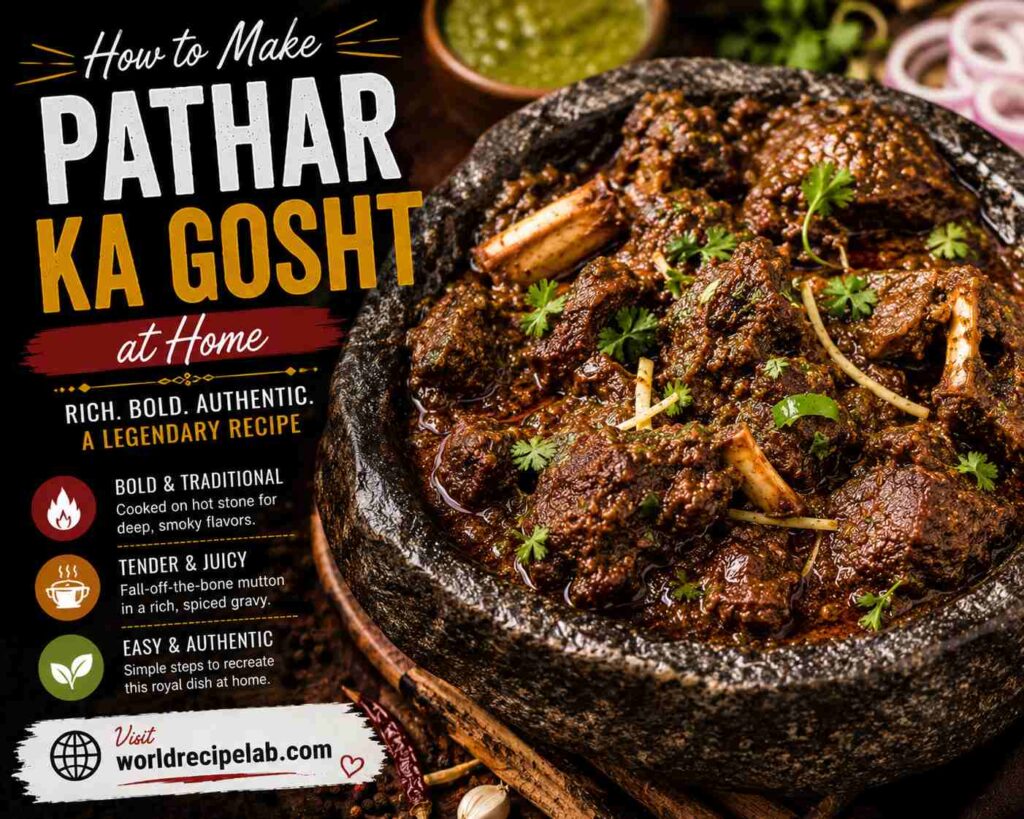
Serve Pathar ka Gosht hot with sliced onions, lemon wedges, green chutney, and roomali roti or naan.
Pathar ka Gosht literally means "meat cooked on stone." It is associated with Hyderabad, where marinated meat is cooked on a heated stone surface rather than in a conventional curry pot.
Unlike mutton curry, this preparation has little gravy. The meat is seasoned and cooked directly on a hot surface, allowing the outside to brown while the inside cooks through.
At home, a heavy iron tawa or grill pan is a practical alternative to a traditional cooking stone. The result will not be identical to every traditional preparation, but the same basic approach can produce flavourful, browned mutton.
This recipe uses 500 g of boneless mutton and serves approximately four people as part of a meal.
Trim away excess fat and cut the boneless mutton into thin, even slices. If necessary, gently flatten thicker pieces with a meat mallet or rolling pin.
Aim for slices approximately ¼ inch thick. Keeping the pieces similar in thickness helps them cook more evenly.
Pat the meat dry before adding the marinade.
In a mixing bowl, combine the ginger-garlic paste, red chilli powder, Kashmiri red chilli powder, raw papaya paste, thick curd, lemon juice, garam masala, and salt.
Mix until the ingredients form a consistent coating.
Add the mutton and turn the slices until they are coated on all sides. Cover the bowl and refrigerate for at least two hours. You can leave the meat overnight if convenient.
Keep the marinating meat refrigerated rather than at room temperature.
Why use raw papaya paste? Raw papaya contains enzymes that break down meat proteins and can help tenderise mutton. Too much, or an excessively long marination, can make the surface mushy, so measure it carefully.
Place a heavy iron tawa or grill pan over medium-high to high heat. Allow it to heat thoroughly before adding the cooking fat.
Brush or spread some of the ghee or oil across the surface.
A traditional stone slab is not essential for a home-style version. However, use a heavy pan that retains heat well, and follow the manufacturer's instructions if using a specialised stone cooking surface.
Arrange the marinated slices in a single layer, leaving space between them. Cook in batches if necessary.
Sear the first side for approximately 2–3 minutes, then turn the pieces. The exact time will depend on the thickness of the slices, the pan temperature, and the cut of mutton.
Avoid moving the meat repeatedly during the initial sear. Allowing the surface to make contact with the hot pan helps it develop a browned crust.
Reduce the heat if the marinade begins to burn before the meat cooks through. Continue turning the slices and baste lightly with the remaining ghee or oil as needed.
The original cooking estimate is 10–12 minutes per side after searing, but this is not a reliable universal timing for mutton. Thin slices may cook much faster, while tougher cuts may require longer or a different cooking method.
Cook the meat thoroughly. For whole cuts of mutton, use a food thermometer and follow a recognised safe cooking temperature; for a conservative home-kitchen approach, cook to at least 63°C (145°F) and allow a three-minute rest. If the mutton remains tough, continue cooking until tender rather than relying on the clock alone.
If the meat starts becoming dry before it is tender, lower the heat and cover the pan briefly to help it finish cooking. The result may be less charred than meat cooked entirely over high heat, but tenderness matters more than forcing a fixed cooking time.
For a smoky finish, you can use the traditional-style charcoal smoking technique known as dhungar. This step is optional.
Use a small, heatproof metal bowl designed to withstand high temperatures. Place it securely inside a suitable covered vessel, away from direct contact with the food. Add a small piece of fully lit charcoal, then a few drops of ghee to produce smoke. Cover briefly, then remove the charcoal bowl carefully.
Safety note: Use charcoal only in a well-ventilated area because burning charcoal produces carbon monoxide. Never burn charcoal indoors or in an enclosed kitchen. Do not leave the hot charcoal unattended, and avoid using a vessel or bowl that is not heat-safe.
You can skip this step entirely and serve the browned mutton without added smoke.
Transfer the cooked Pathar ka Gosht to a serving plate. Add sliced onions, lemon wedges, and green chutney.
Serve with roomali roti, naan, or another flatbread. The dish is best enjoyed soon after cooking, while the meat is hot and the browned edges remain appealing.
Ghee: Use neutral oil, such as sunflower oil, if you do not have ghee.
Kashmiri red chilli powder: Paprika can provide colour and mild sweetness, although its flavour differs from Kashmiri chilli powder.
Thick curd: Use plain, unsweetened Greek yoghurt or another thick plain yoghurt. Avoid flavoured or sweetened yoghurt.
Raw papaya paste: A commercial meat tenderiser can be used according to its package directions. Kiwi also contains tenderising enzymes, but its effect can be strong and less predictable. If substituting it, use a small amount and monitor the marination closely. You can omit enzymatic tenderisers, but tougher cuts may need a different cooking method or more time to become tender.
Boneless mutton: Boneless goat meat can be used. Choose a cut suitable for quick cooking and slice it thinly. Tougher cuts may need to be tenderised by a slower method before being finished on the tawa.
Pathar ka Gosht pairs well with simple sides that balance its chilli seasoning and browned meat.
For more ideas, explore our Mutton Seekh Kebab recipe, Restaurant-Style Tandoori Mutton Ribs, and Kerala-Style Mutton Ghee Roast.
Thick slices take longer to cook and may become tough before their centres are done. Cut the meat evenly and flatten thicker pieces.
Raw papaya is a potent tenderiser. More is not necessarily better; excessive amounts can make the surface mushy.
High heat helps brown the meat, but it can burn the yoghurt-based marinade before the mutton is cooked. Adjust the heat as needed.
Too many slices at once reduce surface contact and can cause the meat to release moisture rather than brown. Cook in batches.
Mutton varies in tenderness. Check the actual doneness of the meat and continue cooking when necessary.
Refrigerate leftover Pathar ka Gosht within two hours of cooking in a covered, shallow container. Store it at 4°C (40°F) or below and use it within three to four days.
Reheat leftovers until they reach 74°C (165°F) throughout. A covered pan over low to medium heat can help prevent the slices from drying out. Add a small splash of water if needed, but avoid prolonged reheating.
You can also slice leftover meat and add it to a wrap or sandwich with onions and chutney. Keep leftovers refrigerated until use, and do not leave cooked meat at room temperature for extended periods.
Yes. A heavy iron tawa or grill pan is a practical home alternative. Heat retention and direct contact with the cooking surface help the meat brown.
Marinate it in the refrigerator for at least two hours. Overnight marination is optional. Because the recipe contains raw papaya paste, avoid extending the marination unnecessarily.
The meat may be too thick, the cut may be naturally tough, or the cooking method may not suit that cut. Slice the meat evenly, use the tenderiser in the stated quantity, and continue cooking appropriately if the mutton has not become tender.
Yes. Neutral oil, such as sunflower oil, works well. Ghee contributes a richer flavour but is not essential.
No. It is primarily a marinated, pan- or stone-cooked mutton preparation rather than a gravy-based curry.
Pathar ka Gosht brings together chilli-spiced mutton, a yoghurt-based marinade, and the browned flavour that comes from cooking meat directly on a hot surface. A heavy tawa makes this Hyderabadi-inspired dish accessible to home cooks without requiring a traditional stone slab.
Prepare the marinade ahead, cook the meat in batches, and adjust the heat to suit the cut. Serve it hot with green chutney, onions, lemon, and flatbread for a satisfying meal.
Raw papaya paste acts as a natural meat tenderizer. Kiwi paste or commercial meat tenderizer powder can be used as substitutes.
Paprika may replace Kashmiri red chilli powder if unavailable.
Mustard oil can be used instead of ghee for a spicier and more robust flavor.
For the best texture, keep the mutton slices about ¼ inch thick.
Avoid overcrowding the pan, as this will steam the meat instead of searing it.
Start with high heat for proper charring, then reduce to medium to finish cooking evenly.
Leftover Pathar ka Gosht can be used in wraps, tacos, sandwiches, or mixed with rice for a quick biryani-style meal.
The charcoal smoking method helps recreate the authentic stone-cooked aroma at home.