
Pesto-Crusted Salmon combines tender salmon with a fragrant coating of basil pesto, Parmesan cheese, and crisp breadcrumbs. The pesto brings fresh basil, garlic, and olive oil flavours, while the topping adds texture and a savoury finish. It is a useful option when you want something more interesting than plain baked salmon without preparing a separate sauce.
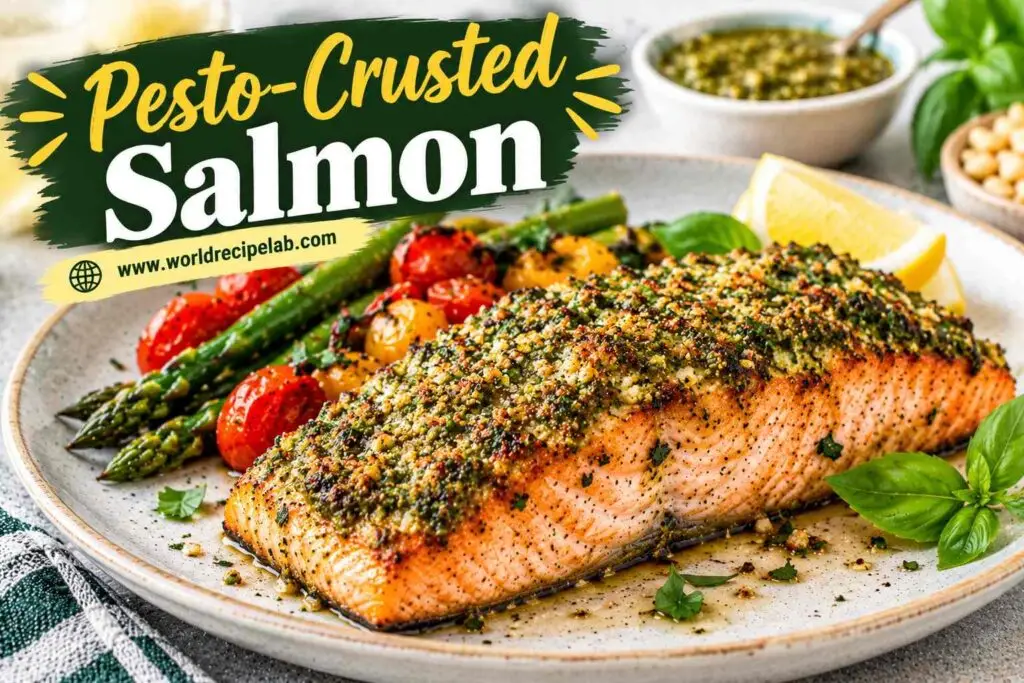
The key is keeping the pesto topping flavourful without making it too wet. A thin, even layer allows the salmon to cook properly while the crust develops colour. Whether you use homemade or store-bought pesto, a few small adjustments can make a noticeable difference to the final dish.
Traditional pesto is commonly made with basil, olive oil, garlic, Parmesan cheese, and pine nuts. When paired with salmon, it provides an aromatic, herb-forward flavour that contrasts with the fish's richness.
The breadcrumb topping is what distinguishes this version from salmon simply baked with pesto. It creates a lightly crisp surface, while Parmesan contributes a salty, savoury note.
This recipe is baked rather than pan-fried, making it convenient for preparing several fillets together. It also leaves room for ingredient swaps depending on what you have available.
Basil pesto: Classic basil pesto is the most straightforward choice. Its herbal flavour pairs naturally with salmon and Parmesan.
Store-bought pesto: A refrigerated or jarred pesto can save preparation time. Check its salt content because pesto, Parmesan, and seasoned breadcrumbs can all contribute sodium.
Homemade pesto: Homemade pesto allows you to adjust the garlic, cheese, nuts, and olive oil. Keep it thick enough to cling to the salmon rather than running off the surface.
Alternative pestos: Sun-dried tomato pesto gives the dish a deeper, more concentrated flavour. Spinach or rocket pesto can also work, although the taste will differ from traditional basil pesto.
The topping works best when each ingredient has a clear purpose.
You can adapt the topping to suit different pantries and dietary preferences.
Pesto ingredients vary by brand, so check labels for nuts, dairy, gluten, and other allergens before serving.
The main concern is excess moisture. Salmon releases moisture as it cooks, while pesto contains oil and sometimes additional water from the herbs and other ingredients.
Pat the fish dry before adding the topping, then spread on a relatively thin layer of pesto. Mix the breadcrumbs with only enough oil to coat them lightly. A thick, wet layer can soften rather than crisp.
Bake the salmon uncovered and leave space between the fillets so hot air can circulate. If you want extra colour on the topping, a brief finish under the grill or broiler may help, but watch it closely because Parmesan and breadcrumbs can brown quickly.
Fresh or properly thawed frozen salmon can both work well. Look for fillets that are similar in thickness, rather than relying only on their weight. Even thickness makes it easier for all the portions to finish cooking at approximately the same time.
Skin-on fillets are suitable because the skin can help hold the fish together. Place them skin-side down, with the pesto crust on top. If using skinless fillets, lightly grease or line the baking dish to make serving easier.
For more information about selecting and cooking salmon, visit the World Recipe Lab Salmon Guide.
Because the crust already contains herbs, cheese, and olive oil, simple sides usually work best.
For a complete bowl-style meal, try the World Recipe Lab Salmon Rice Bowl Recipe.
Keep the topping even. Spread pesto over the surface without applying an excessively thick layer. Press the breadcrumb mixture gently so it adheres.
Use finely grated Parmesan. It distributes more evenly through the crust than large shavings.
Avoid excess oil. Pesto already contains olive oil. Add only enough extra oil to help the breadcrumbs brown.
Watch the final minutes. Breadcrumbs can go from golden to burnt quickly, especially under a broiler.
Check the centre of the fish. A browned crust does not guarantee that the salmon is cooked through. The US Food and Drug Administration recommends cooking fish to an internal temperature of 145°F (63°C), measured at the thickest part.
Refrigerate leftover salmon in a covered container within two hours of cooking. Use refrigerated leftovers within three to four days.
For better texture, reheat the fish in an oven at a moderate temperature until hot throughout. A microwave is convenient, but the breadcrumb crust will usually soften. Avoid prolonged heating, which can dry out the salmon.
Leftovers can be flaked into pasta, added to a grain bowl, or served with salad for another meal.
Oven-baked salmon topped with basil pesto, Parmesan, and golden breadcrumbs for a savoury, herb-filled crust.