

Mutton liver fry, also known as kaleji fry, is a dry Indian preparation built around a simple challenge: getting plenty of spice and roasted flavor without making the liver tough.
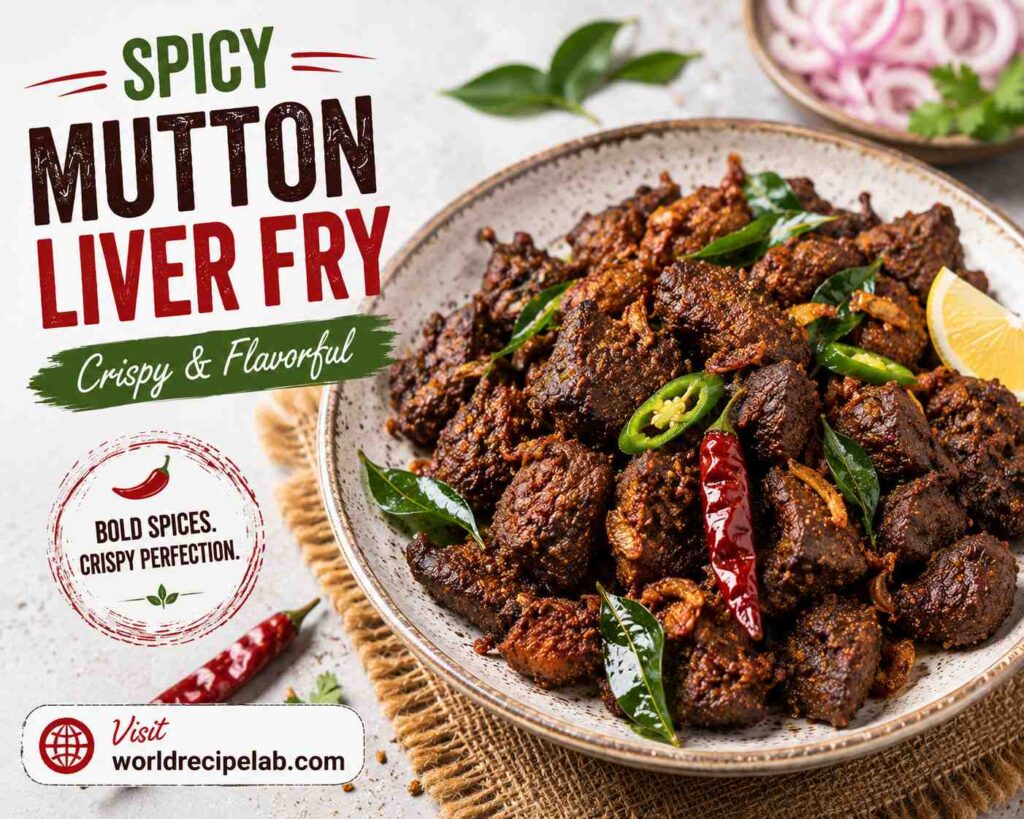
The liver is cleaned, cut into small pieces, coated with onions, chilies and ground spices, then cooked until just done and finished with a short high-heat fry. The result is a savory, spicy dish with browned onions and lightly roasted edges rather than a heavy curry.
This recipe uses 300–400 g mutton liver and serves 2. An optional short milk soak can be used if you prefer a milder liver flavor.
Mutton liver does not need the long cooking time used for many goat or mutton curry cuts. Its texture changes quickly with heat.
Three things make the biggest difference:
For food safety, cook organ meats to a safe internal temperature; if you have a food thermometer, check the thickest piece rather than relying only on the clock.
If you find liver's flavor particularly strong, soak the cleaned pieces in milk for 10–15 minutes. Drain and pat them thoroughly dry before cooking.
This is optional rather than an essential step.
Rinse the liver gently under cold water and remove any visible membranes, tough connective pieces or unwanted veins.
Cut it into reasonably similar-sized pieces. Very large pieces take longer to cook, while tiny pieces can become dry quickly.
If using the optional milk soak, soak for 10–15 minutes, then drain and pat dry.
Heat 2–3 tablespoons of oil in a heavy-bottomed pan or kadai over medium heat.
Add the sliced onions and cook until they become golden and lightly browned.
Add the slit green chilies and curry leaves, if using. Cook for about 1 minute.
The browned onions provide much of the flavor and help give this dry preparation its characteristic roasted taste.
Add the ginger-garlic paste and cook until its raw aroma disappears.
Add the red chili powder, turmeric, coriander powder and black pepper.
Stir well and cook briefly so the spices coat the onions and oil without burning.
If the pan becomes excessively dry, lower the heat rather than adding a large amount of water. This is intended to remain a dry fry.
Add the cleaned liver pieces to the pan.
Toss gently until the liver is coated with the onion and spice mixture.
Cook uncovered over medium-high heat for about 5–6 minutes, stirring occasionally.
At this stage, the liver will begin changing color and releasing some moisture.
Reduce the heat and cover the pan. Continue cooking for approximately 7–8 minutes, stirring gently once or twice.
The exact time can vary with the size and thickness of the pieces, so use doneness rather than the clock alone.
The thickest piece should be cooked through in the center. For a thermometer check, organ meats should reach 71°C / 160°F.
Avoid leaving fully cooked liver over the heat for much longer than necessary because prolonged cooking can make it firm and chewy.
Remove the lid and increase the heat slightly.
Add the garam masala and salt. Toss well and cook for another 2–3 minutes, allowing excess moisture to evaporate and the masala to cling to the liver.
Turn off the heat and add the lemon juice.
Finish with fresh coriander.
Serve hot.
The flavor does not come from using a huge number of spices. The important part is how the ingredients are cooked.
Well-browned onions give the dish sweetness and depth. Ginger, garlic, chilies and black pepper provide the sharper notes, while coriander and garam masala round out the spice mixture.
The final few minutes of dry frying are also important. They help remove excess moisture and give the masala a more concentrated, roasted character.
Yes. Chicken liver can be substituted, but it is generally smaller and cooks differently from mutton liver. Cut it into similar-sized pieces and check it earlier rather than automatically using the same cooking time.
Use dried red chilies or a small amount of chili flakes. The flavor will change slightly, but the dish will still work.
You can use ghee for a richer finish. Mustard oil can also be used if you enjoy its stronger aroma.
No. Curry leaves add a distinctive aromatic note but are optional in this recipe.
Absolutely. The milk soak is optional. Fresh, properly cleaned liver can be cooked without it.
If your kaleji regularly turns chewy, check these points:
The biggest mistake is usually not a lack of spices; it is leaving the liver on the heat after it has already cooked through.
For a hotter version, increase the green chilies and black pepper.
For a milder version, reduce the green chilies and red chili powder while keeping the coriander, ginger and garlic. You can also serve lemon wedges on the side so everyone can adjust the sharpness to taste.
Because this is a dry preparation, it works well alongside simple breads and rice dishes.
Try it with:
For another dry mutton preparation, you can also explore the Best Mutton Recipes at Home collection.
If you enjoy richly spiced goat dishes, Andhra Mutton Curry offers a very different, gravy-based style.
For another snack-style mutton preparation, see our Mutton Seekh Kebab recipe.
Mutton liver fry is best served fresh because the texture can become firmer after chilling and reheating.
If you have leftovers, transfer them to an airtight container and refrigerate promptly. Use within 1–2 days.
To reheat, warm the liver gently in a pan just until heated through. Avoid prolonged reheating, which can make the pieces noticeably tougher.
I would not recommend freezing this particular preparation if maintaining the original texture is a priority.
The most common reason is overcooking. Liver can become firm relatively quickly, so cook it through and remove it from the heat rather than continuing to fry it for a long period.
It doesn't have to be. A 10–15 minute milk soak is an optional preparation step for people who prefer a milder liver flavor.
Yes, although the character of the dish will change. Onions provide sweetness, moisture and body to the dry masala. If you omit them, keep a closer eye on the pan because the spices can catch more easily.
Liver naturally contains moisture, and wet pieces can release more liquid into the pan. Patting the pieces dry before cooking and avoiding overcrowding helps the preparation stay more fry-like.
It can have lightly roasted or browned edges, but it should not be hard or crunchy throughout. The ideal texture is cooked and tender with a concentrated, dry masala coating.
Prep time: 10 minutes
Marination/soaking time: 10 minutes, optional
Cook time: about 20 minutes
Total time: about 40 minutes including the optional soak
Servings: 2
Course: Appetizer, Side Dish
Cuisine: Indian
This spicy mutton liver fry is best when the liver remains tender and the onion-spice mixture is cooked down enough to cling to every piece. Keep the pieces evenly sized, cook them through, and avoid the temptation to keep frying after they are done.
- Soaking the liver in milk helps reduce its strong smell and keeps it soft.
- Avoid overcooking, as liver becomes tough and rubbery.
- Do not add water; the liver releases enough moisture during cooking.
- Fresh liver gives the best texture and flavor.
Variations
Andhra Style:
Add extra green chilies, crushed garlic, and curry leaves for a fiery version.
Kerala Style:
Use coconut oil and add grated coconut and fennel seeds.
Dhaba Style:
Finish with a spoon of ghee and a little kasuri methi.
Keto Version:
Skip onions and cook with butter, garlic, and extra black pepper.
Storage
- Refrigerate leftovers in an airtight container for up to 2 days.
- Avoid freezing, as the texture becomes grainy.
- Reheat in a pan with a few drops of water to prevent drying.
Serving Suggestions
- Roti
- Jeera rice
- Dosa
- As a spicy tea-time snack