
Bengali Kosha Mangsho Recipe | Authentic Mutton Curry
A Rich, Slow-Cooked Celebration of Bengal’s Culinary Soul
💬 Introduction: Why Bengali Kosha Mangsho Is a Must-Try
If you’ve ever been lucky enough to visit a Bengali home on a Sunday afternoon, chances are you were greeted by the aroma of Kosha Mangsho—a rich, spicy mutton curry slow-cooked in mustard oil until the masala hugs every piece of meat. It’s more than just food.
It’s a celebration of tradition, nostalgia, and flavor.
🍴 What Is Kosha Mangsho?
In Bengali,
- “Kosha” means slow-cooked or sautéed over low flame,
- “Mangsho” means meat, typically mutton.
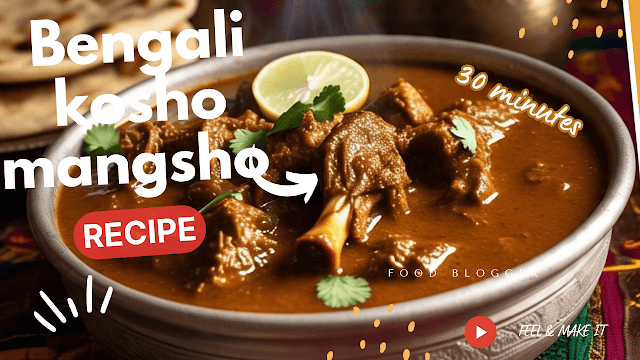
Unlike watery curries, Kosha Mangsho is all about the dark, thick masala that clings lovingly to the meat. Every bite bursts with bold spices and that iconic mustard oil aroma. This dish isn’t made—it’s nurtured.

Bengali Kosha Mangsho Recipe | Authentic Mutton Curry
Ingredients
Equipment
Method
- Combine mutton, curd, mustard oil, ginger paste, garlic paste, Kashmiri red chili powder, turmeric, and salt in a bowl. Coat the meat thoroughly and refrigerate for at least 2–4 hours or overnight for best flavor.
- Heat mustard oil in a heavy-bottomed kadai until it reaches smoking point, then lower the heat slightly. Add bay leaf, cardamoms, cinnamon, and cloves. Allow them to release their aroma before adding sliced onions. Cook until the onions turn deep golden brown.
- Add ginger paste and garlic paste to the onions. Sauté until the raw smell disappears. Stir in sugar if using to help caramelize the masala.
- Add the marinated mutton along with all the marinade. Cook on medium-high heat for 25–30 minutes, stirring frequently. Continue roasting until the masala darkens and starts sticking to the meat, creating the signature “kosha” texture.
- Pour in ½ cup hot water and mix well. Cover the pan tightly and cook on low heat for 45–60 minutes, stirring occasionally. Cook until the mutton becomes tender and the masala turns thick and rich.
- If using potatoes, fry boiled potatoes separately until golden and add them during the final 10 minutes of cooking. Allow them to absorb the flavors.
- Sprinkle Bengali garam masala over the curry and cook for another 2–3 minutes. Serve hot with luchi, steamed Gobindobhog rice, or Basanti pulao.
Notes
⏱️ Time Breakdown
| Task | Time |
|---|---|
| Marination | 2–4 hours (or overnight) |
| Slicing onions | 10 minutes |
| Traditional cooking | 1.5 – 2 hours |
| Pressure cooker method | ~45 minutes |
✅ Shortcut coming up below, but traditional wins for flavor every time.
🔄 Ingredient Substitutes
| If You Don’t Have… | Use This Instead |
|---|---|
| Mustard oil | Ghee + 1 tsp mustard seeds |
| Bengali garam masala | Regular garam masala + a pinch of nutmeg |
| Hung curd | Greek yogurt or strained dahi |
| Kashmiri chili powder | Red chili + a pinch of paprika |
🔥 Why Kosha Mangsho Stands Out
- Dry, Rich & Intense – No thin gravy, just flavorful masala clinging to each bite.
- Slow-Cooked Glory – Time is the main ingredient here.
- Flavor Complexity – The depth comes from curd, mustard oil, caramelized onions, and bhuna masala.
- Bengali Signature – It’s not North Indian, not South—it’s uniquely Bengali.
🧠 Pro Tips Before You Begin
- Always use bone-in mutton—it brings out the richness.
- Don’t skip the marination—that curd and ginger-garlic paste breaks down the meat beautifully.
- Let mustard oil smoke first, then cool slightly before cooking—this removes its raw pungency.
- Use an iron kadai or heavy-bottomed pan for that dark, caramelized finish.
- Add fried potatoes toward the end—trust us, it’s a Bengali favorite.
Ingredient Substitutes
| If You Don’t Have This | Use This Instead |
|---|---|
| Mustard oil | Ghee + 1 tsp mustard seeds |
| Bengali garam masala | Regular garam masala + nutmeg |
| Curd (hung yogurt) | Greek yogurt or thick dahi |
| Kashmiri chili powder | Mix of paprika + red chili |
🔥 Why Kosha Mangsho Is Different
- Dry & Dark: Unlike gravied dishes, this has very little liquid. The masala clings to the meat.
- Slow-Cooked: This is where the name ‘kosha’ comes in. Bhuna is life.
- Layered Flavor: Mustard oil, ginger, garlic, curd — they all come together slowly.
- Bengali Masalas: It has a unique spice blend, distinct from Punjabi or South Indian mutton dishes.
Pro Tips Before You Start
- Use bone-in mutton for richer flavor.
- Don’t skip the marination step. It’s non-negotiable.
- If using mustard oil, let it smoke first. Removes raw pungency.
- Make a fresh batch of bhaja masala (roasted spice mix) for that final hit.
- Cook in an iron kadai if possible. It gives that dark caramelized depth.
🥔 Bonus: Add Potatoes Like a True Bengali
- Parboil and peel 2 medium potatoes.
- Fry them in mustard oil until golden and crisp.
- Add during the last 10 minutes of cooking.
🥔 Pro Tip: Use baby potatoes or golden variety for best absorption.
🍽️ How to Serve Kosha Mangsho
Let it rest! Kosha Mangsho tastes better after a few hours, or even the next day.
Best Pairings:
- 🫓 Luchi (deep-fried Bengali bread)
- 🍚 Steamed Gobindobhog rice
- 🍛 Basanti pulao for festive occasions
- 🍋 With a wedge of gondhoraj lebu (aromatic lime)
🧊 Storage Tip: Keeps well in fridge for up to 4 days. Freeze for up to a week. Reheat gently with a splash of hot water or ghee.
❓ FAQs,
❓ “Can I make this in 30 minutes?”
Technically, yes—with a pressure cooker. But the taste? Nowhere close to the traditional version.
❓ “What if I want a no-onion, no-garlic version?”
Skip both, and use hing (asafoetida) with a blend of bhaja masala (dry roasted spices).
❓ “Why is my curry watery?”
Too much tomato or water. Kosha Mangsho is a dry curry—go easy on the liquid and let it bhuno uncovered toward the end.
🕰️ “Can I make Kosha Mangsho in under 30 minutes?”
Technically yes, with a pressure cooker and premade masala. But you’ll sacrifice flavor.
🧄 “No onion no garlic version?”
You can skip both. Use hing (asafoetida) and a mix of dry roasted bhaja masala for depth.
💧 “Why does the curry become watery?”
Overuse of tomatoes or adding too much water. Keep the moisture minimal and uncovered near the end.
📚 A Bite into History
Kosha Mangsho traces its roots back to colonial Bengal, when zamindars demanded grand feasts. Cooks crafted this dish with caramelized onions, mustard oil, and slow-cooked mutton to meet those royal expectations.
Over generations, it became a staple for Sunday lunches, Durga Puja feasts, and family reunions.
Today, it represents Bengali pride on a plate.
💡 Final Thoughts
Kosha Mangsho isn’t just about meat—it’s about memories, culture, and love simmered into a pot. Whether you grew up eating it or are trying it for the first time, this recipe brings authentic Bengal to your kitchen.
So the next time someone says, “Why does Bengali food take so long?”—just smile and say:
“Because the best things in life can’t be rushed.”