

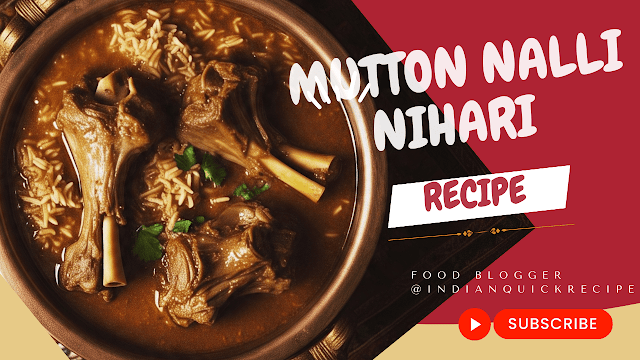
How to Make Nalli Nihari at Home – A Slow-Cooked Delight Worth Waking Up For!
 |
| Mutton nalli nihari served with soft naan, fried onions, and lemon wedges |
Introduction: What is Nalli Nihari?
Imagine a stew so rich, so deeply flavorful, that it once belonged only to kings. That dish is Nalli Nihari — a royal mutton curry made with slow-cooked shank bones full of marrow. The name comes from two words:
- “Nalli” means mutton shank with bone marrow.
- “Nihari” comes from the Arabic word “Nahar”, meaning morning.
This dish was traditionally eaten after early morning prayers (Fajr). It’s still enjoyed as a hearty breakfast in parts of India and Pakistan. But today, we’re not waking up early — we’re bringing its magic into our homes, slowly cooked to perfection!
Few dishes warm the soul like a slow-simmered Mutton Paya Soup that’s rich in flavor and tradition.
If you’re craving something rich, spicy, and soulful, this is your recipe.
No rush. Just patience and love.

How to Make Nalli Nihari at Home – A Slow-Cooked Delight Worth Waking Up For!
Ingredients
Equipment
Method
- Add mutton shanks, salt, turmeric, and water to a pressure cooker or large pot. Pressure cook for 3 whistles or simmer in an open pot for about 40 minutes. Remove the mutton and strain the stock. Reserve the stock for later use.
- Heat ghee or mustard oil in a heavy-bottomed pot. Add cloves, black cardamoms, bay leaf, cinnamon stick, and black peppercorns. Sauté for 30 seconds.
- Add sliced onions and cook until golden brown. Stir in ginger-garlic paste and cook for 2–3 minutes.
- Add wheat flour and cook for another 2 minutes. Mix in Nihari masala, red chili powder, coriander powder, turmeric powder, and salt. Stir well.
- Add the boiled mutton pieces to the masala. Pour in the reserved mutton stock and mix gently until everything is well combined.
- Cover the pot with a tight lid and simmer on low heat for 2–3 hours. Stir occasionally and add more water if necessary. Allow the marrow from the bones to enrich and naturally thicken the gravy.
- Once the mutton is tender and the gravy reaches a rich consistency, switch off the heat. Garnish with crispy fried onions, fresh coriander leaves, julienned ginger, and lemon wedges. Serve hot.
Notes
– Wheat flour can be substituted with all-purpose flour or cornflour.
– Ghee may be replaced with mustard oil or neutral cooking oil.
– Store-bought Nihari masala works well if homemade is unavailable. Pro Tips – Slow cooking is the secret to authentic Nihari flavor.
– Bone marrow adds richness and should not be removed.
– Toast the flour lightly to prevent lumps.
– Nihari tastes even better the next day.
– Homemade Nihari masala gives the freshest flavor. Serving Suggestions – Khameeri roti
– Naan
– Tandoori roti
– Steamed basmati rice
– Sheermal
– Chilled lassi Storage – Refrigerate leftovers in an airtight container for up to 3–4 days.
– Freeze for up to 1 month.
– Reheat gently on low heat and add a little water if needed. FAQs Can I use chicken instead of mutton?
Yes, but the flavor will be lighter and cooking time will be shorter. Is Nihari very spicy?
No. It is moderately spicy and can be adjusted to taste. Can I freeze Nalli Nihari?
Yes. Cool completely before transferring to airtight containers. Can I make it ahead?
Absolutely. The flavors deepen overnight, making it even more delicious the next day.
💖 Why You’ll Love This Recipe
- 🥘 Deep, slow-cooked flavor
- 🍖 Tender meat falling off the bone
- 🧠 Nourishing and satisfying
- 🥄 Perfect for special weekends or festivals
- 👨🍳 Works in both traditional and pressure cooker methods
🕰️ Preparation & Cooking Time
| Step | Time |
|---|---|
| Ingredient prep | 15 minutes |
| Boiling mutton | 30–45 minutes |
| Making gravy | 20 minutes |
| Slow simmering | 2–3 hours |
| Garnishing & plating | 10 minutes |
| Total | ~3.5 hours |
Don’t worry—it’s mostly hands-off. Let it cook while you relax.
🔄 Ingredient Alternatives
Before we dive into the recipe, here are some useful swaps:
- Mutton Shank (Nalli): If not available, use lamb leg with bone.
- Wheat flour (atta): You can use all-purpose flour (maida) or cornflour.
- Ghee: Use mustard oil or any neutral oil for a lighter version.
- Nihari Masala: Use homemade for best flavor. Store-bought works too.
If you enjoy royal Mughlai flavors, this Awadhi Mutton Korma deserves a place on your special occasion menu.
🥄 Final Touch – Garnishing
Before serving, don’t forget to garnish. It brings color, aroma, and texture.
- Add a handful of crispy fried onions on top.
- Sprinkle fresh coriander leaves.
- Add julienned ginger for zing.
- Serve with lemon wedges on the side.
This is the moment where your Nihari turns into a royal feast!
🍽️ How to Serve Nalli Nihari
Here are some traditional and modern ways to serve:
- With Khameeri Roti – The best and most authentic pairing.
- With Naan or Tandoori Roti – Soft breads soak up the gravy.
- With Steamed Basmati Rice – Great if you love rice with curry.
- With Sheermal (Sweet Bread) – A richer option used in Lucknow.
Serve it hot, with a glass of chilled lassi on the side for the ultimate Mughlai experience.
💭 Pro Tips for Best Nihari
- Always slow-cook the meat. That’s the secret to rich flavor.
- Use mutton with bone marrow – it adds unmatched depth.
- Toast the flour lightly before adding to avoid lumps.
- Make a day ahead. Nihari tastes even better the next day!
- Use homemade Nihari masala when possible. The taste is fresher.
Looking for something elegant yet comforting? Kashmiri Mutton Yakhni offers delicate flavors that are impossible to forget.
📌 Frequently Asked Questions
❓ Can I use chicken instead of mutton?
Yes, but the flavor won’t be as deep. Chicken Nihari is quicker to cook and lighter.
❓ Is Nihari very spicy?
It’s moderately spicy. You can adjust red chili levels based on your taste.
❓ How long can I store Nalli Nihari?
It stays fresh for 3–4 days in the fridge. In fact, it tastes better the next day!
❓ Can I freeze it?
Yes. Let it cool completely. Store in airtight containers. Use within 1 month.
❤️ Final Thoughts
Nalli Nihari isn’t just a dish — it’s an experience. A dish that invites you to slow down and enjoy the process. When you finally lift the lid after hours of slow cooking, the aroma alone will make your mouth water. Every spoon is packed with flavor, warmth, and history.
Whether you’re making it for a special Sunday lunch or a festive family dinner, this recipe will never disappoint. Just remember, it’s not fast food — it’s soul food.
Cook with love, serve with pride, and enjoy every bite.
📖 The Royal History of Nalli Nihari
Nalli Nihari has its roots in the royal kitchens of the Mughal Empire. It was first prepared in Old Delhi and Lucknow, especially for noblemen and royal soldiers. After their morning prayers, nobles were served Nihari to nourish them before the day’s battles or administrative duties.
Over time, Nihari left the palaces and entered the hearts of common people. It became a symbol of warmth and hospitality, especially during festivals like Eid and family get-togethers. Even today, in cities like Delhi, Hyderabad, and Karachi, people line up early morning outside famous Nihari joints for a taste of this magic.
With this recipe, you’re bringing centuries of tradition to your own kitchen.