

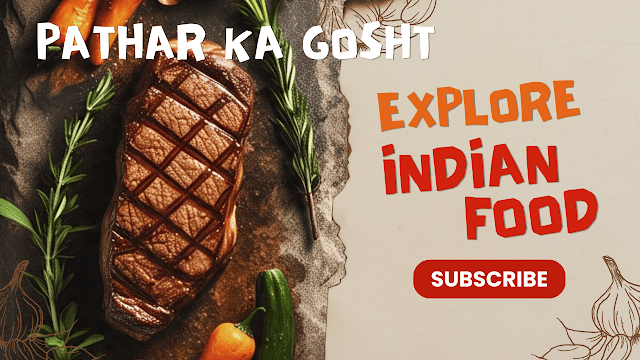
Pathar ka Gosht – The Legendary Hyderabadi Stone-Cooked Mutton Recipe
 |
| Tender Hyderabadi pathar ka gosht served with onions, lemon, and green chutney |
If there’s one dish that defines street-side royalty in Hyderabad, it’s the fiery, juicy, and incredibly flavorful Pathar ka Gosht. Translated as “meat cooked on stone,” this dish is a culinary marvel that combines rustic tradition with mouth-watering flavor.
Let’s break down how to make it at home while keeping all the smoky, charred magic alive.
Bengali Kosha Mangsho (Spicy Dry Mutton Curry) A Step-by-Step Authentic Recipe
If smoky grilled meat is your weakness, these Tandoori Mutton Ribs will leave you craving another serving.
Preparation Time:
- Prep time: 20 minutes
- Marination time: Minimum 2 hours (overnight preferred)
- Cooking time: 25–30 minutes
- Total time: Around 3 hours including marination
Creamy, juicy, and packed with smoky flavors, this Afghani Mutton Tikka is impossible to resist.

Pathar ka Gosht
Ingredients
Equipment
Method
- Clean the mutton and pat it dry. Lightly beat the slices with a meat mallet or rolling pin to flatten them for even cooking.
- In a bowl, combine ginger-garlic paste, red chilli powder, Kashmiri red chilli powder, raw papaya paste, curd, lemon juice, garam masala, and salt. Coat the mutton thoroughly with the marinade. Cover and refrigerate for at least 2 hours or overnight for best results.
- Traditionally, Pathar ka Gosht is cooked on a stone slab. At home, heat a thick iron tawa or grill pan over high heat until very hot. Add a little ghee or oil and spread evenly.
- Place the marinated mutton slices on the hot surface without overcrowding. Cook over high heat for 2–3 minutes on each side to seal in the juices.
- Reduce the heat to medium and continue cooking for 10–12 minutes per side until the meat becomes tender and develops smoky, charred edges. Baste occasionally with more ghee for extra flavor.
- For enhanced smokiness, place a hot piece of charcoal in a small steel bowl inside the pan. Add a few drops of ghee onto the charcoal and immediately cover the pan for 2–3 minutes.
- Transfer the Pathar ka Gosht to a serving platter. Serve hot with green chutney, sliced onions, lemon wedges, and roomali roti or naan.
Notes
Step-by-Step pathar ka gosht Recipe:
1. Tenderize and Marinate
Start by cleaning and patting dry the mutton slices. Beat the pieces slightly to flatten them (this ensures even cooking). In a bowl, mix ginger-garlic paste, both red chilli powders, curd, lemon juice, garam masala, salt, and raw papaya paste.
Coat the mutton well with this mixture. Cover and refrigerate for at least 2 hours. If you can, marinate it overnight—trust me, it’s worth it!
2. Stone or Tawa Prep
Traditionally, a big granite or stone slab is used for cooking. At home, use a thick iron tawa or grill pan. Heat it until smoking hot.
Add a few drops of ghee or oil and spread it.
3. Cooking the Meat
Now lay the marinated meat slices directly onto the hot surface. Don’t overcrowd. Let them cook on high heat for 2–3 minutes per side initially to seal in the juices.
Then reduce heat slightly and cook for 10–12 minutes on each side until soft, juicy, and smoky. Baste occasionally with more ghee for added flavor.
Pro Tips for pathar mutton (gosht)
- Use a press or spatula to keep the meat flat during cooking.
- Flip carefully; the meat becomes tender and can break.
- Char a piece of coal, put it in a small bowl in the pan, add ghee, and cover for 2 minutes to add more smokiness.
How to serve pathar ka gosht
- Best served hot with green chutney, sliced onions, and lemon wedges.
- Can be paired with roomali roti or naan.
Final Thoughts:
Pathar ka Gosht is more than a recipe—it’s a conversation starter. The kind of dish that transports you to a bustling Hyderabadi lane just with its aroma. You don’t need a stone slab to enjoy it at home. Just the right ingredients, patience, and high heat.
Every barbecue lover should try these succulent Mutton Seekh Kebabs at least once—they’re worth every bite.
History of stone cooked mutton (pathar ka gosht) recipe
The origin of Pathar ka Gosht traces back to the royal kitchens of the Nizams. Legend has it that a royal soldier once cooked meat on a hot stone during war—creating a smoky, juicy innovation that later turned into a royal favorite.
Even today, it remains a much-loved street food around Hyderabad’s Charminar area, winning hearts for its simplicity and flavor.
Stay tuned where we deep dive into regional variations, expert chef tricks, and nutritional value!
Pathar ka Gosht – Regional Twists, Expert Tricks, and Health Facts
we explored how to make the perfect Pathar ka Gosht at home—right from the marinade to the final smoky sizzle. Now, let’s take things further.
Now, we’ll uncover the lesser-known regional twists, secret chef tips, nutritional details, and creative ways to enjoy this Hyderabadi gem beyond the usual plate.
Ready to explore another bold mutton specialty? Kerala’s famous Ghee Roast is bursting with unforgettable spices.
🌍 Regional Twists on Pathar ka Gosht
Though Pathar ka Gosht originated in Hyderabad, its fame has inspired local variants across India. Let’s take a tour of the most delicious ones.
1. Charminar-Style Pathar Gosht (Original)
Straight from the streets near Charminar, this version is high on spice and smoky flavor. The meat is often cooked on a huge granite slab right in front of customers. The aroma alone is enough to draw a crowd.
Signature Add-ons:
- Extra garlic in the marinade
- Coal smoke infused right before serving
- Served with flaky khamiri roti
2. Lucknowi Variant
In Lucknow, chefs tone down the heat slightly and add fragrant spices like mace, nutmeg, and saffron. The meat here is marinated longer and slow-cooked, creating a melt-in-mouth texture.
Taste Note: More royal and subtle, less fiery.
3. Mumbai Tawa Gosht (Inspired Cousin)
Mumbai’s version isn’t cooked on stone but a thick tawa. The masala is spicier and chunkier, resembling a fusion of Pathar ka Gosht and seekh kebab.
Street Add-on: Served with buttered pav and green chutney!
👨🍳 Expert Chef Tricks You Should Try
Even the best home chefs can level up their Pathar ka Gosht game with these pro secrets. They may sound small, but the flavor upgrade is massive!
✅ Meat Thickness Matters
Always slice the mutton around 1/4 inch thick. Too thick, and it becomes chewy. Too thin, and it may dry out.
✅ Double Marination
After your first marination with tenderizer, let it sit for an hour. Then re-coat it with curd, lemon juice, spices, and leave overnight. The result? Juicier meat with deeper flavor.
✅ Control the Heat Like a Pro
Start with a blazing hot surface to sear the meat, then lower to medium so it cooks through without burning. Think like a blacksmith—fire first, finesse later.
✅ Smoke Without Stone
Even without a granite slab, you can mimic the stone-cooked effect:
- Heat a small piece of charcoal
- Place it in a small bowl inside your pan
- Pour ghee on it and cover the pan for 2–3 minutes
This adds that signature smoky flavor in seconds!
✅ Use Desi Ghee Over Oil
While oil works, nothing matches the rich, earthy taste of pure desi ghee for this dish.
🧠 Nutritional Breakdown (Per 100g serving):
| Component | Value |
|---|---|
| Calories | ~190–220 kcal |
| Protein | 17–20g |
| Fat | 12–15g |
| Carbohydrates | <2g |
| Iron | 15% of RDA |
| Vitamin B12 | 30% of RDA |
✅ Health Benefits of stone cooked mutton (Yes, There Are Some!)
Though it’s indulgent, Pathar ka Gosht isn’t just empty calories.
- High in protein: Great for muscle repair and energy
- Iron-rich: Good for blood circulation
- Vitamin B12: Supports nerve health
- No heavy gravies: Unlike creamy curries, this uses minimal fat and carbs
But do watch your portion size, especially if you’re trying to eat light.
From royal curries to sizzling grills, discover the mutton recipes readers can’t stop cooking.
🍴 Creative Ways to Enjoy Pathar ka Gosht
Yes, it’s epic on its own—but you can get creative and use it in:
1. Gosht Wraps
Wrap those smoky slices in roomali roti with mint chutney, sliced onions, and a dash of chaat masala.
Perfect for picnics or quick dinners.
2. Gosht Tacos (Fusion Fun)
Toss some chopped Pathar ka Gosht into mini tortillas. Add yogurt-mint sauce, chopped onions, and lettuce. Instant Indian-Mexican delight!
3. Meaty Toast
Top your garlic bread or toasted pav with a few pieces and cheese. Grill till melty.
Midnight snack = upgraded.
4. Biryani Booster
Mix leftover Pathar ka Gosht with steamed basmati rice, some fried onions, and saffron water. Voila—quick biryani fix!
🔥 Common Mistakes to Avoid when making pathar ka gosht
Avoid these traps, and your dish will always be a winner.
❌ Using thick cuts
It takes forever to cook and turns rubbery. Always go for thin, even slices.
❌ Skipping the tenderizer
This dish is all about melt-in-mouth texture. Without a tenderizer, you’ll be chewing forever.
❌ Low heat cooking throughout
You won’t get the char and smoky edges that define this dish. High heat is a must, at least in the beginning.
❌ Overcrowding the pan
Give each piece breathing space. Overcrowding will steam the meat instead of searing it.
🤔 Final Words
Pathar ka Gosht may have royal roots, but it’s truly a people’s dish. Cooked in the open, eaten with fingers, and packed with fire and flavor—this dish brings together everything we love about Indian street food.
If Part 1 was about technique, Part 2 is about elevating that experience.
Whether you stick to tradition or experiment with tacos and toasts, the core remains the same: juicy, smoky mutton cooked hot and fast.
So go ahead—fire up that tawa and make your kitchen smell like the streets of Hyderabad.