

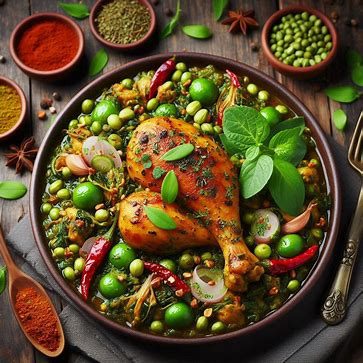
Methi Chicken Recipe – Punjabi-Style Fenugreek Chicken Curry
Methi Chicken is a North Indian chicken curry made with tender chicken, fresh fenugreek leaves, yogurt, onions, tomatoes, and warming spices.
Fresh methi gives the curry its defining character — an earthy aroma with a gentle bitterness that becomes more balanced as it cooks with the onion, tomato, yogurt, and spices.
For the best flavor, use fresh methi when available. Kasuri methi works when fresh leaves are difficult to find, but its flavor is more concentrated and slightly different.

What Is Methi Chicken?
Methi Chicken is a chicken curry where fenugreek leaves (methi) are one of the main flavoring ingredients. It’s commonly associated with North Indian cooking, and most versions combine chicken with onions, tomatoes, yogurt, ginger, garlic, and spices.
This recipe uses bone-in chicken for a richer curry, though boneless chicken works well when you want a quicker option.
Why You’ll Love This Recipe
- Fresh methi gives the curry a distinctive earthy flavor.
- Bone-in chicken stays juicy during simmering.
- Yogurt adds mild tang and richness.
- The gravy doesn’t need a large amount of cream.
- Methi’s natural bitterness stays balanced.
- You can use either fresh methi or kasuri methi.
- It pairs well with rice and Indian flatbreads.
Recipe at a Glance
Prep time: 20 minutes
Cook time: 40 minutes
Total time: About 1 hour
Servings: 4
Course: Main course
Cuisine: North Indian
Difficulty: Easy to intermediate
The complete ingredient list and cooking method are in the recipe card below.

Methi Chicken: A Flavorful Fusion of Fresh Fenugreek and Spices
Ingredients
Equipment
Method
- Pluck the methi leaves and wash them thoroughly 2–3 times.
- Soak them in salted water for 10 minutes, then drain and squeeze out excess water to reduce bitterness.
- Heat mustard oil or ghee in a deep kadai.
- Add green chilies followed by sliced onions and sauté until golden brown.
- Add ginger-garlic paste and cook for 2–3 minutes until the raw aroma disappears.
- Add chopped tomatoes and cook until soft and mushy.
- Add red chili powder, coriander powder, turmeric powder, and salt.
- Cook until the masala deepens in color and oil starts separating.
- Add the prepared methi leaves and sauté for 3–4 minutes until they soften and blend with the masala.
- Lower the heat and gradually add whisked yogurt while stirring continuously.
- Cook for 3–4 minutes until a creamy masala base forms.
- Add the chicken pieces and coat them well with the methi masala.
- Cook on medium heat for 6–8 minutes.
- Cover and cook for 10 minutes in its own juices.
- Add ½–¾ cup water according to your preferred consistency.
- Cover and cook for 20–25 minutes until the chicken becomes tender and fully cooked.
- Sprinkle garam masala and add fresh cream if using.
- Cook uncovered for 2–3 minutes to allow the flavors to come together.
- Serve hot with jeera rice, butter naan, lachha paratha, or tandoori roti.
Notes
– Lower the heat before adding yogurt to prevent curdling.
– For a lighter version, skip cream and use only thick yogurt.
– Add soaked cashews while cooking for a richer gravy.
– The dhungar method with hot charcoal and ghee adds a restaurant-style smoky aroma.
– Leftover Methi Chicken can be used in paratha rolls, stuffed buns, quesadillas, or biryani.
– Store leftovers in an airtight container in the refrigerator for up to 3 days.
Ingredient Notes
Fresh methi: The defining ingredient in this curry. Remove the thicker stems and wash the leaves thoroughly because fresh bunches can carry soil or grit. If your methi is particularly bitter, soaking the cleaned leaves briefly in salted water, then draining and squeezing them, can soften the bitterness.
Chicken: Bone-in curry-cut chicken works especially well because it stays moist and adds depth to the gravy. Boneless chicken can also be used, but it cooks faster.
Yogurt: Use thick, plain yogurt and whisk it until smooth before adding it to the curry. It provides acidity and creaminess without making the gravy overly heavy.
Mustard oil or ghee: Mustard oil gives the curry a more pronounced savory character, while ghee creates a rounder, richer flavor. A neutral cooking oil works too.
Fresh methi vs. kasuri methi: These aren’t interchangeable one-for-one. Fresh methi has a softer herbal flavor and adds moisture, while kasuri methi has a more concentrated aroma. If substituting dried methi, add it gradually and adjust to taste.
Cream: Cream is optional. Yogurt already provides richness and acidity, while the onion-tomato base gives the gravy body. Leave it out for a lighter curry or add a little at the end for a richer finish.

How to Balance Methi’s Natural Bitterness
Methi is naturally a little bitter, and that bitterness is part of its character. The goal isn’t to remove it completely but to keep it balanced.
A few things help:
- Wash the leaves thoroughly and remove excess water before cooking.
- Don’t use more methi than the recipe calls for.
- Cook the methi with the masala rather than adding a large amount at the very end.
- Let the onion, tomato, and yogurt balance the earthy flavor.
- Taste the curry before adding anything to correct bitterness.
If the finished curry tastes more bitter than you’d like, check the seasoning first. A little more salt, yogurt, or tomato can soften the perception of bitterness more naturally than adding sugar.
The best solution, however, is to use a reasonable amount of methi from the beginning and allow the flavors to balance as the curry cooks.
Important Cooking Tips
Brown the Onions Properly
Cook the onions until well softened and golden rather than rushing them. They provide natural sweetness that helps balance methi’s earthy character.
Concentrate the Tomato Masala
Don’t add the chicken while the tomato mixture is still watery. Cook the masala until it thickens and the oil begins to separate. This creates a more concentrated and flavorful gravy.
Add Yogurt Over Lower Heat
Whisk the yogurt first. Lower the heat and add it gradually while stirring. This helps it blend smoothly into the masala instead of splitting.
Don’t Overcook Boneless Chicken
Boneless chicken cooks faster than bone-in pieces. Start checking it earlier and avoid leaving it in the curry longer than necessary.
Chicken is safely cooked when the thickest part reaches 165°F (74°C) internally.
Common Mistakes to Avoid
- Using unwashed methi: Fresh leaves can contain grit, so wash them thoroughly.
- Adding too much methi: More isn’t necessarily better and can make the curry excessively bitter.
- Adding yogurt over high heat: This can cause the yogurt to split.
- Overcooking the chicken: Stop cooking once the chicken is tender and fully cooked.
- Making the gravy too thin: Add water gradually and allow the masala to remain concentrated.
Ingredient Substitutions
| Ingredient | Substitute | Notes |
|---|---|---|
| Bone-in chicken | Boneless chicken | Cooks faster |
| Fresh methi | Kasuri methi | More concentrated flavor |
| Thick yogurt | Greek yogurt | Similar consistency |
| Mustard oil | Ghee or neutral oil | Changes the flavor slightly |
| Fresh cream | Skip it | Curry remains flavorful without it |
| Green chilies | Reduce or omit | Helps control heat |
What to Serve With Methi Chicken
Methi Chicken works especially well with:
- Jeera rice
- Steamed basmati rice
- Tandoori roti
- Butter naan
- Lachha paratha
- Missi roti
For freshness, serve it with sliced onions, lemon wedges, plain yogurt, or cucumber raita.
Storage and Reheating
Let leftover curry cool before transferring it to an airtight container.
It can be refrigerated for up to 3 days. For longer storage, freeze it in a well-sealed freezer-safe container.
Reheat gently on the stovetop until heated through. If the gravy has thickened, add a small splash of water while reheating.
Reheat only the portion you plan to eat rather than repeatedly heating and cooling the entire batch.
Can You Make Methi Chicken Ahead?
Yes. The flavors can become more integrated after resting and reheating.
If you’re preparing the curry ahead for guests, refrigerate it promptly after cooking and cooling. Reheat gently until the chicken and gravy are thoroughly hot before serving.
Variations
Methi Chicken With Kasuri Methi
Use dried fenugreek leaves when fresh methi isn’t available. Crush the leaves lightly between your fingers before adding them to release their aroma.
Creamy Methi Chicken
Stir a small amount of cream into the curry at the end for a smoother, richer finish.
Methi Chicken With Cashews
Blend soaked cashews into the masala for a thicker and richer gravy.
Mild Methi Chicken
Reduce the green chilies and hot red chili powder while keeping the methi and aromatic spices. This keeps the curry flavorful without making it too hot.
Boneless Methi Chicken
Use boneless chicken thighs for a quicker version. Reduce the cooking time and check the chicken for doneness earlier.
Frequently Asked Questions
What does Methi Chicken taste like?
Methi Chicken is savory and aromatic, with the distinctive earthy character of fenugreek leaves. Fresh methi also brings mild bitterness, which is balanced by the onion, tomato, yogurt, and spices.
Is Methi Chicken the same as Saag Chicken?
No. Methi Chicken is defined by fenugreek leaves, while saag generally refers to dishes made with leafy greens such as spinach or mustard greens. The curry bases can be similar, but the flavor is different.
Can I use chicken breast instead of thighs?
Yes. Chicken breast can be used, but it is leaner and can dry out more easily. Keep a close eye on the cooking time.
Can I make Methi Chicken dairy-free?
Yes. Use an unsweetened plant-based yogurt and skip the cream. The flavor will change slightly, but the curry can still be flavorful and satisfying.
Can I make Methi Chicken in a pressure cooker?
Yes. However, the stovetop method gives you more control over the gravy and methi. If using a pressure cooker, avoid overcooking the chicken and simmer the curry uncovered afterward if the gravy needs to thicken.
A Short Note on Methi in North Indian Cooking
Fenugreek leaves are widely used in Indian cooking, both fresh and dried.
Fresh methi is used in curries, flatbreads, and vegetable dishes, while dried kasuri methi is often used in smaller quantities as an aromatic ingredient.
Methi Chicken is one of the combinations where fenugreek’s herbal character works particularly well with chicken and a spiced yogurt-based gravy.
Final Thoughts
Methi Chicken is a great choice when you want something different from a standard tomato-based chicken curry. Fresh fenugreek gives it an unmistakable earthy flavor, while yogurt, onions, tomatoes, ginger, garlic, and spices keep the curry balanced.
The essentials are simple: clean the methi well, don’t use more than you need, cook the onion-tomato base properly, and add the yogurt carefully.
Serve it with basmati rice or a warm flatbread, and let the methi remain the star of the dish.
Explore More Chicken Recipes
- Chicken Malvani
- Kadai Chicken
- Chicken Chettinad
- Chicken Jalfrezi
- Indian Chicken Curry