
Mysore Pak: The Decadent Sweet Treat of Indian Street Food
 |
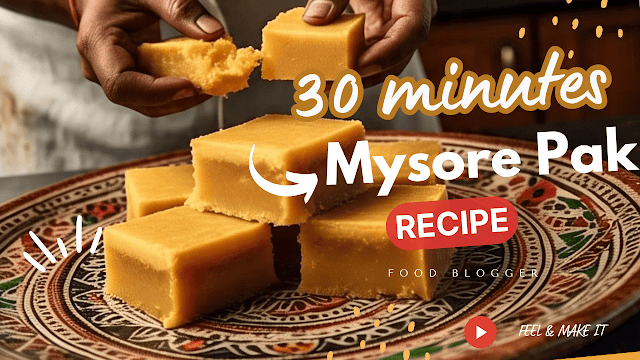
| Classic Mysore Pak cubes served on a banana leaf with rich golden texture |
Mysore Pak, a time-honored dessert from Karnataka, stands out as one of India’s most cherished sweets. With its melt-in-your-mouth texture and rich, buttery flavor, this traditional treat has evolved from royal kitchens to bustling street food stalls, captivating generations of food lovers. In this guide, we explore the fascinating history, cultural significance, and detailed recipe for making authentic Mysore Pak at home.
The Rich Heritage of Mysore Pak
Mysore Pak traces its origins to the royal kitchens of the Kingdom of Mysore in Karnataka. Traditionally made during festivals and special occasions, it was crafted as a luxurious dessert to celebrate joyous moments. The dessert’s name is believed to derive from its region of origin, Mysore, and its rich, granulated texture. Over the years, Mysore Pak has transcended its royal beginnings to become a staple on Indian street food menus—synonymous with indulgence and comfort.
Top culinary blogs and heritage food sites highlight that Mysore Pak’s secret lies in its simplicity: just a few high-quality ingredients transform into a dessert that is both rustic and decadent. Modern adaptations have emerged, but the classic version remains deeply rooted in tradition.
Why Mysore Pak is a Trending Dessert
Hyderabad “authentic Mysore Pak recipe,” “how to make Mysore Pak,” and “traditional Mysore Pak” are steadily popular. Food enthusiasts worldwide are eager to recreate this iconic dessert, both for its nostalgic value and its irresistible taste. Its enduring appeal is a testament to its perfect balance of texture and flavor—rich, buttery, and slightly crumbly.

Mysore Pak Recipe
Ingredients
Equipment
Method
- In a heavy-bottomed pan, combine sugar and water. Bring the mixture to a boil and simmer until it reaches a one-string consistency. Add cardamom powder if using.
- In a separate pan, dry roast the besan over low heat until it turns aromatic and slightly lighter in color. Remove from heat and allow it to cool slightly.
- Heat the ghee in a heavy pan. Gradually add the roasted besan while stirring continuously to form a smooth, lump-free mixture. Cook on low heat for 5–7 minutes until fragrant.
- Slowly pour the prepared sugar syrup into the besan mixture while stirring continuously. Continue cooking on low heat until the mixture thickens and begins to leave the sides of the pan.
- Transfer the hot mixture immediately to a greased tray or plate. Spread evenly and allow it to cool slightly.
- While still warm, cut the Mysore Pak into squares or diamond shapes using a greased knife. Allow it to cool completely before serving.
Notes
Expert Tips for Perfect Mysore Pak
Temperature Control: Maintaining low heat during the entire process is crucial to prevent burning and to achieve the ideal texture.
Continuous Stirring: Stir the mixture consistently while adding the sugar syrup to avoid lumps and ensure even cooking.
Practice Patience: Mysore Pak requires careful attention—rushing the process can lead to a grainy texture.
Storage: Store Mysore Pak in an airtight container. It can be kept at room temperature for several days, preserving its flavor and texture.
The Cultural Impact of Mysore Pak
Mysore Pak isn’t just a dessert—it’s a symbol of celebration and tradition. It is a fixture at festivals, weddings, and family gatherings, evoking memories of home and heritage. Modern food bloggers often spotlight Mysore Pak in the context of Indian culinary heritage, celebrating its rustic charm while inspiring new twists and creative presentations.
Conclusion
Mysore Pak is a timeless Indian dessert that embodies the richness of Indian culinary traditions. With its luscious, melt-in-your-mouth texture and deep, buttery flavor, it continues to enchant food lovers across the globe. This guide, enriched with detailed recipes, expert tips, and cultural insights, is designed to help you recreate authentic Mysore Pak at home.