

Kashmiri Mutton Yakhni is a yogurt-based mutton curry known for its delicate aroma, tender meat, and distinctive combination of fennel, dry ginger, and whole spices. Unlike tomato-based curries, this dish gets much of its character from a gently simmered yogurt gravy and a fragrant mutton stock.
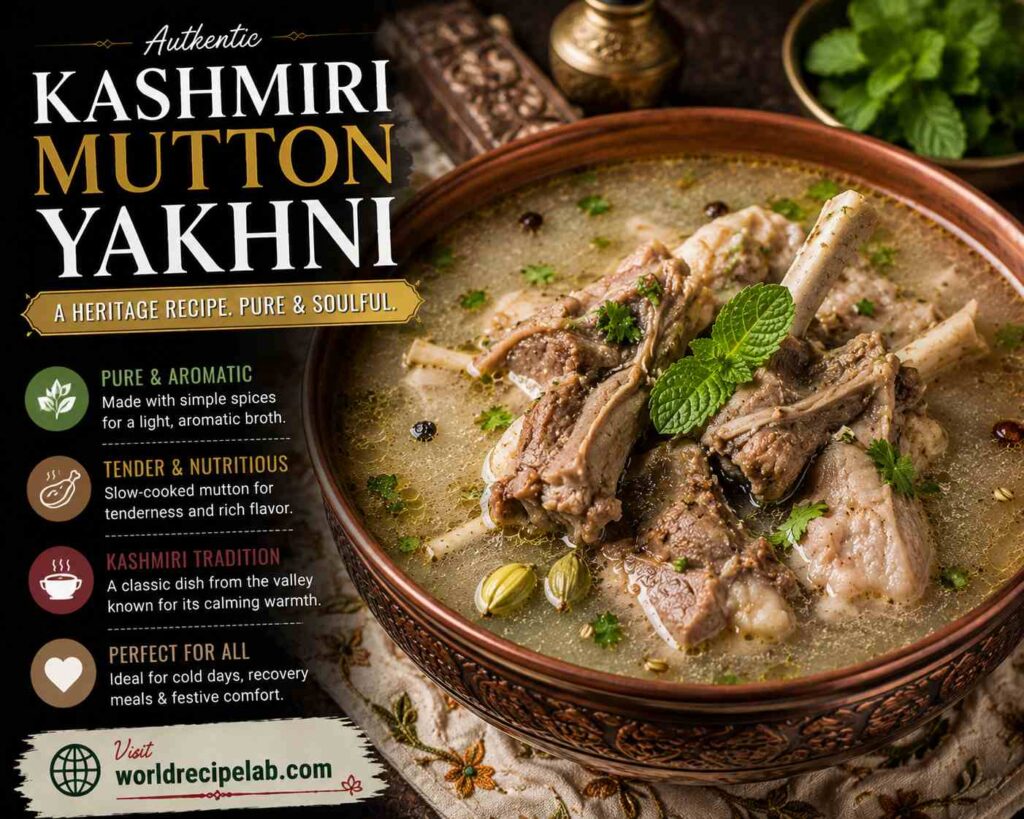
This version uses bone-in mutton, thick yogurt, mustard oil or ghee, and traditional warming spices. It contains no onion, garlic, or tomato, making it a useful option when you want a milder curry with a different flavour profile from everyday Indian gravies.
Serve it with steamed basmati rice for a satisfying meal.
Yakhni generally refers to a broth or stock used in several South Asian and Persian-influenced culinary traditions. Kashmiri Mutton Yakhni is especially associated with a yogurt-based gravy flavoured with aromatic spices.
Fennel powder and dry ginger are important flavouring ingredients. Green and black cardamom, cloves, cinnamon, and bay leaves contribute fragrance without relying on a heavy onion-tomato masala.
Yakhni is also associated with Kashmiri feast cooking, including Wazwan. Recipes vary between households and cooks, so this version is a home-style preparation rather than a claim to represent every traditional method.
Actual cooking time depends on the cut of mutton, the size of the pieces, and the cooking equipment.
Important liquid note: The ingredient list includes water for cooking the mutton and additional water for the gravy. Add the reserved mutton stock gradually rather than automatically pouring in every bit of liquid. The final amount needed will depend on how much stock remains and how thick you want the gravy.
Place the mutton, salt, and 2 cups of water in a pressure cooker. Cook until the meat is partly tender, allowing the pressure to release naturally before opening the cooker.
The original recipe suggests 4–5 whistles, but whistle counts vary by cooker, heat level, cut, and piece size. Check the meat rather than relying on the whistle count alone.
If using a regular pot, simmer the mutton in the water until it is partly tender, adding more water if needed. This can take longer than the suggested pressure-cooking method.
Reserve the cooking stock. You will use it to flavour the yogurt gravy.
Heat the mustard oil in a heavy-bottomed pan. If using mustard oil, heat it until it just begins to smoke, then lower the heat and allow it to cool slightly before adding the spices.
Add the green cardamom, black cardamom, cloves, cinnamon, and bay leaves. Stir briefly until fragrant, taking care not to burn them.
If using ghee instead, heat it until melted and hot before adding the spices.
Reduce the heat to low. Whisk the yogurt until smooth.
For extra protection against curdling, mix a spoonful or two of the warm mutton stock into the yogurt before adding it to the pan. Add the yogurt gradually while stirring continuously.
Keep the heat low and stir gently until the yogurt mixture is warm and smooth. Avoid allowing it to boil vigorously.
Stir in the fennel powder and dry ginger powder. Mix thoroughly so the spices are distributed throughout the gravy.
Cook gently for a few minutes, stirring frequently. If the mixture becomes too thick, add a small splash of reserved stock.
Add the partly cooked mutton to the yogurt gravy. Pour in enough reserved stock to create the consistency you want.
Stir carefully to coat the pieces without breaking them. Cover the pan and simmer over low heat.
Continue cooking gently for approximately 20–25 minutes, checking the meat and gravy as it cooks.
The mutton should become fully tender, and the flavours should blend into a smooth, aromatic gravy. If the meat is still tough, continue simmering and add a little hot water or stock when necessary.
Do not rely on a particular cooking time or a layer of oil on the surface as proof that the meat is done. Tenderness and safe cooking are what matter.
If using saffron, add the saffron-infused milk towards the end of cooking. Stir gently and simmer briefly without boiling the yogurt gravy aggressively.
Turn off the heat and let the curry rest for about 5 minutes before serving.
Serve the mutton yakhni hot with steamed basmati rice. The rice absorbs the aromatic yogurt gravy without competing with its delicate flavours.
Thick, full-fat yogurt gives the gravy a richer consistency. Whisk it thoroughly before adding it to the pan. Yogurt at room temperature is easier to incorporate than very cold yogurt.
High heat and vigorous boiling can cause yogurt to separate. Add it gradually, stir continuously, and maintain a gentle simmer.
Bone-in shoulder or other suitable braising cuts provide flavour and become tender during slow cooking. Cut the pieces to a reasonably similar size so they cook more evenly.
The gravy should coat the meat while remaining fluid enough to serve with rice. Start with less stock and add more as needed.
Fennel and dry ginger are central to this version. Adding large quantities of chilli powder, turmeric, tomato, or garam masala would change its intended flavour profile.
A five-minute rest after cooking allows the gravy to settle before serving. Avoid leaving the cooked curry at room temperature for an extended period.
Chicken can be used for a different yogurt-based curry, but it requires a separate cooking-time adjustment and should not be treated as the same mutton recipe.
Steamed basmati rice is the simplest pairing. Its mild flavour complements the fennel-and-yogurt gravy.
You could also serve the curry with:
For another regional mutton dish, try Kashmiri Mutton Yakhni's richer counterpart, Awadhi Mutton Korma. The two dishes offer different approaches to aromatic, yogurt-based gravies.
Transfer leftover curry to a clean, covered container and refrigerate within two hours of cooking. Use refrigerated leftovers within 3–4 days.
For longer storage, freeze the curry in meal-sized portions in freezer-safe containers. The yogurt gravy may separate slightly after thawing, but gentle reheating and stirring can help bring it back together.
Thaw frozen portions in the refrigerator when possible. Reheat the curry gently in a saucepan, stirring occasionally. Add a small amount of water or stock if the gravy has thickened.
Heat leftovers until steaming hot throughout. Avoid vigorous boiling, which can make the yogurt gravy separate.
This version is mildly spiced rather than chilli-hot. Its flavour comes mainly from fennel, dry ginger, cardamom, cloves, cinnamon, and yogurt.
Yogurt can separate when exposed to high heat, especially if it is added cold to a very hot pan or boiled vigorously. Whisk the yogurt, temper it with a little warm stock, add it gradually, and cook over low heat.
Yes. This recipe contains neither onion nor garlic. Its flavour comes from the yogurt, mutton stock, whole spices, fennel, and dry ginger.
Yes. Use the pressure cooker to tenderise the mutton, then prepare the yogurt gravy separately in a heavy-bottomed pan. Add the cooked meat and stock to the gravy and simmer gently until the mutton is fully tender.
Simmer it gently without a lid for a short time, stirring regularly. Avoid increasing the heat too much because vigorous boiling may split the yogurt.
Yes. Refrigerate it promptly after cooking and reheat gently when needed. The gravy may change texture during storage, so stir it well as it warms.
If you enjoy regional Indian mutton dishes, explore these recipes from World Recipe Lab:
Kashmiri Mutton Yakhni is a good choice when you want a fragrant curry without an onion-tomato base. Cook the yogurt gently, allow the mutton to become tender, and adjust the stock to achieve a gravy that works well with rice.
• Always use full-fat, room-temperature yogurt to avoid curdling.
• Bone-in mutton pieces provide the richest flavor.
• Mustard oil gives the most authentic Kashmiri aroma, but ghee can also be used.
• If dry ginger powder is unavailable, a small piece of fresh ginger can be used instead.
• Saffron is optional but adds a delicate fragrance and pale golden color.
• For a refined restaurant-style texture, strain the mutton stock before adding it to the yogurt gravy.
• Reheat gently over low heat. Avoid microwaving directly, as the yogurt may split.
• This mild and aromatic curry tastes best with steamed basmati rice and requires no heavy side dishes.