

Tandoori mutton ribs are marinated in yoghurt, ginger-garlic paste, and Indian spices before being roasted or grilled until browned and flavourful. The marinade gives the ribs a tangy, aromatic coating, while a final blast of high heat helps develop charred edges.
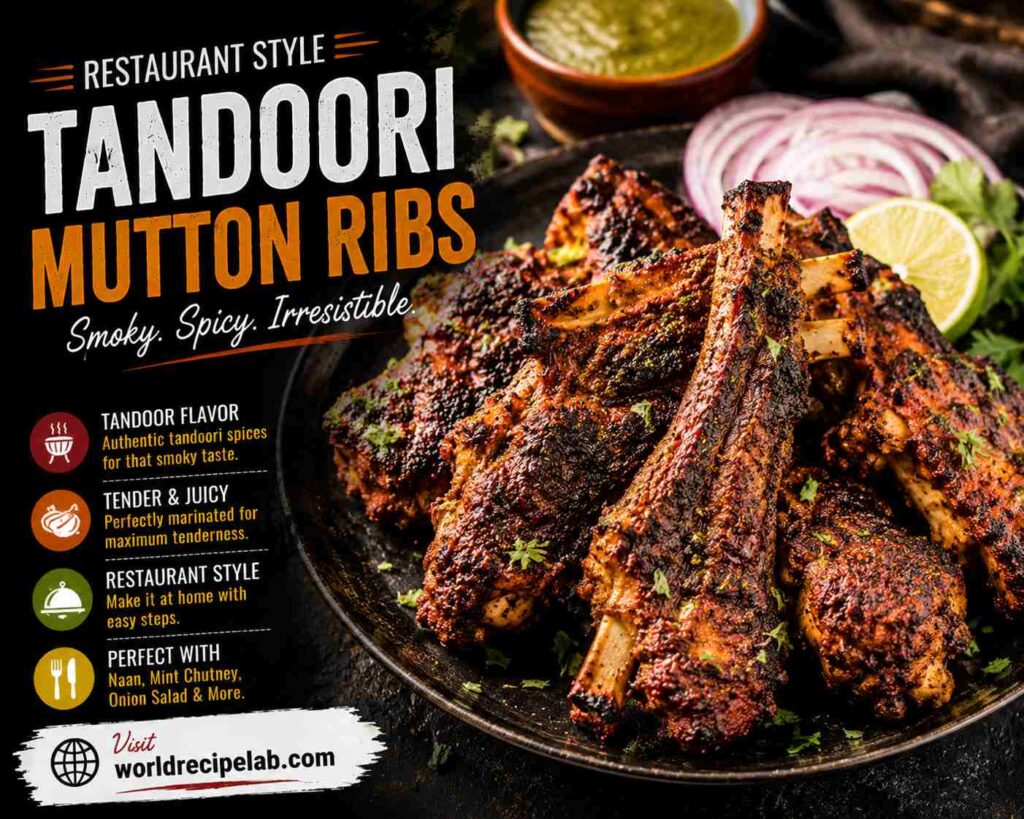
You do not need a traditional tandoor to make them at home. An oven or barbecue grill works well, although ribs may need a longer cooking time to become tender than thinner cuts of meat.
Serve these ribs hot with mint chutney, sliced onions, lemon wedges, and naan or roomali roti.
Tandoori-style cooking uses a spiced marinade and high heat to create a browned exterior with plenty of flavour. Yoghurt adds tanginess, while ginger, garlic, chilli, cumin, coriander, and garam masala provide the seasoning.
Mutton ribs contain connective tissue that can remain chewy if they are cooked too quickly. For tender results, cook them until the meat softens, then use high heat to finish the exterior. The exact cooking method depends on the size of the ribs and the animal's age.
This recipe uses 500 g of mutton ribs and serves approximately 2–3 people.
Trim excess fat if necessary and pat the ribs dry with paper towels.
Rub them with 1 tablespoon of lemon juice and a little salt. Set aside for 10–15 minutes while you prepare the first marinade.
Lemon juice adds acidity and flavour, but it does not replace proper cooking or reliably tenderise thick ribs on its own.
Combine the ginger-garlic paste, 1 teaspoon of Kashmiri red chilli powder, 1 tablespoon of lemon juice, and salt in a bowl.
Coat the ribs evenly with the mixture. Cover and refrigerate for 30 minutes.
This first layer seasons the meat before the thicker yoghurt marinade is added.
In a separate bowl, whisk together the hung curd, roasted besan, garam masala, cumin powder, turmeric, coriander powder, black pepper, the remaining Kashmiri chilli powder, oil, and crushed kasuri methi.
Add a pinch of red food colouring if desired. It is entirely optional; Kashmiri chilli powder already contributes colour.
The marinade should be thick enough to cling to the ribs rather than run off.
Coat the ribs thoroughly with the yoghurt mixture. Cover and refrigerate for at least 6 hours, or overnight.
Keep the meat refrigerated throughout marination. Do not leave raw mutton on the kitchen counter for extended periods.
For convenient meal preparation, you can marinate the ribs the day before cooking.
Oven method: Preheat the oven to 220°C (428°F). Arrange the ribs on a wire rack over a baking tray so that air can circulate around them.
Roast the ribs, turning them as needed to encourage even browning. However, do not assume that 25–30 minutes will make every rack of mutton ribs tender. Thick ribs may need substantially longer.
If the exterior is browning too quickly while the meat remains tough, reduce the oven temperature and continue cooking. You can cover the ribs loosely with foil to slow further browning. For tougher ribs, a covered, lower-temperature cooking stage before the final high-heat finish may be more effective than roasting at 220°C throughout.
Grill method: Preheat the grill and establish a medium-heat cooking zone alongside a hotter zone for finishing. Start the ribs over moderate heat so they can cook without the yoghurt marinade burning. Turn them periodically and move them away from direct flame if the outside darkens too quickly.
Thick ribs may need a covered indirect-heat stage before they are finished over higher heat.
Important: The original recipe's oven estimate of 25–30 minutes and grill estimate of 15–20 minutes are not reliable guarantees of doneness or tenderness. Cooking time varies with rib thickness, grill temperature, and the cut of meat. Use a food thermometer and check the meat's texture. Whole cuts of mutton should reach at least 63°C (145°F), followed by a three-minute rest, for a conservative minimum safety guideline; ribs often need considerably more cooking to become tender.
Once the ribs are cooked and tender, use the oven's broiler or the grill's hotter zone to brown the outside.
Watch closely during this stage. The yoghurt, garlic, and spices can burn quickly.
Brush the cooked ribs with melted butter if desired, then sprinkle with a little chaat masala. Rest for about five minutes before serving.
Arrange the ribs on a platter with lemon wedges, sliced onions, and mint-coriander chutney.
Serve with naan, roomali roti, or tandoori roti. For a fuller meal, add a simple salad or grilled vegetables.
Mutton ribs: Lamb ribs can be substituted. They may cook differently depending on their size and fat content, so check them rather than automatically reducing the cooking time.
Hung curd: Use plain, thick Greek yoghurt. If your yoghurt is watery, strain it through a clean cloth or fine sieve.
Kashmiri red chilli powder: Paprika can provide colour and mild sweetness. Add cayenne separately if you want more heat.
Besan: Roasted gram flour helps the marinade cling to the ribs. Rice flour can be used in a small amount if needed, although the flavour and texture will differ. Cornstarch is another possible thickener but will not provide the same nutty flavour.
Kasuri methi: You can omit dried fenugreek leaves if unavailable. Dried oregano is possible in a pinch, but it changes the flavour profile and is not a close substitute.
Ghee or butter: The marinade uses oil, but you can brush the cooked ribs with melted ghee instead of butter for a richer finish.
The ribs pair well with fresh, tangy sides and Indian flatbreads.
If you enjoy Indian meat dishes, try these recipes from World Recipe Lab:
Yes, although the result will be closer to pan-cooked ribs than oven-roasted tandoori ribs.
Use a heavy skillet with a lid. Cook the marinated ribs over low to medium-low heat, turning them periodically. If they brown too quickly, lower the heat and add a small splash of water to help prevent scorching.
Continue until the meat is cooked through and sufficiently tender. Remove the lid near the end to allow excess moisture to evaporate, then brown the ribs briefly.
For particularly tough ribs, a pressure cooker or another covered, moist-heat method may be more practical. The ribs can then be finished on a hot tawa or under a broiler to develop colour.
Refrigerate cooked ribs within two hours in a covered, shallow container. Keep them at 4°C (40°F) or below and use within three to four days.
Reheat until the centre reaches 74°C (165°F). To help prevent drying, reheat the ribs in a covered oven-safe dish with a small splash of water, then uncover briefly to restore some surface browning.
Leftover meat can be removed from the bones and used in wraps or stuffed flatbreads. Refrigerate leftovers promptly and reheat them thoroughly before serving.
Yes. Roast them on a wire rack over a baking tray. If they brown before becoming tender, lower the temperature and continue cooking until they are ready. Finish under the broiler for extra colour.
They may be undercooked for the cut, too thick, or cooked at such high heat that the outside browns before the connective tissue softens. Give tougher ribs more time and use a lower-temperature covered stage when necessary.
Yes. Refrigerate the ribs in the marinade overnight. Because the marinade contains lemon juice and yoghurt, avoid leaving the meat unrefrigerated.
No. Kashmiri chilli powder adds colour naturally. Food colouring is optional and does not improve the flavour.
Yes. Lamb ribs work well with the same marinade, but size and fat content affect the cooking time. Check tenderness and doneness rather than assuming lamb always cooks faster.
Tandoori mutton ribs are all about balancing a well-seasoned marinade with enough cooking time to make the meat tender. A home oven or grill can produce browned, flavourful ribs without a traditional tandoor.
Marinate the meat ahead, prevent the yoghurt coating from burning, and finish with high heat only after the ribs are cooked through. Serve with chutney, onions, lemon, and warm flatbread for a satisfying meal.
Notes
- Greek yogurt can replace hung curd.
- Rice flour or cornstarch may be used instead of roasted besan.
- Dried oregano can be substituted for kasuri methi, although the flavor will differ.
- Food color is optional. Kashmiri chili powder provides natural color.
- Lamb ribs can be used instead of mutton ribs; reduce cooking time slightly.
- No oven or grill? Cook the ribs in a heavy skillet or tawa over low heat and crisp them uncovered at the end.
- Leftover ribs can be shredded and used in wraps, frankies, or stuffed naan.
- Serve with mint chutney, pickled onions, butter naan, roomali roti, or tandoori roti.
- Pair with sweet or salty lassi, masala soda, or chilled beverages.